FactBabi guling means 'turning pig'
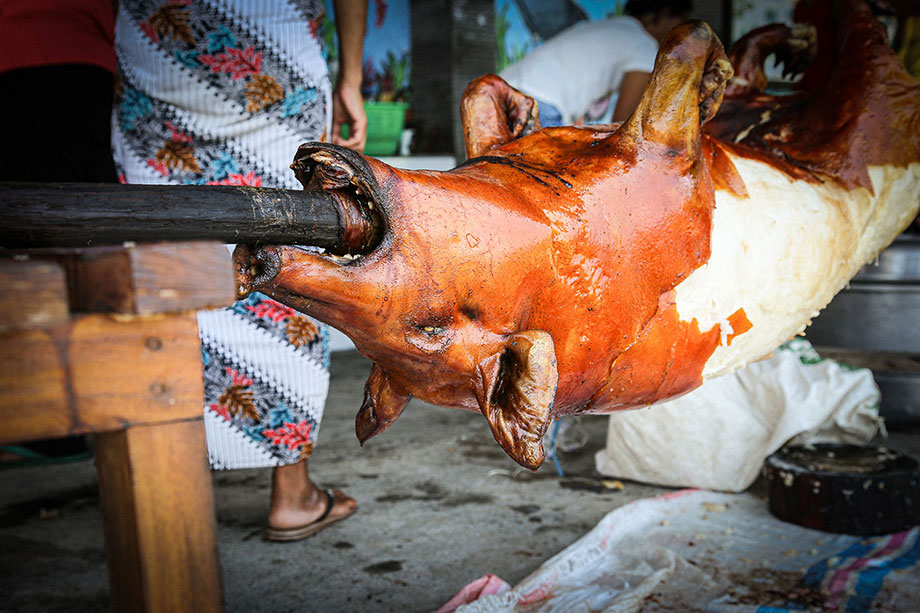
"Guling" means to roll or turn in Indonesian, and that's exactly what happens: a whole young pig is skewered on a long spit and turned continuously over a fire. Served over rice, the dish becomes nasi babi guling — Bali's most famous plate of food.
FactBorn as a ceremonial offering
Babi guling began as temple food: prepared as an offering and shared by the community at Balinese Hindu ceremonies. It still anchors weddings, temple festivals and family rites such as tooth-filing ceremonies — the warung version came much later.
FactPenampahan Galungan: the day of slaughter
The day before Galungan — Bali's biggest festival, held every 210 days — is Penampahan, the 'day of slaughter', when pigs are killed in villages across the island from dawn. The pig symbolises the beastly, greedy side of human nature that must be defeated before the festival, and neighbourhood groups (seka mepatung) often buy and share one together. The meat becomes lawar, satay and babi guling for days of feasting.
FactWhy pork thrives in Bali alone
Bali is Indonesia's only Hindu-majority province, while most of the country is Muslim and doesn't eat pork. That religious difference is why this whole-pig tradition flourished here and barely exists elsewhere in the archipelago — babi guling is not halal and has no halal version.
FactBase gede: the spice paste heart
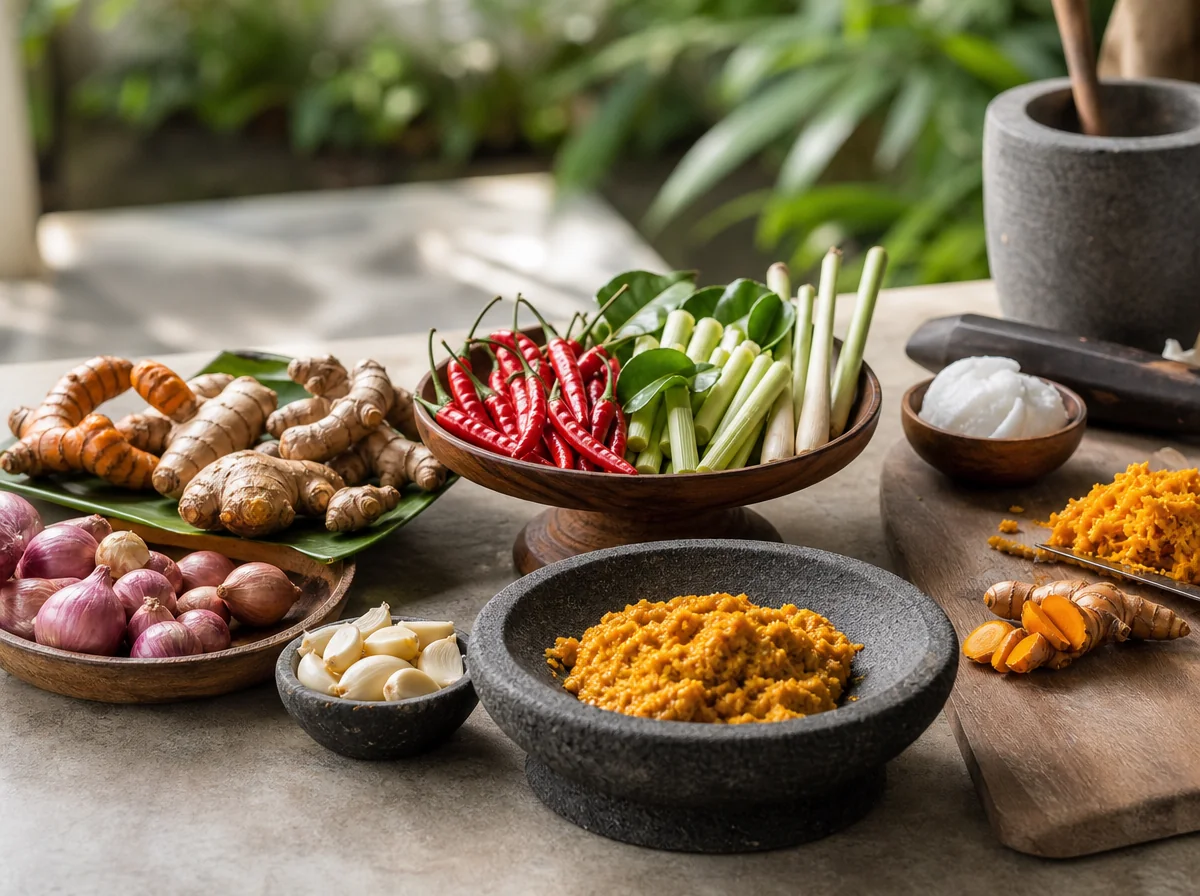
The flavour comes from base gede (also called base genep, the "complete paste"): shallots, garlic, turmeric, ginger, galangal, chillies, coriander seed, lemongrass, candlenut and shrimp paste ground together. It's rubbed inside and outside the pig and packed into the cavity before roasting.
FactRoasted over coconut husks and wood
Traditionally the pig turns by hand over embers of wood and coconut husk — not open flame — so the meat cooks gently while the skin slowly renders. In the final stretch the heat is raised and the skin is basted until it blisters into the deep, glassy crackling everyone fights over.
FigureThree to four hours on the spit
A babi guling typically roasts for around three to four hours of constant turning, depending on the pig's size. The work starts well before dawn, which is why warungs open in the morning with the pig already cooked.
FigureA suckling pig is a small pig
Classic recipes call for a young pig of around 6 to 8 kilos, while pigs roasted for big village ceremonies can run to around 15 to 20 kilos. Smaller pigs mean tender meat and thin skin that crisps evenly — the whole point of the dish.
FactWhat's actually on the plate
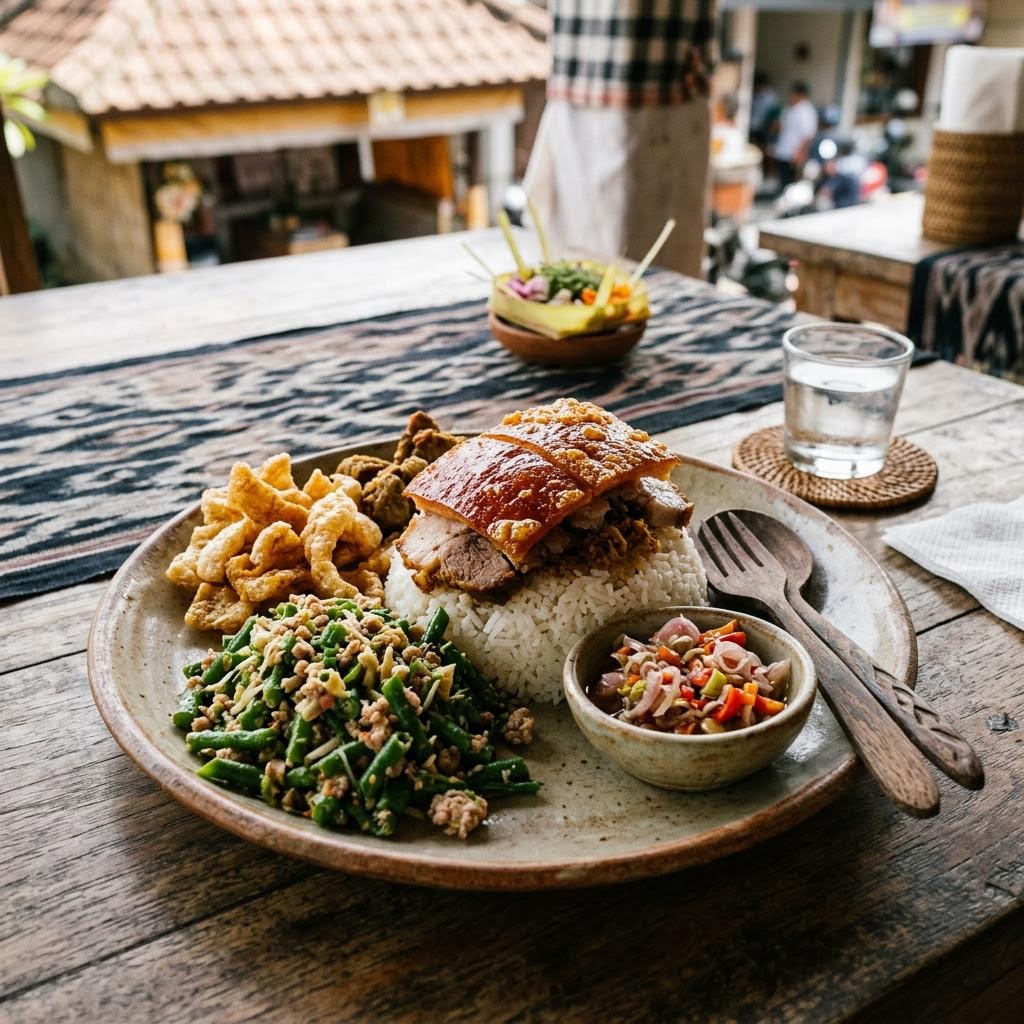
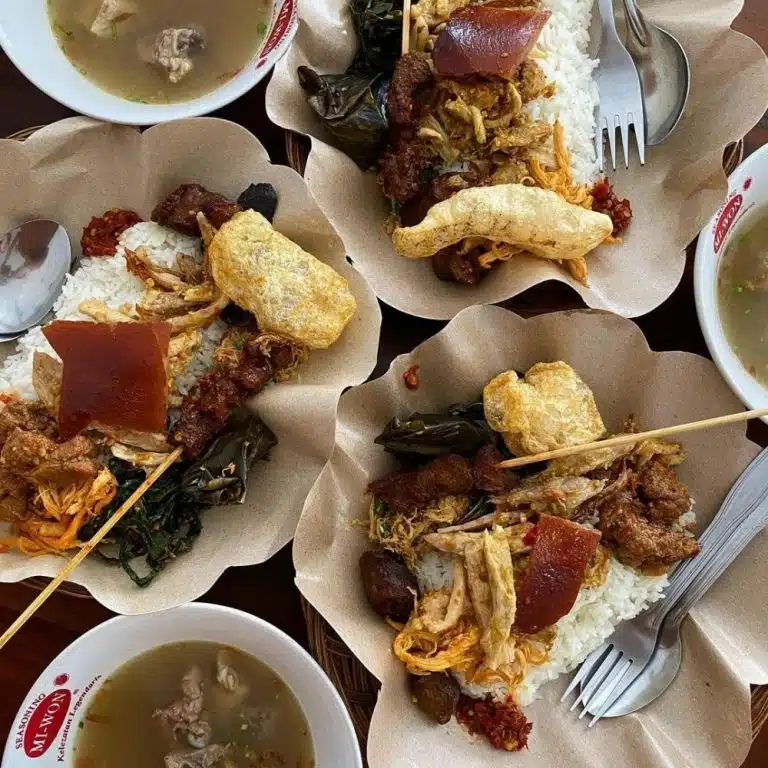
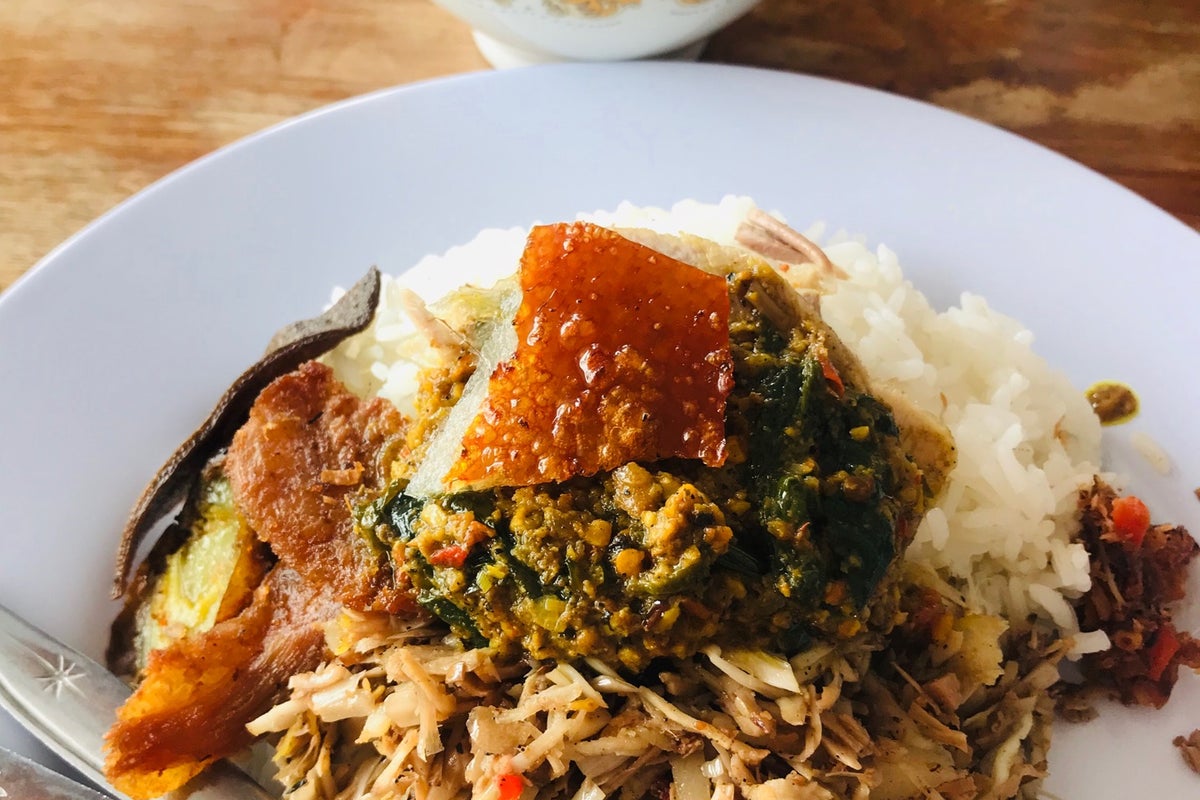
Order nasi babi guling and you get a plate, not a slice: rice topped with slices of roast pork, a shard of crackling, fried pork, lawar (chopped vegetables with coconut and spices), often a stick of sate lilit or pork satay, plus a small bowl of pork bone broth on the side.
FactLawar and urutan complete the plate
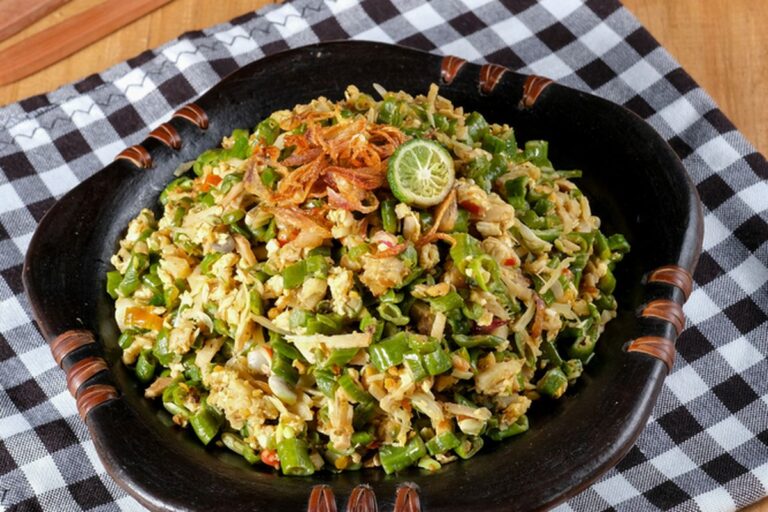
Lawar is a chopped mix of long beans or young jackfruit with grated coconut, spices and minced pork — red lawar is made with fresh blood, white lawar without. Urutan is the Balinese pork sausage, seasoned with the same spice paste and often served sliced on the plate.
FactJukut ares: the banana-stem soup
The classic companion to ceremony pork is jukut ares: the tender inner stem of a young banana trunk, thinly sliced and simmered in a spiced pork (or chicken) bone broth with base genep. Slightly fibrous, it soaks up the broth like a sponge. It's a feast-day dish, closely tied to Galungan and tooth-filing ceremonies, so you'll rarely find it in ordinary warungs.
TipOrder 'campur' for a bit of everything
"Campur" means mixed: a nasi campur-style plate gives you the full spread of meat, skin, lawar, sausage and extras together. At Ibu Oka, the "pisah" (separated) special serves components apart — worth it if you want to taste each part on its own.
TipAsk for extra kulit — the skin
"Kulit" is the crackling, and it's the prized part. If you want more of it, ask when you order — many warungs will sell extra skin on the side or load up a "special" plate. Once the day's skin is gone, it's gone.
TipIt is spicy by default
Heat isn't optional unless you speak up: sambal is usually spooned straight over the rice, and some warungs (Pak Malen, Bu Dayu) are known for fiery plates. If you want control, ask for sambal on the side or say "tidak pedas" — not spicy — when ordering.
PlaceIbu Oka, Ubud's famous warung
Ibu Oka is the name most visitors hear first: a family-run Ubud institution of over forty years on Jl. Suweta, near the palace, open roughly 11am to 6pm. Expect simple tables, fast turnover and some of the most sought-after crackling in Bali — go early, because the best cuts go first.
FactAnthony Bourdain put Ibu Oka on the map
Ibu Oka was a local favourite long before television, but Anthony Bourdain's visit on No Reservations made it internationally famous — he raved about the crackling and the complete plate. It's still the babi guling most first-time visitors to Ubud seek out.
FigureIbu Oka's menu, by the numbers
At Ibu Oka in Ubud the Special plate is around IDR 65,000 and the Separated Special around IDR 75,000, with pork soup at about IDR 15,000 a bowl. Prices at famous-name warungs run higher than neighbourhood spots, but a full babi guling lunch still costs less than most café breakfasts in the tourist south.
PlacePak Malen on Sunset Road, Seminyak
Warung Babi Guling Pak Malen, at Jl. Sunset Road No. 554 in Seminyak, is a no-frills roadside warung loved for juicy, well-spiced meat and a famously fiery sambal. A mixed plate costs around IDR 45,000, and it's open roughly 8:30am to 6:30pm — handy to or from the airport.
PlacePak Dobiel, the Nusa Dua legend
Warung Babi Guling Pak Dobiel (signed Sari Dewi) on Jl. Srikandi No. 9 in Nusa Dua is famed for thick-cut, juicy pork with real bite, and it pleases locals and visitors alike. Plates run around IDR 45,000–65,000; get there before 3pm, as by 4pm it's usually closed or sold out.
PlaceBu Dayu, Kuta's night-time option
Warung Babi Guling Bu Dayu Kencani on Jl. Raya Kuta No. 116 breaks the lunch-only rule: the main spot opens around 5pm and runs late into the night, until about 2am. Plates cost around IDR 35,000–60,000, everything is well balanced, and the sambal has a serious kick.
PlaceKarya Rebo, crackling near the airport
Rumah Makan Babi Guling Karya Rebo on Jl. Toyaning in Kedonganan, Kuta, is a big, busy eatery near Ngurah Rai Airport, popular with locals and departing travellers alike. It's especially praised for its crispy crackling — arrive before lunch to be sure of getting some.
PlaceMen Agus, babi guling with a view
Warung Nasi Babi Guling Men Agus on Jl. Raya Canggu No. 163 serves its plates overlooking green rice fields on the Canggu–Tanah Lot road. It's a local-leaning spot with gentler prices — meals start from around IDR 25,000 — and is open roughly 8am to 8:30pm.
PlacePande Egi, the Gianyar favourite
Babi Guling Pande Egi in Beng village, Gianyar, is the connoisseurs' pick — one of the highest-rated babi guling warungs on the island, drawing crowds from across Bali. It's a worthwhile detour on the way to or from Ubud if you want the version locals argue about most.
PlaceSari Kembar 99, Denpasar's long-hours local pick
Babi Guling Sari Kembar 99, on Jl. Teuku Umar Barat No. 99 on the Denpasar side of town, is a local workhorse rather than a tourist name — and unusually for babi guling it serves from about 6:30am to 10pm. It's known for kulit kriuk (extra-crunchy skin), lawar and cheap nasi bungkus takeaway packs.
PlacePasar Senggol: Gianyar's night market
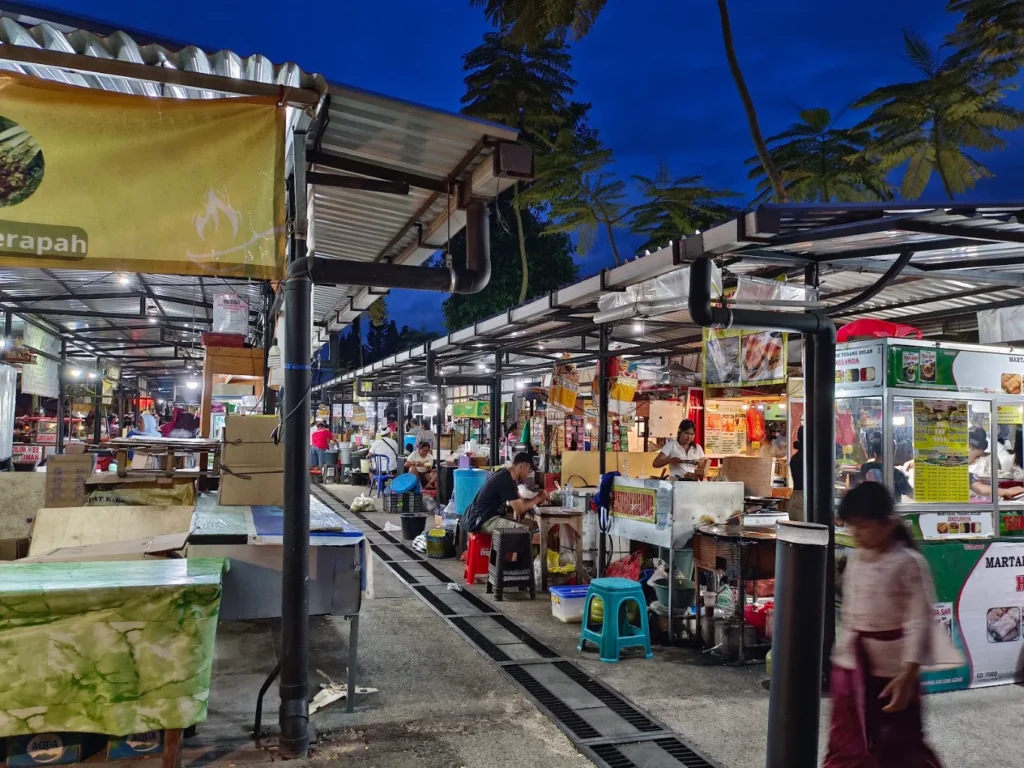
Gianyar town's night market, Pasar Senggol on Jl. Ciung Wanara (roughly 3pm to 10pm), is street-food Bali at its most local — and Gianyar is babi guling heartland. Stalls serve roast pork plates alongside satay, fried snacks and sweets for a fraction of south-coast prices. Come hungry, bring small cash, and treat it as dinner and entertainment in one.
FactWarungs differ by region
Regulars argue about babi guling by regency. Gianyar, the dish's heartland, is famed for richly spiced plates heavy on lawar; Denpasar's city warungs move fast, wrapping nasi bungkus for workers; Ubud's famous names plate up for visitors at higher prices. Same dish, three personalities — trying one of each is a legitimate Bali itinerary.
FigureA plate costs around IDR 25,000–75,000
Most local warungs charge around IDR 25,000 to 60,000 for a complete, filling plate. Famous tourist-facing spots sit at the top of the range — Ibu Oka's Special is around IDR 65,000 and the Separated Special around IDR 75,000.
FigureThe skin sells out first
At the most popular warungs the crackling is typically gone by around 1pm, even when meat remains. If the skin is why you're going — and for most people it is — treat babi guling as a late-morning or early-lunch mission, never a late lunch.
TipGo for lunch, not dinner
Warungs roast before dawn and sell the pig through the morning and lunch — crackling often runs out by early afternoon and many places close by mid-afternoon once sold out. Aim to arrive between about 11am and 1pm for the full selection.
TipBring cash, in small notes
Most babi guling warungs are cash businesses, and cards or QR payment can't be relied on at the smaller ones. Carry small-denomination rupiah — a plate is cheap, and change for a 100,000 note at a busy lunch counter slows everyone down.
TipWords to know
babi guling — roast suckling pig;
babi — pig / pork;
guling — roasted on a spit;
nasi — rice;
lawar — minced meat, vegetables and coconut mixed with spices;
sambal — chilli sauce;
pedas — spicy / hot;
urap — vegetables tossed with grated coconut;
sate — skewered grilled meat;
kerupuk — crackers;
sayur — vegetables;
kuah — broth / gravy;
bumbu — spice / seasoning;
kulit — skin (the crackling);
usus — intestines;
darah — blood (in lawar merah);
base genep — complete Balinese spice paste;
makan — to eat;
enak — delicious;
warung — small family eatery
See also: related sets
Babi guling is ceremony food before it is warung food: the temple festivals in Temples and the wedding feasts in Weddings — and for another famous Bali meal on the sand, the seafood of Jimbaran in Beaches.