FactLegal or symbolic? The big choice
Foreign couples marrying in Bali face one decision first: a legal wedding recognised in Indonesia, or a symbolic ceremony with the legal paperwork done at home. A legal Bali wedding needs a religious ceremony under one of Indonesia's six recognised religions, plus embassy paperwork and registration. A symbolic ceremony — the choice most visitors make — has no legal effect and needs no documents at all.
FactA legal Bali wedding starts with religion
Indonesia has no registry-office civil wedding like most Western countries. Under the Marriage Law of 1974, a marriage is valid when performed according to the couple's religion, and it must then be recorded by the state. Non-Muslim couples register with the civil registry (Catatan Sipil or Dukcapil); Muslim couples register with the Office of Religious Affairs (KUA).
FactSymbolic ceremonies: no paperwork, any style
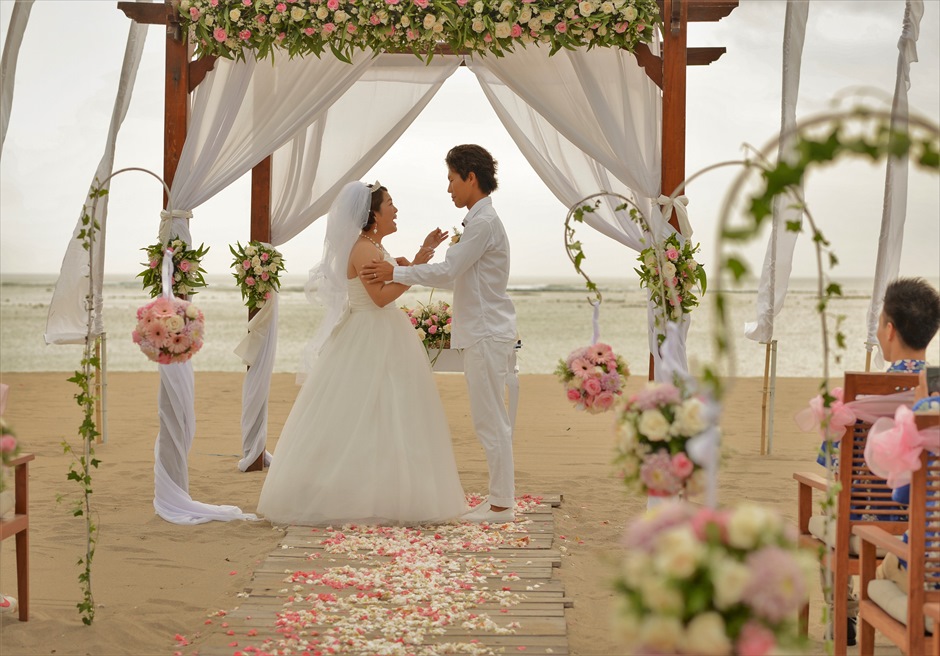
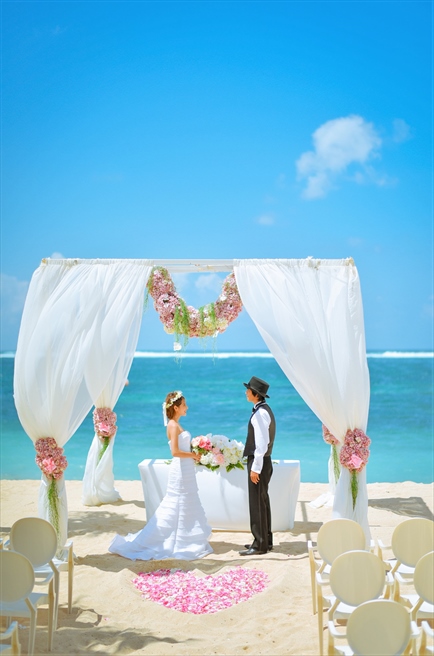
A symbolic or blessing ceremony in Bali can take place anywhere, at any time and in any form — on a beach, a clifftop or in a garden villa — led by a celebrant, a Balinese priest, or both. Couples usually register the marriage legally at home, before or after the trip. A celebrant in Bali costs around IDR 2.5 million and up, and a Balinese blessing can be added on top.
FactMost foreign couples marry legally at home
Because of the religion rule and the paperwork, most foreign couples do the legal part at a registry office at home and save Bali for the ceremony itself. That route means lighter paperwork, no religion to declare, and vows in your own words. A legal Bali wedding suits couples who already share a faith and want one date on the certificate.
FactThe Certificate of No Impediment
The key document for a legal Bali wedding is the Certificate of No Impediment (CNI), issued by your own country's embassy or consulate in Indonesia, confirming you are legally free to marry. Both partners need one, and both usually have to appear in person to sign a declaration before a consular officer. If your embassy cannot issue a CNI or an accepted equivalent, legal registration in Bali usually cannot go ahead at all.
FactBoth partners must share one religion
To marry legally in Bali, both partners must declare and marry under the same one of Indonesia's six recognised religions: Islam, Protestant Christianity, Catholicism, Hinduism, Buddhism or Confucianism. Couples of different faiths cannot register unless one converts, and since 2023 the courts have been instructed not to approve registrations of interfaith marriages.
FactDocuments to bring for a legal wedding
Each partner typically needs a valid passport and a full birth certificate, plus a divorce decree or former spouse's death certificate if previously married. You will also need several 4 x 6 cm photographs of the two of you together, a declaration of religion, and passport copies for your two witnesses. Your planner will confirm the final list, as requirements vary slightly between regencies.
FactTranslations and apostilles
Any foreign document not in Indonesian must be translated by a sworn translator, and some documents may need to be legalised or apostilled first. Indonesia joined the Apostille Convention in 2022, which made that step much simpler than it used to be. Registries generally reject a Certificate of No Impediment more than three months old, so time the embassy visit carefully.
Figure10 working days' notice, 60 days to register
Notice of intention to marry should be lodged with the registry at least 10 working days before the wedding, and the marriage must be registered within 60 days of the ceremony — that registration is what produces the marriage certificate you will actually use for anything official. Plan to be in Bali at least three to five working days before the ceremony so the registry can check your papers.
FactAge 19 and two adult witnesses
Both partners must be at least 19 years old to marry legally in Indonesia, and you need two witnesses over 18 with identification who attend the registration. Same-sex couples cannot marry legally in Bali, as Indonesian law does not recognise same-sex marriage — for these couples, the simple answer is a legal wedding at home and a symbolic ceremony in Bali.
FigureWhat a Bali wedding costs by size
In 2026, a realistic total is around US$2,500 to US$5,000 for a two-person elopement, around US$10,000 to US$20,000 for an intimate wedding of 10 to 20 guests, around US$15,000 to US$30,000 for 30 to 50 guests, and around US$40,000 to US$100,000 or more for a 100-guest luxury event. Bali is still far cheaper than a comparable wedding in Australia, the US or Europe.
FigureElopements from around US$2,500
The cheapest way to marry in Bali is a two-person elopement on a beach or clifftop with a celebrant, a bouquet, a photographer and dinner for two — around US$2,500 to US$5,000 all in. Several Ubud resorts sell elopement packages from around IDR 30 million, including the ceremony, flowers and a private dinner.
FigureResort packages run from around IDR 30 million
Published 2026 resort packages start at around IDR 30 million for an Ubud elopement, around IDR 61 million at COMO Canggu, around IDR 68 million at The Edge in Uluwatu, around IDR 69 million at Hotel Indigo Seminyak, and around IDR 125 to 146 million at The Mulia and The Ritz-Carlton in Nusa Dua. Tirtha Uluwatu's packages start from around IDR 240 million. Most prices are quoted before tax and service, so check whether the figure is net or '++'.
FigureLegal packages cost around IDR 11 to 19 million
A legal wedding package arranged through a planner costs around IDR 11 million to IDR 19 million for a Christian or Buddhist ceremony, covering the religious ceremony, civil registration and fees. Embassy fees, translations and apostilles are usually extra. Allow three to six months of lead time for the legal route, plus the notice period in Bali.
FigurePhotography, flowers and the celebrant
For a mid-size wedding, expect around US$2,500 to US$4,500 for photography and video, around US$2,500 to US$6,000 for flowers and decor, and around US$500 to US$900 for the celebrant and ceremony. Venue rental alone runs around US$500 to US$1,500 for an elopement and US$8,000 to US$15,000 or more for a large event — exclusive takeover of a signature Uluwatu venue can exceed US$15,000 for the venue alone.
PlaceTirtha Uluwatu: Bali's original cliff chapel
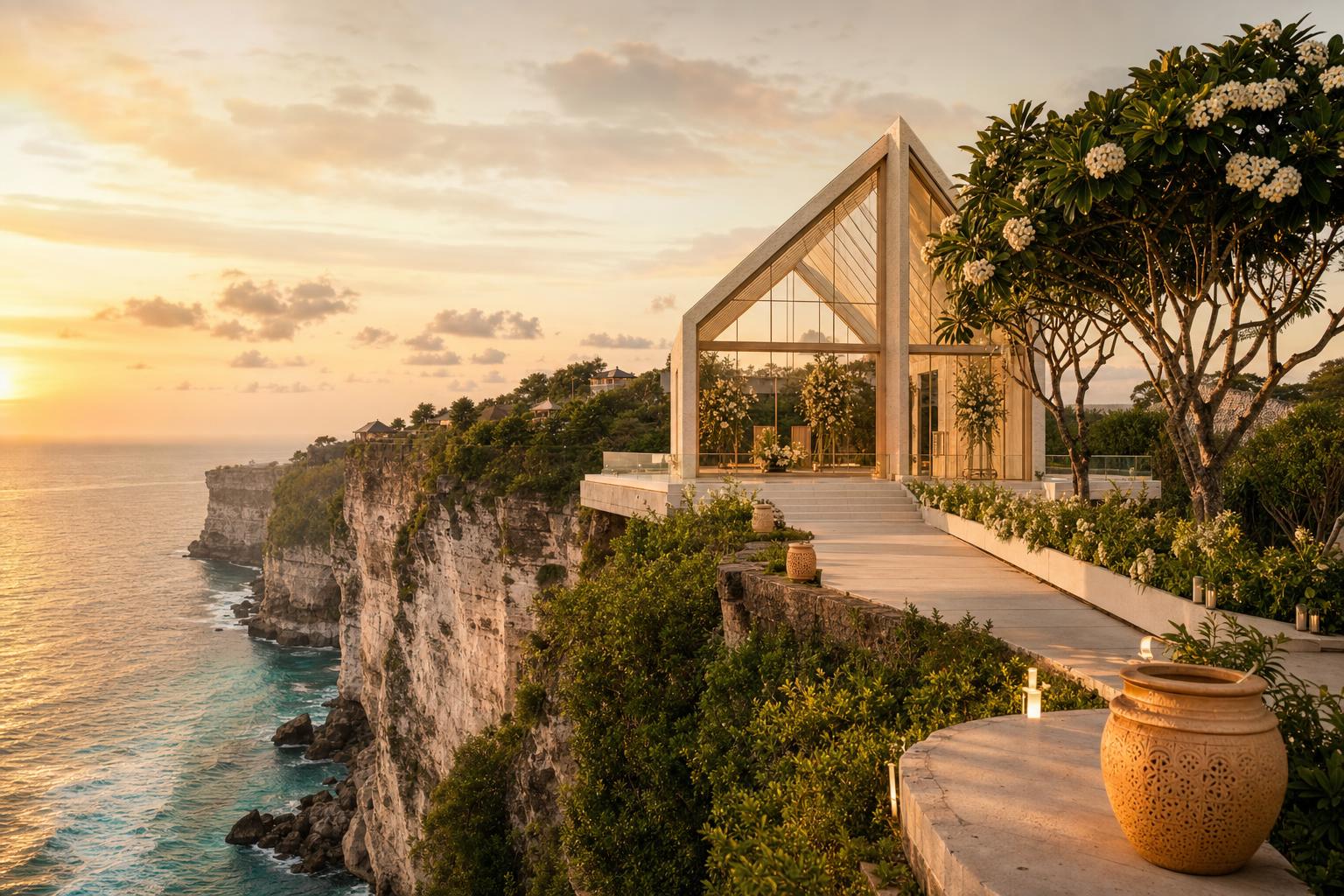
Tirtha Uluwatu is the original clifftop wedding resort on the Bukit Peninsula — a 6,300 square metre estate with a white canvas-and-glass chapel framing the Indian Ocean behind the altar, a glass stage projecting over the cliff, and reception halls scaling from intimate ceremonies to 300 guests. Packages start from around IDR 240 million, with a deposit of around IDR 45 million to confirm.
PlaceAlila Villas Uluwatu: the Cliff-Edge Cabana
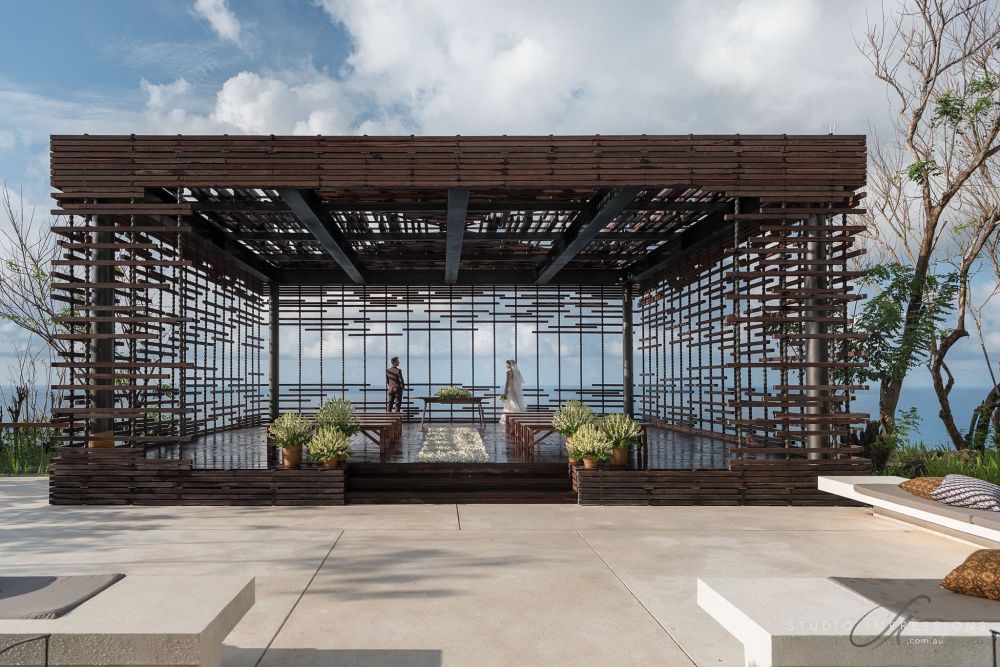
Alila's Cliff-Edge Cabana, a timber pavilion projecting over the ocean, is one of the most photographed ceremony spots in Bali. Weddings are sold as elopement and small-wedding packages around the cabana, which holds about 40 guests, with packages from around IDR 180 million including tax and service. The resort sits on the Uluwatu cliffs with bold contemporary architecture.
PlaceThe Edge: fixed-price clifftop weddings
The Edge sits on the Uluwatu cliffs with its own wedding venue and a glass-bottomed sky pool hanging over the ocean. Unusually, it publishes five set packages with tax and service included, from around IDR 68 million for 10 guests to around IDR 685 million for 150. Every package includes floral styling, a celebrant-led blessing, canapés, dinner and a tiered cake.
PlaceNusa Dua: beach chapels and grand resorts
Nusa Dua is Bali's beach-wedding heartland: The Ritz-Carlton's Majestic Chapel is the island's best-known beach chapel, with packages from around IDR 146 million, while The Mulia hosts 100 to 200 guests from around IDR 125 million. The calm lagoon, white sand and manicured grounds suit larger guest lists and older relatives better than a cliff staircase.
PlaceUbud: garden villas and rice terraces
Ubud weddings trade the ocean for jungle and rice terraces: garden villas, riverside chapels and terrace lawns, often for two to 50 guests. Samsara Ubud offers elopements from around IDR 30 million, Four Seasons Sayan from around IDR 22 million, and Capella Ubud from around IDR 41 million for two. It is the best setting for a small, private ceremony — and the easiest for a honeymoon that starts right there.
PlaceTirta Gangga: the water palace
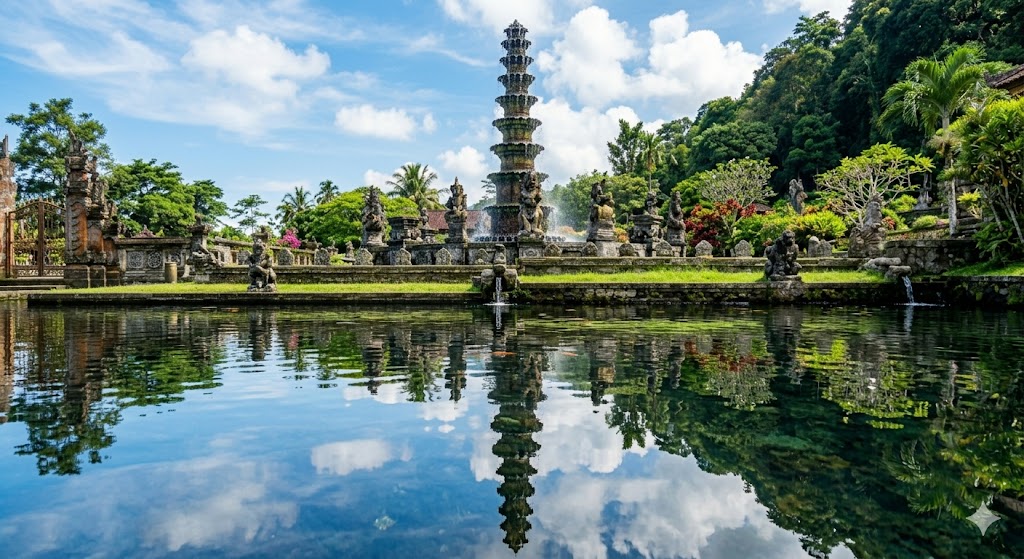
For something completely different, the royal water palace of Tirta Gangga in Karangasem, East Bali, offers ceremonies among koi-filled ponds, stepping stones and fountains, built by the last king of Karangasem in 1946 around holy springs. It suits small, photogenic ceremonies rather than big receptions, and pairs naturally with a trip to Lempuyang, about 30 minutes away.
FactA Balinese blessing in traditional dress
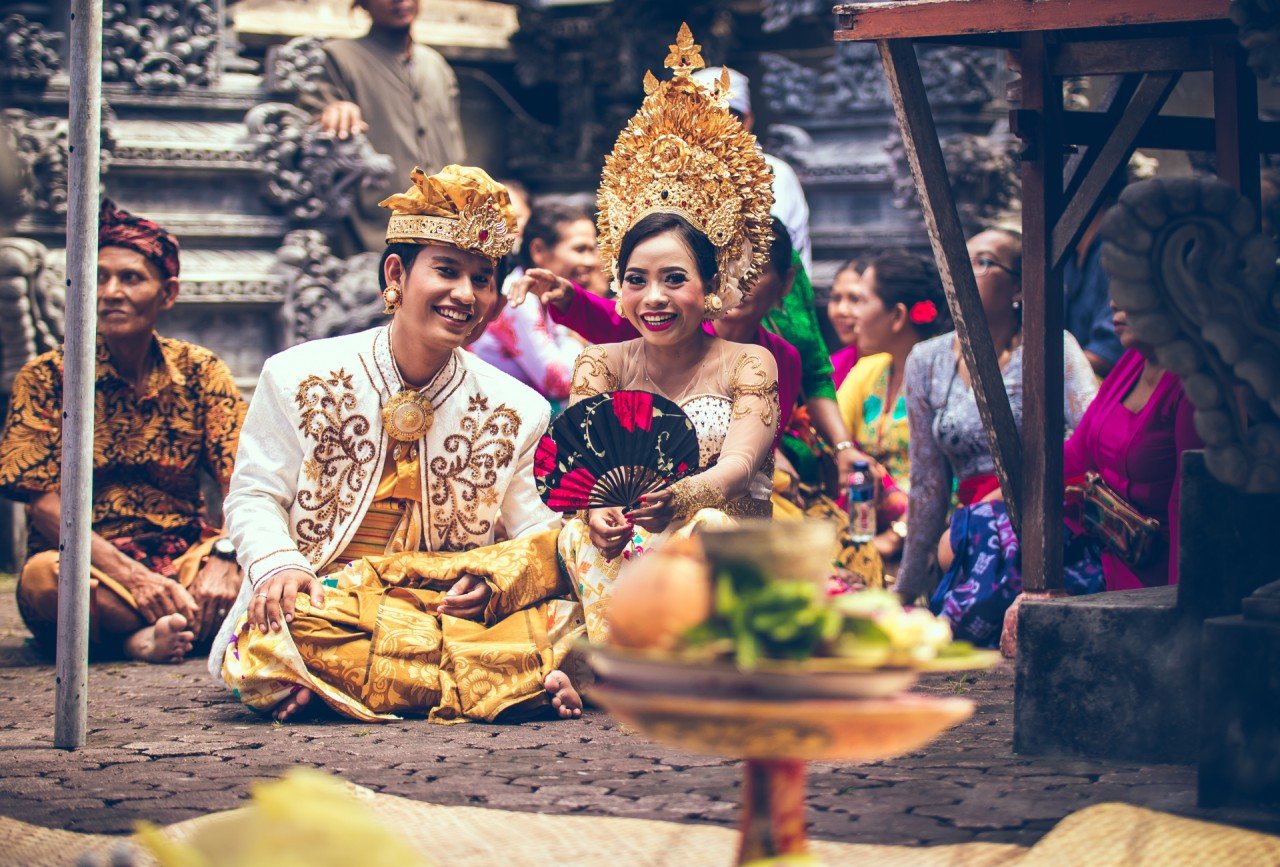
Many foreign couples add a Balinese Hindu blessing to their ceremony, dressing in traditional attire — gold headdresses, embroidered kebaya and patterned sarongs — while a priest (pemangku) blesses the couple with holy water, rice and flowers. It is a cultural ceremony, not a legal marriage, and it can be combined with a Western-style celebrant-led ceremony on the same day.
FactFrangipani: Bali's wedding flower
Frangipani (plumeria) is the flower of a Bali wedding — white and yellow blossoms for bouquets, hair pieces, aisle petals and table decorations. They are cheap, local and in bloom all year, and their scent is the smell most visitors associate with the island. Roses, orchids and marigolds are the usual companions in a tropical bouquet.
FactMelukat: a purification before the vows
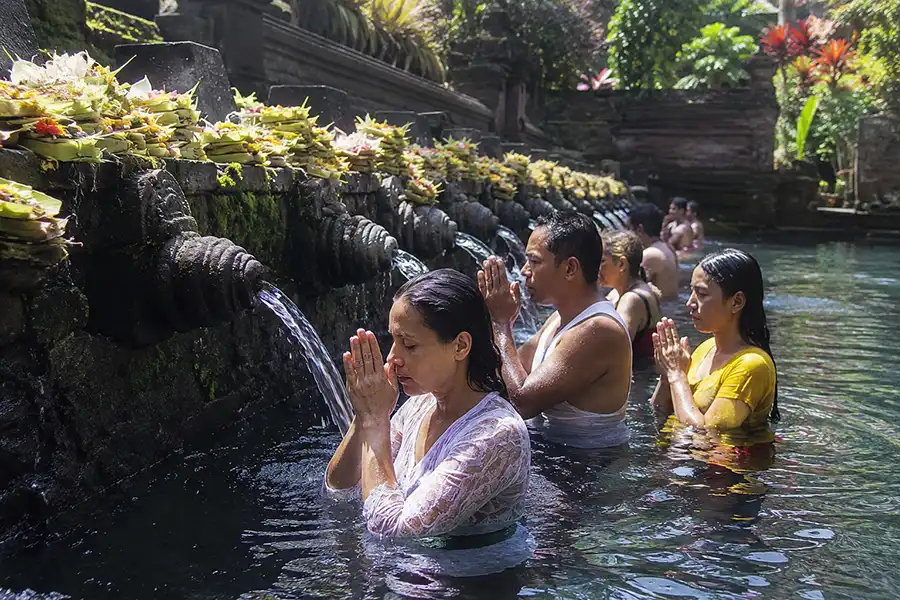
Some couples begin their wedding with melukat, a Balinese purification ritual under the fountains of a holy spring temple such as Tirta Empul near Ubud. Dressed in a sarong, you move from spout to spout in prayer as the water washes over you — a way of starting married life cleansed and blessed. It is a spiritual ritual, so treat it with respect and follow the order of the fountains.
FactGamelan, dancers and offerings
A Bali wedding is rarely just a ceremony: gamelan musicians, traditional dancers, flower girls scattering petals, and tall offerings of fruit and marigolds are all part of the day. Balinese weddings are community celebrations, and local tradition says the couple's union is blessed by the gods, the ancestors and the whole village. Ask your planner what is included — dancers and musicians are usually an add-on.
FactBest months: May to October
The dry season, roughly May to October, is the best time for a Bali wedding: sunny days, low humidity and the least chance of rain ruining an outdoor ceremony. June to August is peak season, so venues and photographers book out first. The wet season, roughly November to March, brings afternoon downpours — beautiful light, but have a covered backup plan.
TipBook 6 to 12 months ahead
Book your venue and planner six to 12 months ahead, especially for a dry-season Saturday, and lock in your photographer early — the best ones are booked a year out. For a legal wedding, start the embassy paperwork three to six months before the date. Guest flights and hotels in Bali are cheapest when booked early, and your guests will thank you for the notice.
TipAvoid Nyepi and check the calendar
Avoid Nyepi, Bali's Day of Silence — the whole island shuts down for 24 hours, the airport closes, and nobody may go outside. It falls in March, on a different date each year. Also check for major temple festivals (odalan) and public holidays, which can close venues or fill hotels, and confirm your venue's curfew — many resorts require music to end by 10 or 11pm.
TipHoneymoon where you married
Stay on for the honeymoon: Uluwatu's cliff villas, Ubud's jungle resorts, a few nights on Nusa Penida for the Kelingking viewpoint and quiet beaches, or a slow week in Amed on the north-east coast for snorkelling and Mount Agung sunrises. Many resorts offer honeymoon packages with private dinners and spa treatments — ask when you book the wedding, as the discount is often better than booking separately.
TipThis is general information, not legal advice
Marriage rules in Indonesia change, and requirements differ by nationality, religion and regency — what works for an Australian couple may not work for a British or American one. Always check your own country's embassy or consulate in Indonesia and your home registry before booking anything, and use a reputable Bali wedding planner who handles the legal paperwork regularly. Treat these cards as a starting point, not a legal opinion.
TipWords to know
pawiwahan — Balinese Hindu wedding ceremony;
pernikahan — wedding, marriage;
pengantin — bride or groom;
mempelai — bride or groom (formal);
memadik — formal proposal, when the groom's family asks for the bride;
dewasa ayu — auspicious day;
mepamit — the bride's farewell to her family;
mekala-kalaan — purification rite at the heart of the wedding;
pedanda — high priest;
pemangku — temple priest;
tirta — holy water;
banten — offering;
canang — small flower offering;
payas agung — grand ceremonial dress;
kebaya — traditional blouse;
udeng — men's headcloth;
cincin — ring;
janji — promise, vow;
bulan madu — honeymoon;
selamat — congratulations
Hanuman and the monkey god's blessing
Some Uluwatu wedding packages include a blessing from Hanuman, the white monkey god of the Ramayana, and ceremonies are often timed so the vows finish just as the sunset kecak fire dance begins in the clifftop amphitheatre. It is a symbolic blessing rather than a legal or religious rite, so check with your planner exactly what is included and whether photography is allowed.
TipSee also: related sets
A Bali wedding borrows from everywhere: the water palace and the holy springs in Temples, the monkey god's blessing in Monkeys, and the flowers in Orchids.