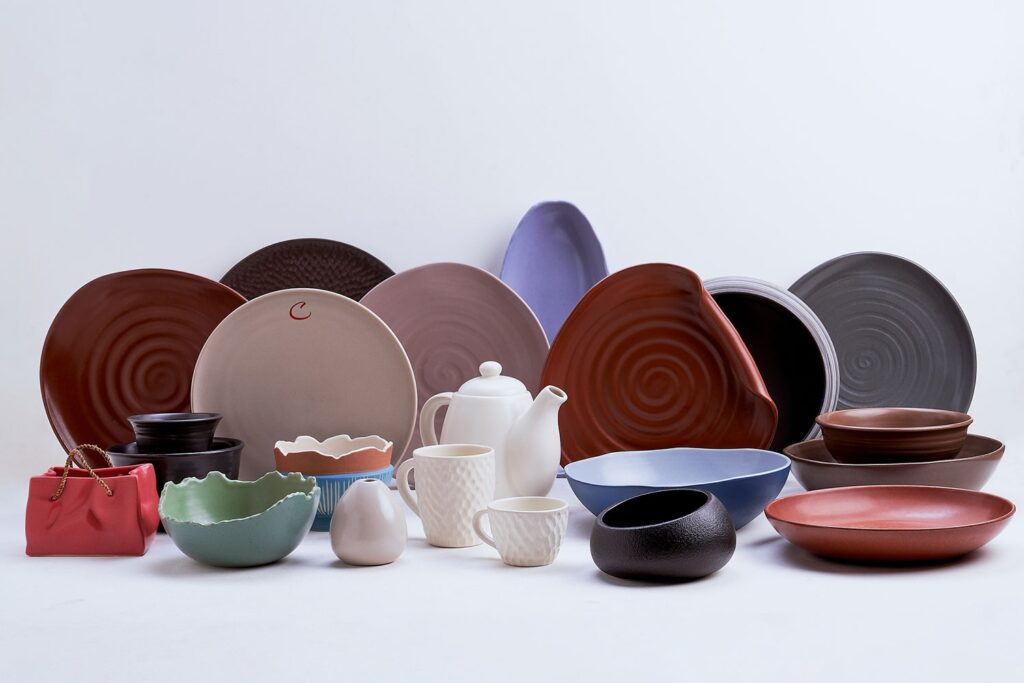
FactPottery is one of Bali's oldest crafts
Clay vessels have been made in Bali since ancient times, and archaeologists have found pottery among grave goods at sites such as Gilimanuk in the west of the island. Pottery was once made in many villages, and the craft is still passed down within families in the surviving centres. Today it is one of the island's living heritage crafts, even as younger Balinese are less likely to take it up.
FigureLow-fired earthenware, fired at about 650°C
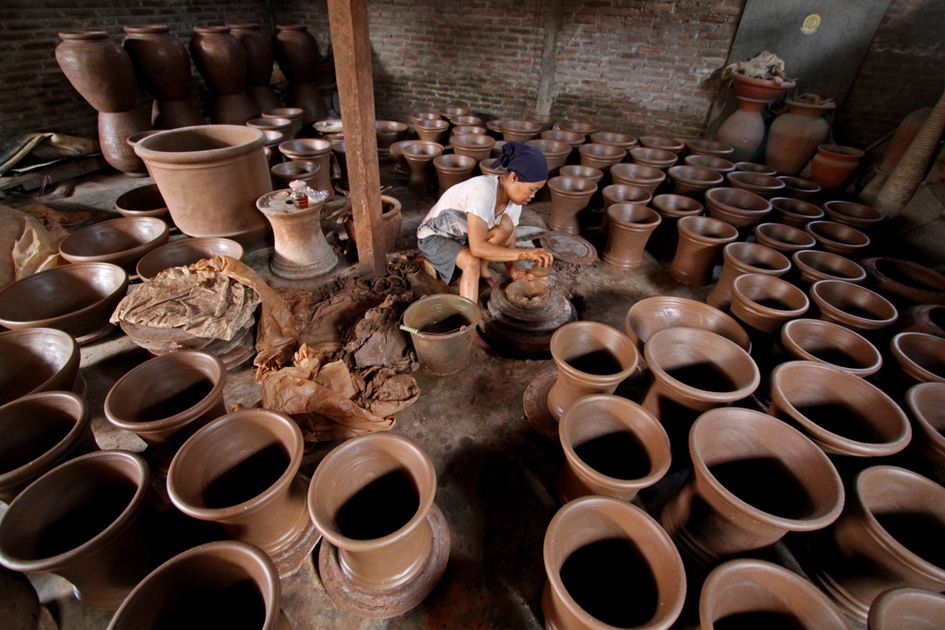
Traditional Balinese earthenware, called gerabah, is fired at low temperatures, with a maximum of around 650 degrees Celsius. That makes it porous and fragile compared with modern stoneware, so it chips and cracks more easily. It is beautiful, but it needs gentler handling than the glazed ceramics sold in resort shops.
FactWhat the old pots were for
For generations, large terracotta pots were the way Balinese households stored water, cooked rice and kept food. A tall water jar by the door and a clay cooking pot over the fire were everyday sights in every village compound. As plastic and metal took over, fewer households use the old pots, and potters turned to roof tiles, tableware and decorative work instead.
PlacePejaten: Bali's terracotta village
Pejaten, a small village about 15 kilometres northwest of Denpasar in Tabanan regency, has long been known as the hub of Bali's terracotta industry. Its decorative and roof tiles and its earthenware have been exported to Japan, the United States and Europe. At one time it was said that about 90 percent of Pejaten villagers were terracotta craftsmen, with a small workshop in most homes.
FactPejaten's red clay ran out
Pejaten's fame rested on its excellent red clay, but the village clay was mined out and began running short in the early 1980s. Today almost 95 percent of the clay used in the village comes from outside it, from supplier villages such as Bantas and Selemadeg, and fine white clay is brought in from Malang in East Java. The craft survived by adapting, not by standing still.
FactFrom roof tiles to porcelain
When demand for household pottery fell in the 1970s, Pejaten turned its skills to ceramic roof tiles, which the island's building trade needed in large numbers. Then in 1985 villagers began experimenting with high-temperature porcelain, and within a few years Pejaten was turning out dinner sets, elegant bowls, delicate animal figurines and open lattice-work filigree vases. The village now makes both humble terracotta and fine glazed ceramics.
FigureOne Pejaten workshop makes about 5,000 pieces a month
Ngurah Gusti Suryasa pioneered Pejaten's small-scale ceramic home industry in 1987, learning glazing in training courses in Malang and Bandung and then perfecting his recipes by trial and error. His factory grew to around 80 workers, most of them women, producing about 5,000 ceramic pieces a month. His trademark is a tosca-green glaze, with animal shapes such as fish, lizards, frogs and turtles climbing out of sugar bowls, teapot lids and perfume jars.
FactRoof tiles with gods on them
Pejaten's terracotta roof tiles are not plain: many carry reliefs of gods, goddesses and wayang heroes, in a style said to have been introduced by the painter Kay It. Special clay pieces cap the ridgelines of roofs, with the middle cap piece and end pieces especially decorative. Look up at the roofs of Balinese houses and temples and you will see Pejaten's work overhead.
FactCoconut husk kilns
In Pejaten the tiles are dried slowly in large racks, which takes a long time in Bali's humid tropical climate, and then fired in large brick kilns. The kilns are heated by burning coconut husks and wood scraps in hearths at the bottom, while the tiles are stacked in at the top. Smoke from dozens of these kilns drifts over the village on firing days.
FactPejaten's humorous clay figures
Pejaten is also known for grotesque, humorous standing clay figures inspired by the stories of the Ramayana and Mahabharata. They decorate gardens and walls all over Bali, grinning, grimacing and gesturing at passers-by. They are a reminder that Balinese pottery has always had a playful side as well as a sacred one.
PlaceTanteri Museum of Ceramic Art, Pejaten
The Tanteri Museum of Ceramic Art stands in Banjar Simpangan, Pejaten, in Kediri district, Tabanan, about 28 kilometres from the airport. It was founded in 2011 and named after I Made Tanteri, the village head who pioneered ceramic development in Pejaten in the 1980s. The museum collects traditional gerabah and contemporary ceramics from Bali and across Indonesia, and some of the pieces on display are more than 400 years old.
TipTry the wheel at Tanteri
Visitors to the Tanteri Museum can watch potters at work and try wheel-throwing and decorating with Balinese motifs, making a piece to take home. Museum entry is around IDR 20,000 for domestic visitors and IDR 40,000 for foreign visitors, and workshops start from around IDR 75,000 to 150,000, so check prices before you go. Children under 12 enter free, and the museum is generally open Monday to Saturday, 9am to 5pm.
FactTanteri Ceramic: from family workshop to export tableware
Tanteri Ceramic began as a family business in 1987 and grew into one of Bali's largest ceramic producers, making fine dining tableware that is exported to Europe and beyond. Its pieces are high-fired, glazed and made to restaurant standards, a world away from the low-fired earthenware of the old village kilns. You can see the whole range, from simple flower vases to intricate glazed designs, in the showroom beside the museum.
PlaceBasang Tamiang: pottery by hand, the old way
Banjar Basang Tamiang, in Kapal village, Mengwi, Badung, is Bali's other great pottery centre, and it works in the oldest way of all. Everything is made by hand using a traditional tool called the pemubutan, with no moulds and no electric wheels. Local tradition dates the craft here to around 1103 in the Balinese Saka calendar, and links it to King Sri Aji Jaya Pangus, who is said to have brought pottery knowledge back from an expedition to China.
FactThe pemubutan: Bali's hand wheel
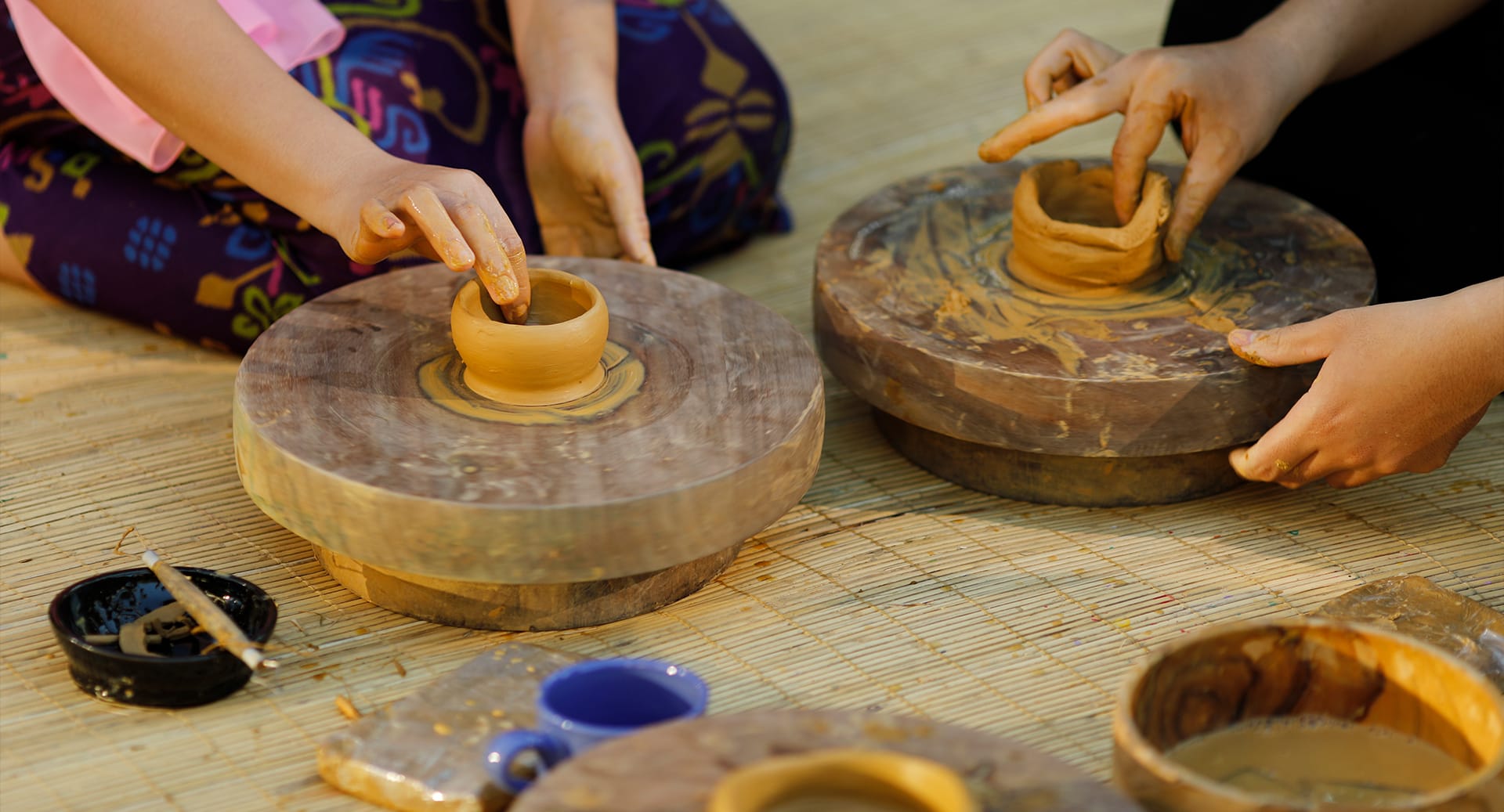
The pemubutan is a simple hand-turned wheel, and it is the only shaping tool used at Basang Tamiang. The clay is first dried in the sun, then mixed with crushed and sifted rock and enough water to make a workable dough. A skilled potter can shape hundreds of pieces a day on it, and the finished pots still bear the marks of the maker's hands.
FactCeremony pots: jun, carat and coblong
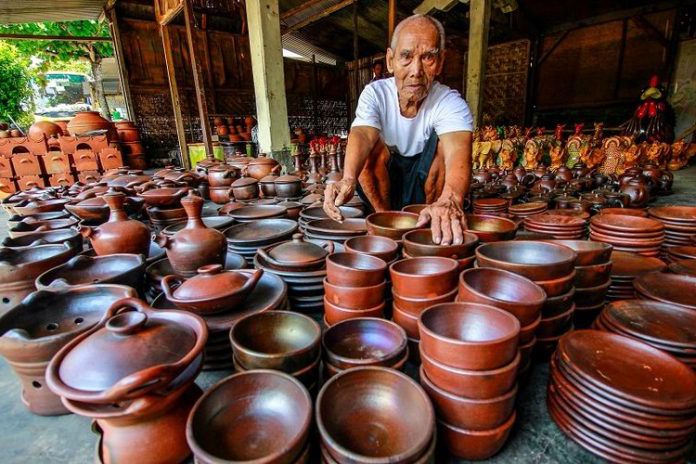
Much of what Basang Tamiang makes is for religious ceremony, not for tourists: jun pere and jun tandeg water jars, carat water vessels, coblong offering bowls and dulang trays. The same workshops also make everyday pieces such as cooking pots, piggy banks and clay barrels. If you visit, the pots stacked along the roadside are mostly destined for temples and family shrines across Bali.
FactA vow keeps the craft alive
In Basang Tamiang, pottery is more than a livelihood: families believe the descendants of the potters must carry the craft on, and that abandoning it would bring misfortune. There is even a village agreement that no pottery may be made while ceremonies are under way at Pura Dalem Bangun Sakti, the temple the craft is tied to. The craft is now recognised as part of Bali's intangible cultural heritage, but researchers warn the younger generation shows little interest in becoming potters.
TipPottery on the roadside at Kapal
Drive along Jalan Raya Kapal in Badung and you will see rows of gerabah for sale along the road, with workshops tucked into the houses behind them. It is one of the easiest places to watch traditional potters at work without a tour or a ticket. Stop, watch for a while, and ask before photographing people at work; a small purchase is always appreciated.
FactBanyuning and Binoh: the older centres
Pejaten and Kapal are not the only old pottery villages. Banyuning in north Bali still makes ritual pottery that is recognised as intangible cultural heritage, and Binoh in Ubung Kaja, Denpasar, was a pottery centre in the past, with ancient traces of the craft found by archaeologists. Many of these smaller centres have faded as factory-made goods took their market, which makes the surviving villages all the more worth visiting.
FactPottery in ceremony: holy water and offerings
Clay vessels are woven into Balinese Hindu ritual: carat and coblong hold tirta, holy water, and clay pots store rice and carry offerings to the temple. Pottery is required for ceremonies, so demand for the traditional forms never disappears, even when tourists stop buying. The ornaments on Pejaten pottery, gods, divine weapons, barong and sacred animals, come directly from this ceremonial world.
FactHand-building, coil and wheel
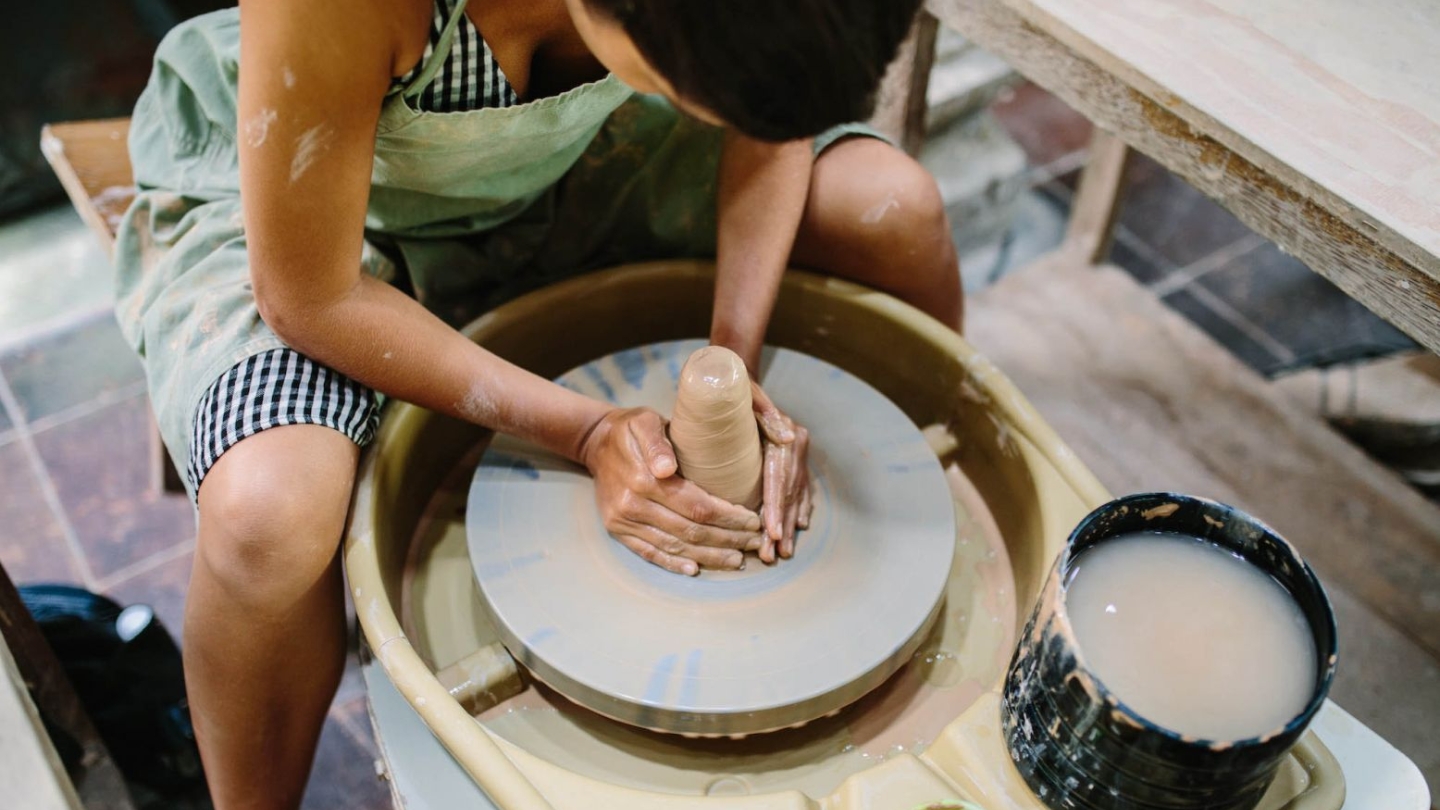
Balinese potters shape clay by pinching, coiling, slab-building and wheel-throwing, and a good workshop class will let you try several of them. Coiling, rolling out long snakes of clay and joining them ring by ring, is the oldest technique and still the way large jars are built. Wheel-throwing looks easy and is not: centring the clay takes practice, so expect your first pot to wobble.
FactLow fire or high fire: know what you are buying
Traditional gerabah is low-fired and porous, which means it is not food-safe and can stain or crack if soaked. Modern stoneware and porcelain from studios such as Jenggala, Kevala and Gaya are high-fired, glazed inside and out, and safe for food and drink. Before you buy a bowl or mug for daily use, ask whether it is glazed inside and whether it can go in the microwave or dishwasher.
PlaceSerayu Pottery, Ubud
Serayu Pottery, at Jl Gunung Sari No. 3 in Peliatan, Ubud, is a small stone-walled studio that has become one of Ubud's best-known pottery classes. You can choose earthenware or stoneware clay: earthenware is easier for beginners, while stoneware is tougher and food-safe. Classes cost around IDR 300,000 to 425,000 for about 60 minutes on the wheel with 2 kg of clay, and finished pieces are ready in 10 to 14 days. Classes are by appointment only, daily 9am to 5pm.
PlaceSetungku Ceramics, Ubud
Setungku Ceramics in Teges, Ubud, offers wheel-throwing and hand-building workshops in a relaxed studio setting. A wheel-throwing session costs around IDR 380,000 for 1.5 hours with 1.5 kg of clay and two pieces to be fired, while the full experience, both wheel and hand-building, costs around IDR 450,000 for 2.5 hours and three pieces. Fired pieces take 3 to 4 weeks, so book early in your trip if you want to take yours home.
PlaceKevala Studio, Sanur
Kevala Studio, at Jl Danau Poso No. 20 in Sanur Kauh, is the workshop arm of Kevala Ceramics, whose hand-painted tableware appears in restaurants all over Bali. It runs eight different workshops, from introduction to wheel throwing and hand-building to decorating, painting a piece, and classes for kids. Classes start from around IDR 300,000, and the studio is open daily from 9am to 5pm. Kevala's shops in Sanur, Ubud and Uluwatu are good places to buy finished pieces.
PlaceJenggala, Jimbaran: make a pot
Jenggala was founded in Bali in 1976 and is one of the island's most storied ceramics names, with its headquarters and studio at Jl Uluwatu II in Jimbaran, open 9am to 7pm. Its 'Make a Pot' hand-building class costs around IDR 550,000 per person for two hours, including 1 kg of stoneware clay, tools and glazes, and you learn pinching, coiling and slab techniques. Drying and firing take 2 to 3 weeks, and there is also a wheel-throwing session for beginners.
PlaceGaya Ceramic, Ubud
Gaya Ceramic in Ubud was founded by Italians Marcello and Michela, who moved to Bali in 2001 to build a place where craft and design would meet; the Gaya Ceramic Arts Center followed in 2010. The showroom at Jl Raya Sayan 105 is open daily 9am to 6pm, and the studio makes tableware, lighting and artworks for clients including Armani Casa and Bulgari Hotels. A one-day private class costs around US$100 and a one-week immersion around US$700, with firing charged separately by weight.
TipHandmade or moulded? How to tell
Turn a piece over and look at the base: hand-thrown ceramics often show soft spiral marks where the clay was trimmed, while factory pieces tend to have perfectly smooth bases and moulded brand stamps. Run your fingers along the inside wall of a bowl or mug; subtle ridges left by the potter's hands are a sign of craft, while perfectly uniform walls suggest industrial production. Slight differences between two 'identical' pieces are a good sign, not a flaw.
TipGetting pottery home in one piece
Wrap each piece individually so no ceramic surface touches another, and pack it in the centre of your suitcase, not at the edges, with soft clothing or bubble wrap around it. Never stack bowls or plates without protection between them, and fill empty spaces so nothing can shift. For larger pieces, ask the shop to arrange shipping: reputable stores can pack and send ceramics internationally, though you should ask about insurance and delivery times first.
TipCaring for terracotta at home
Unglazed terracotta is porous, so do not soak it and do not put it in the dishwasher; wash it by hand and let it dry fully. A new earthenware pot can be seasoned by soaking it in water before first use, which helps stop it absorbing liquid from food. Keep low-fired pieces out of the freezer and away from sudden heat, and remember they are display and dry-storage pieces unless the seller tells you they are glazed and food-safe.
TipWords to know
tanah liat — clay;
gerabah — traditional earthenware;
tembikar — pottery; ceramics;
genteng — roof tile;
kendi — spouted water pitcher;
jun — large water jar;
carat — ceremonial water vessel;
coblong — ceremonial offering bowl;
dulang — offering tray;
periuk — cooking pot;
belanga — wide earthenware cooking pot;
tempayan — large storage jar;
pasu — flower pot;
tungku — clay stove; kiln hearth;
pembakaran — firing;
glasir — glaze;
roda putar — potter's wheel;
pemubutan — traditional hand-turned wheel;
tanah merah — red clay;
tirta — holy water;
sangging — artisan clan of sculptors and potters;
porselen — porcelain
See also: related sets
Related cards in other sets — tap one to jump to it.