FactWhat is wayang kulit?
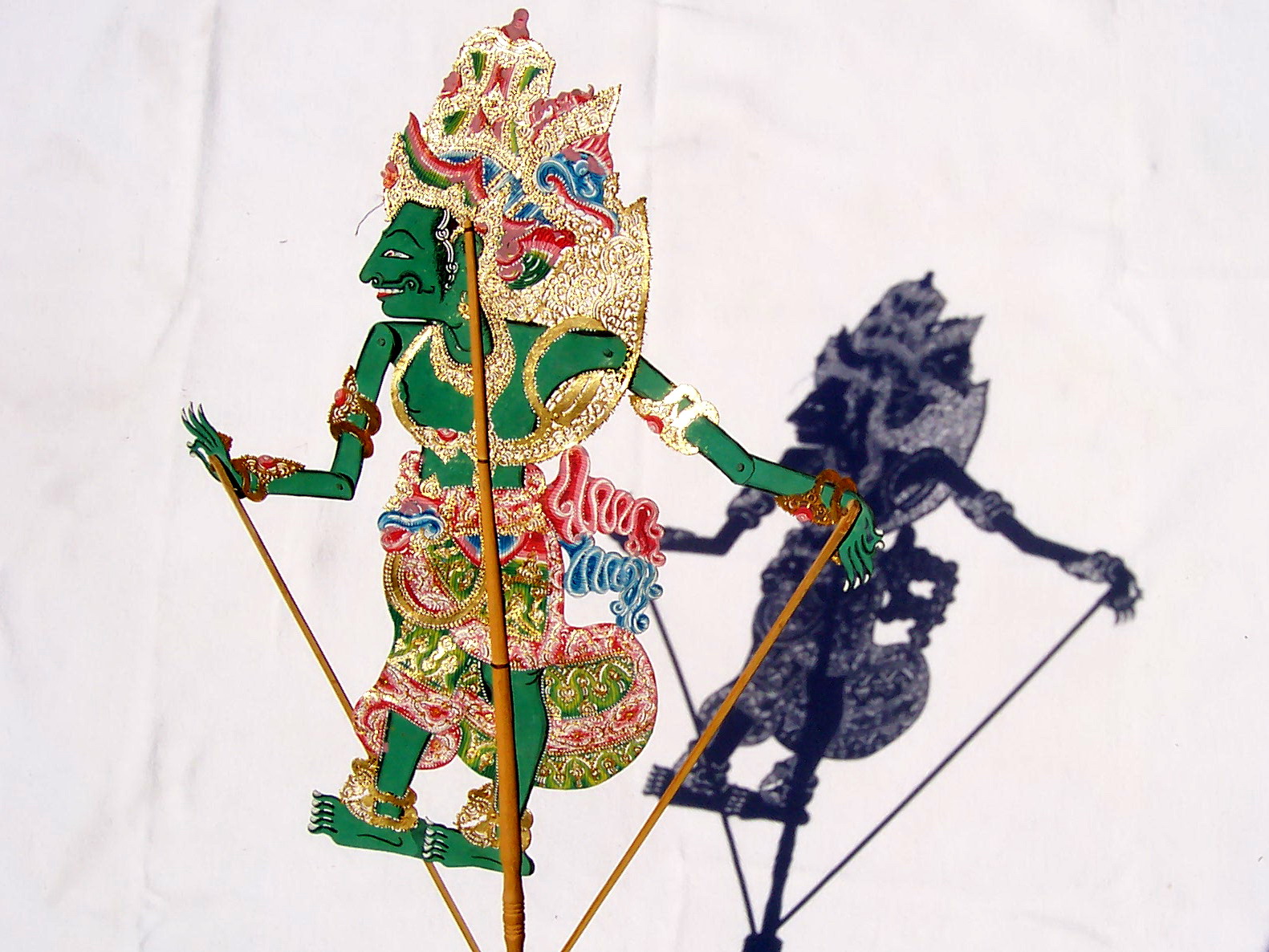
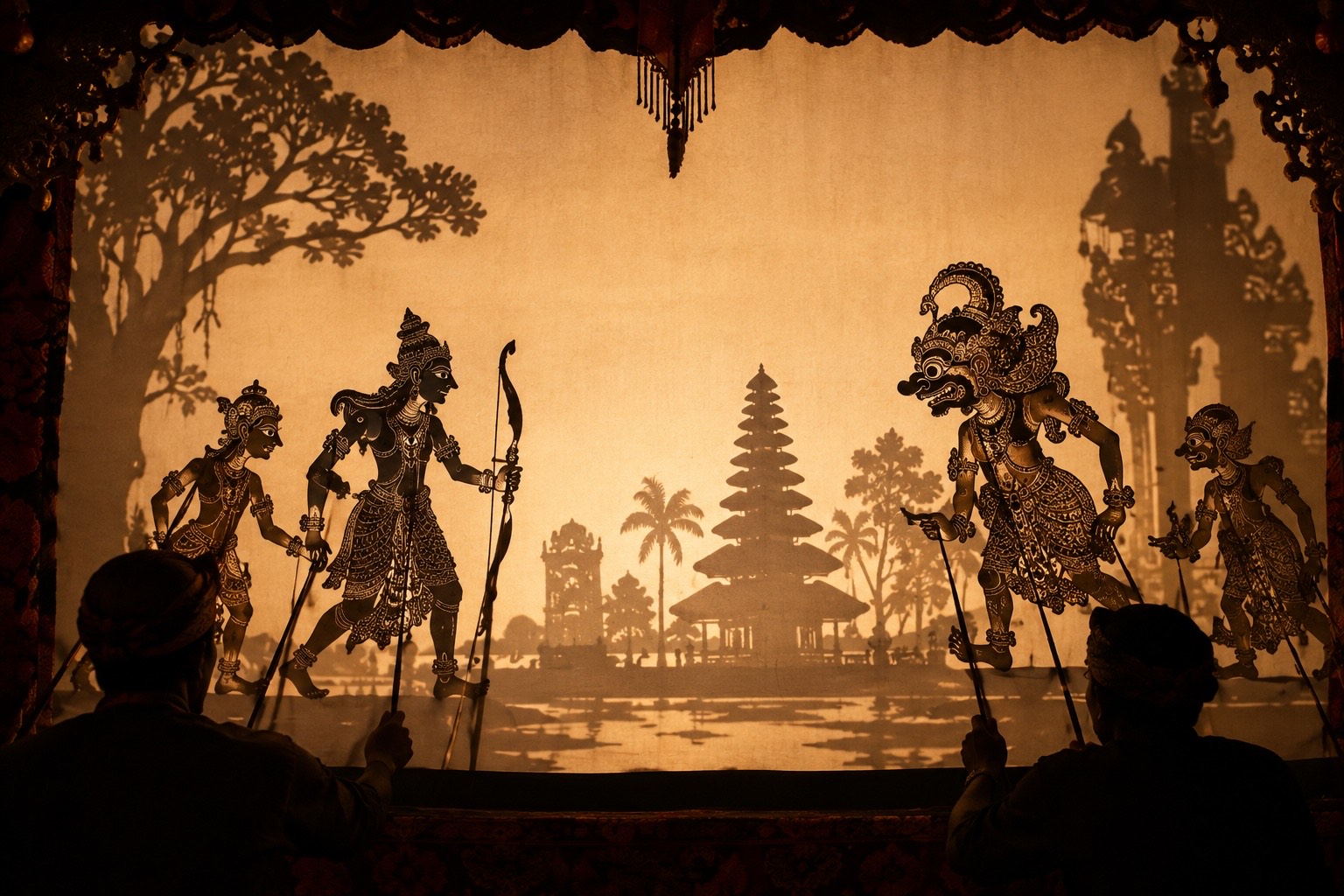
Wayang kulit is Bali's shadow puppet theatre: intricately carved leather puppets are moved behind a backlit white screen, the kelir, so the audience watches their shadows. A coconut-oil lamp, or today often an electric light, casts the shadows while a gamelan orchestra plays behind the puppeteer. It is entertainment, ritual and moral lesson in one, and UNESCO listed Indonesian wayang as intangible cultural heritage in 2008.
FactThe dalang: one man, every voice
The dalang is the puppeteer, and he does everything: he moves the puppets, voices every character from hero to clown, sings, and conducts the gamelan. He works from a long apprenticeship, often under a relative who is a master, and in Bali many dalang are also priests, known as mangku dalang. Through the clown characters he can joke about village gossip and even voice political opinions safely.
FactRamayana and Mahabharata, night after night
Wayang stories come from the Hindu epics, the Ramayana and the Mahabharata, with Balinese performances most often drawing on the Mahabharata. The same heroes return again and again: Rama and Sita, the Pandawa brothers, the clown servant Semar, who speaks for ordinary people. Knowing even the outline of one epic makes a performance far easier to follow.
FactAll night: 9pm to dawn, in three parts
A full village wayang runs through the night, roughly 9pm until dawn, in three parts: the characters and the conflict are introduced in the evening, the clowns appear and the battles rage around midnight, and the hero wins and the celebrations run until sunrise. The leading characters seldom appear before midnight. Staged shows for visitors are much shorter, around 75 to 90 minutes.
FactThe puppets: buffalo hide and gold paint
Wayang puppets are cut from buffalo hide, painted in bright colours with gold leaf, and worked with thin wooden rods — one for the body, one for each arm. A dalang's set lives in a large wooden chest, the kotak, and a good set can hold 30 to 60 figures. The puppet is said to represent only the physical part of a character, while its shadow represents the soul.
PlaceWhere to see it: Oka Kartini in Ubud
The best-known public wayang in Ubud is at Oka Kartini, on Wednesday, Friday and Sunday at 8pm, running about 75 minutes. The dalang narrates a Mahabharata episode in Balinese and Indonesian, with an English synopsis handed out before the show, and a small gamelan plays behind the screen. Tickets are around IDR 75,000 and the small venue means booking ahead is wise. The master dalang I Wayan Wija of Sukawati, creator of the wayang tantri animal fables in 1982, has long been connected with this stage.
TipRitual wayang vs the tourist show
Wayang belongs first to ritual: it is performed at weddings, tooth-filing ceremonies, cremations and temple festivals, where it can run all night for the family and the village. A staged show like Oka Kartini's is a shortened version made for visitors, in Balinese with a synopsis. If you hear of a village performance, go — they are announced in advance and anyone may watch the shadow side for free.
FactGamelan: the orchestra behind every performance
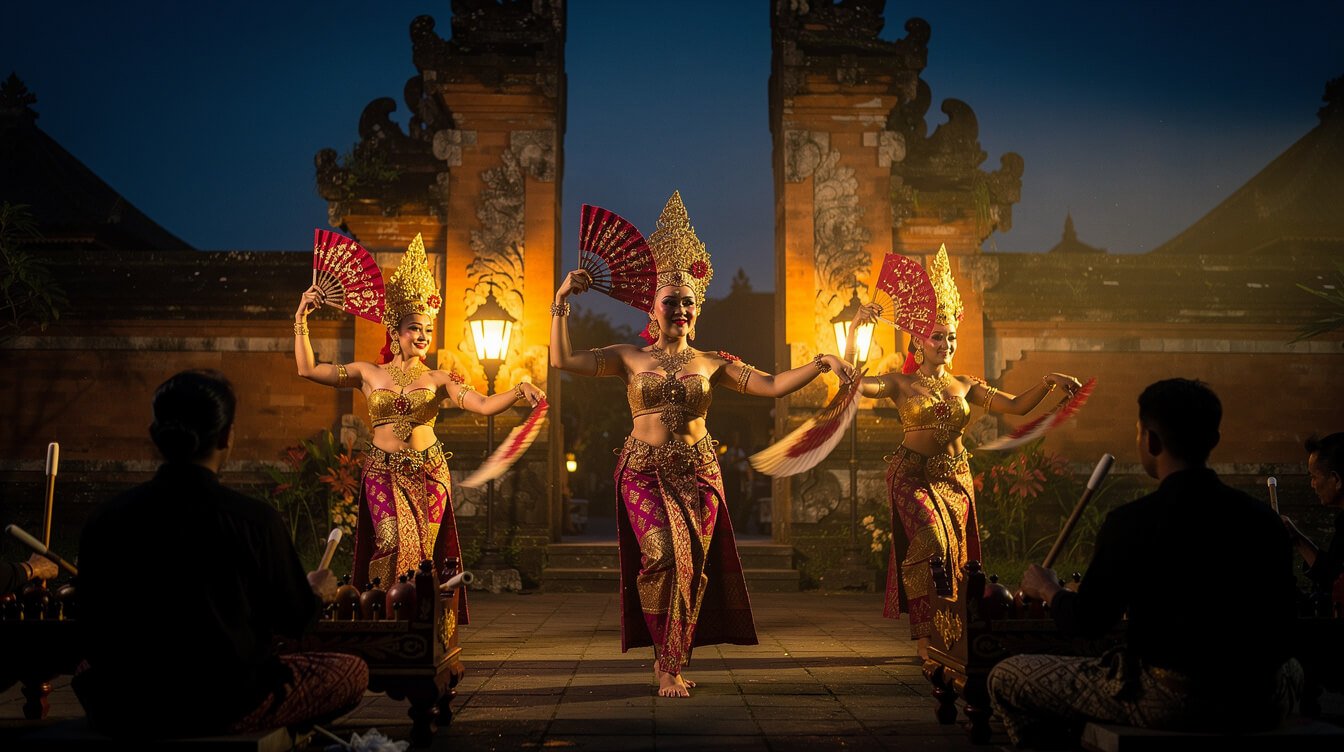
Almost every Balinese performance is accompanied by a gamelan, an orchestra of bronze gongs, metallophones, drums and flutes. The drummer, on the kendang, leads like a conductor, setting the tempo and cueing the dancers. A full ensemble can have 25 musicians or more, and for wayang the smaller gender wayang quartet often plays instead. The music follows the performers, not the other way round.
FactGong Kebyar: the competition that fills the amphitheatre
The centrepiece of the Bali Arts Festival is the Gong Kebyar competition, in which the best gamelan orchestras from Bali's regencies face each other on the open-air Ardha Candra stage in Denpasar. Kebyar means sudden or explosive, and the music is fast, loud and full of interlocking rhythms. Evening sessions run from about 7:30pm and the crowds are huge, so arrive early for a seat.
FigureBali Arts Festival: a month of performance
Pesta Kesenian Bali, the Bali Arts Festival, has run every year since 1979 at the Taman Werdhi Budaya Art Centre in Denpasar. The 48th edition ran from 13 June to 11 July 2026, with more than 500 events and more than 20,000 performers and artists. Entry to the art centre and most performances is free, and the daily schedule runs from morning workshops to the evening competitions and dance dramas.
FactKecak: 50 to 150 men, no instruments at all
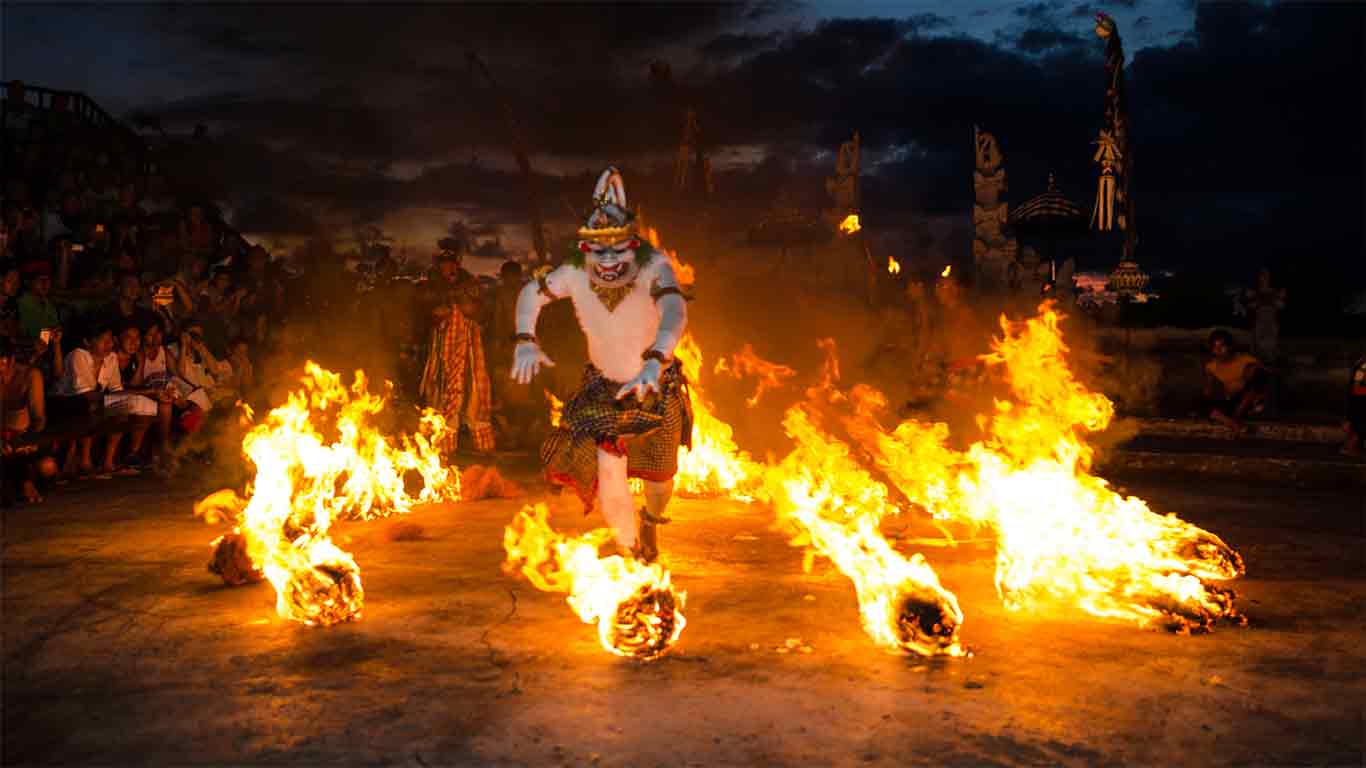
Kecak, the Ramayana monkey chant, is a dance-drama with no instruments: the whole orchestra is a chorus of 50 to 150 bare-chested men sitting in a circle chanting 'cak-cak-cak' in interlocking rhythms. Around them, dancers act out scenes from the Ramayana, the battle between Rama's monkey army, led by Hanuman, and the demon king Ravana. It is Bali's most famous performance, and the one most visitors see first.
PlaceKecak at Uluwatu at sunset
The Kecak fire dance plays daily at Uluwatu Temple's clifftop amphitheatre, with shows at 6pm and 7pm as the sun sets over the Indian Ocean, each lasting about an hour. Dance tickets are around IDR 150,000 for adults and IDR 75,000 for children, and the temple entry (around IDR 60,000) is charged separately. The 6pm show sells out most nights, so book online in advance and arrive by about 4:30pm for a good seat.
FactKecak's surprising birth
Kecak looks ancient, but it was shaped in the 1930s, when the German painter Walter Spies and the Balinese dancer I Wayan Limbak reworked the sanghyang trance ritual into a staged Ramayana drama for visitors. The chant grew from the ritual chorus, whose 'cak' syllables imitate the call of the gecko. Limbak's touring troupes then made it famous around the world, and he lived to 106, dying in 2003.
FactSendratari: the wordless epic
Sendratari is a large-scale dance-drama that tells a whole epic without spoken dialogue: a narrator speaks while a big cast dances to full gamelan. It was created in the 1960s by the choreographer I Wayan Beratha and others, drawing on the Ramayana sendratari first staged in Java in 1961. The Bali Arts Festival traditionally closes with a colossal sendratari on the Ardha Candra stage, often with hundreds of dancers.
FactWayang wong: the puppets come to life
Wayang wong turns the shadow puppets into people: masked dancers perform episodes of the Ramayana, with Rama, Sita and an army of monkey and demon masks. It combines dance, epic drama and music, and is sacred in many places, performed only at certain temple festivals by dancers chosen for the role, in villages such as Tejakula in north Bali. It is one of the nine dances in Bali's UNESCO listing.
FactArja: Bali's sung opera
Arja is Bali's sung opera, a dance-drama in which the performers sing their own dialogue to gamelan accompaniment, mixing refined court language with clownish comedy. It grew from the old gambuh theatre and was once the popular theatre of the villages. Today it is mostly seen at temple festivals and at the Bali Arts Festival, where its singing and comic timing make it a favourite with Balinese audiences.
FactGambuh: the oldest dance-drama
Gambuh is the oldest surviving Balinese dance-drama, with roots in the Javanese courts, and its slow, formal movements are the source of much later dance. It tells stories of Prince Panji to the sound of long bamboo flutes, performed by 25 to 40 dancers, and was once the royal theatre of the courts. It is rarely staged now, but the village of Batuan is known for keeping it alive.
PlaceBarong at Batubulan every morning
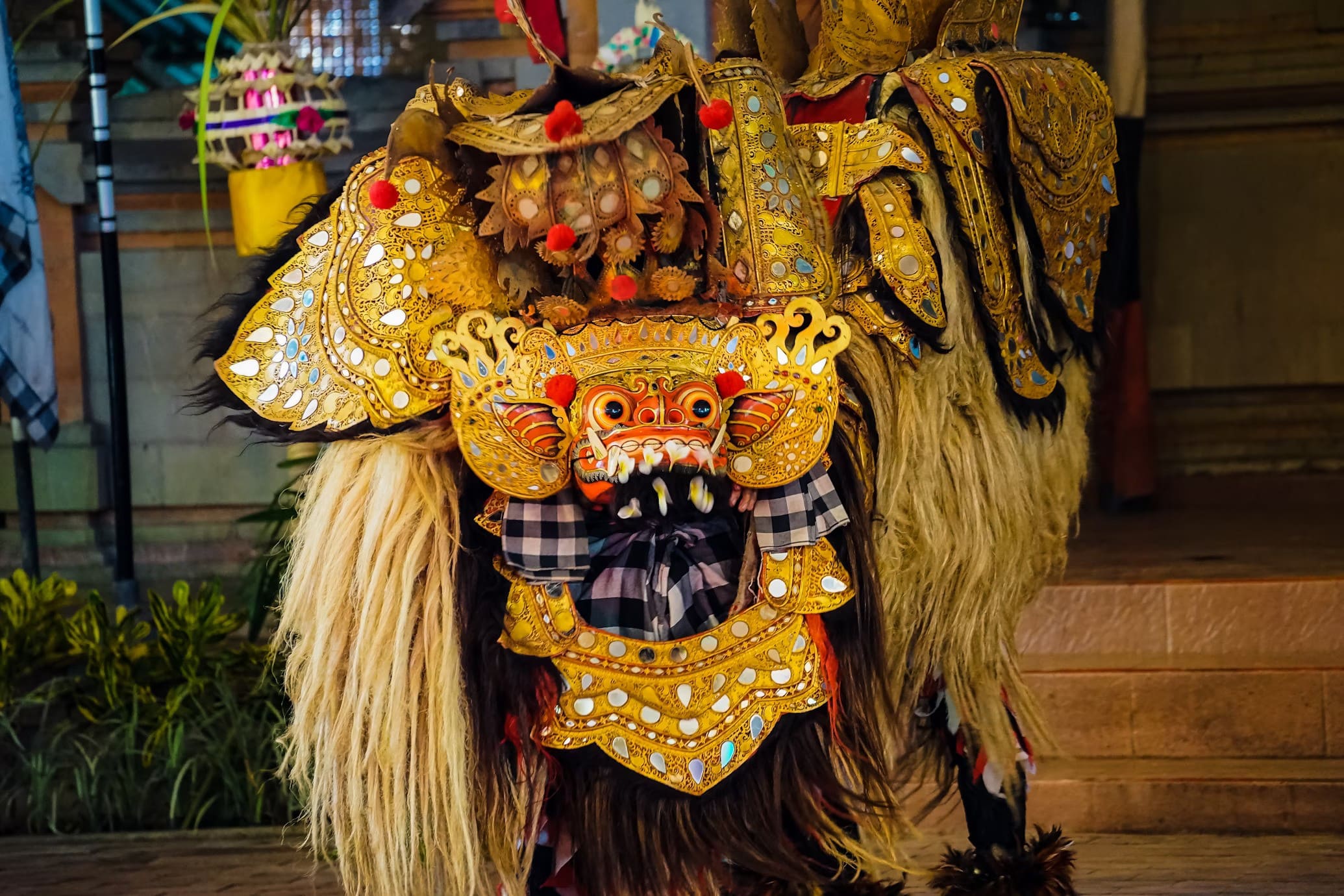
Batubulan, a village in Gianyar between Denpasar and Ubud, is the traditional home of the Barong dance, performed there daily at 9:30am for about an hour. The show tells the battle between Barong, the lion-like guardian spirit, and Rangda, the witch, ending in the famous kris dagger dance, in which warriors in trance turn their blades on themselves. Tickets are around IDR 100,000 to 150,000 for adults, and several stages operate in the village, so confirm the exact venue.
PlaceDevdan Show: Indonesia on one stage
The Devdan Show at Bali Nusa Dua Theatre is Bali's big modern stage show: 75 minutes of dance, acrobatics, illusion and special effects telling the story of Indonesia's cultures, from Bali and Java to Sumatra, Borneo and Papua. It plays Monday, Wednesday, Friday and Saturday at 7:30pm. International adult tickets run around IDR 500,000 to 1,300,000 depending on the seat, with children aged 4 to 12 at about half price, and the name comes from the Sanskrit for 'God's grace'.
PlaceBali Agung Show: 150 performers and live animals
The Bali Agung Show at Bali Safari & Marine Park in Gianyar is an extravagant indoor mega-stage show where around 150 Balinese dancers, musicians and shadow-puppet masters perform together with live animals. It runs Tuesday to Sunday from about 2:30 to 3:30pm, with no show on Mondays. It is included in the Jungle Hopper Legend ticket, around IDR 750,000 for an adult and IDR 620,000 for a child, which also covers the safari journey and animal presentations.
FactAerial acrobatics and circus in the big shows
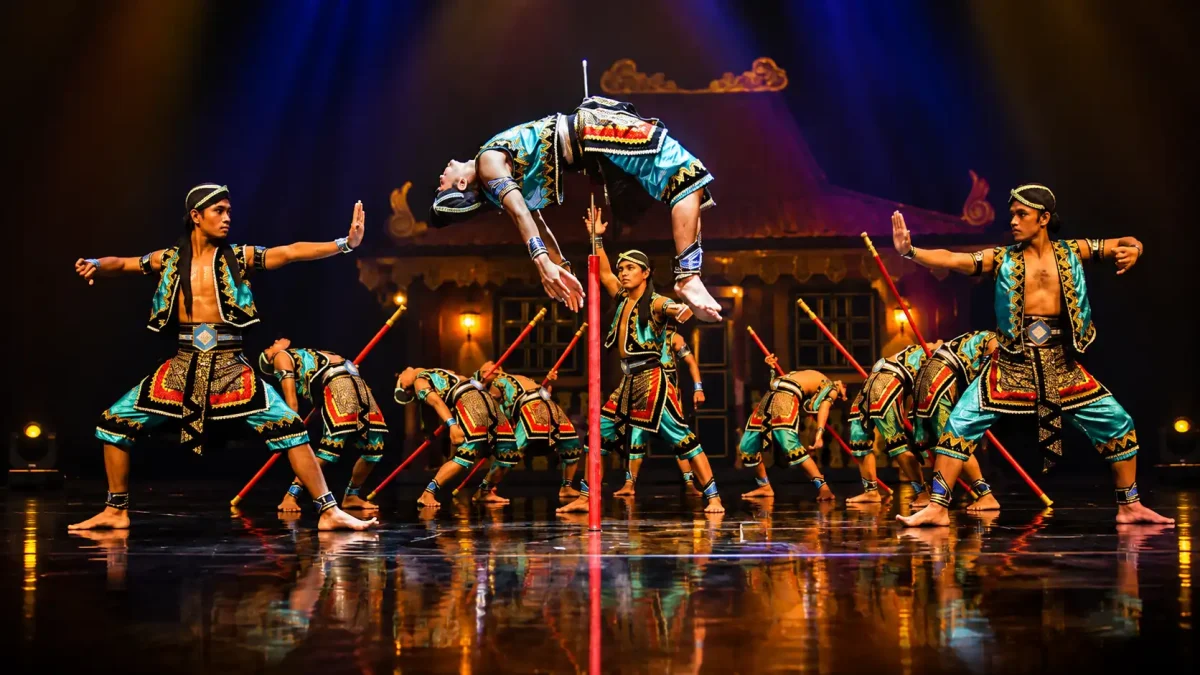
The modern stage shows borrow from the circus as well as from tradition: Devdan's cast includes aerial acrobats who spin and fly above the stage on silks and poles, and the Bali Agung Show mixes dance with animal acts. It is a different world from the temple courtyard — air conditioning, assigned seats and stage effects — and it is the easiest way to see many Indonesian traditions in a single evening.
FigureLive music after dark: Kuta, Seminyak, Canggu
Bali has far more live music than most visitors expect: one gig guide counted 221 live-music listings in a single month, led by Ubud with 67, Uluwatu with 45, Canggu with 24, Kuta with 20 and Seminyak with 18. Expect top-40 cover bands in the Kuta hotels and bars, jazz and acoustic duos in Seminyak, and reggae, rock and indie originals in Canggu. Many gigs are free, and most are weekly, so check the venue's social media on the day.
PlaceOld Man's: reggae Wednesdays in Canggu
Old Man's, the open-air bar on Batu Bolong beach in Canggu, is the beating heart of the island's live-music scene, with a stage by the pool and a genuinely mixed programme. Wednesday is reggae night, Canggu's longest-running weekly event, while Fridays turn to rock and funk. It is free to walk in, the crowd is surfers and travellers as much as music fans, and the bands are often better than the setting promises.
PlaceHard Rock Cafe: top-40 bands seven nights a week
The Hard Rock Cafe on Jalan Pantai Kuta in Kuta is the easiest big room in the south for a live band: top-40 bands play seven nights a week from about 10pm until late, with guest bands from across Indonesia and overseas. Its sister stage, Centerstage at the Hard Rock Hotel next door, runs bands seven nights a week too, starting earlier in the evening. Entry is often free, and it is the fallback when everywhere else is quiet.
Fact1931: Bali conquers Paris
In June to September 1931, 51 Balinese dancers and musicians performed at the Dutch Pavilion of the International Colonial Exhibition in Paris, led by the nobleman Tjokorde Gede Rake Soekawati. It was the first Balinese group ever to tour abroad, and the programmes were much like the shows already staged for tourists at the Bali Hotel. The French press loved them, and the tour put Balinese performance on the world map.
FactJohn Coast's 1952 world tour
In 1952 the British impresario John Coast took the Peliatan gamelan and dance group on a lavish tour of Europe and America, playing London, New York and Las Vegas. It was a sensation, and it impressed the intricacies of Balinese music and dance on an international audience for the first time. The group had first stunned Paris in 1931, and Coast, who had fallen in love with the music while interned in the war, spent the rest of his life promoting it.
FactWalter Spies and the invention of tourist performance
The German painter Walter Spies settled in Bali in 1927 and, with the artists and scholars who gathered around him in Ubud, helped shape the Bali the world knows. He supervised the first recordings of Balinese music in 1928 and 1929, commissioned the Kecak dance as a tourist entertainment with Katharane Mershon, and staged the kris dance for visitors from 1936. Much of what tourists watch today was first arranged for them in the 1930s.
FactTemple performances: ceremony first
Performance in Bali begins as ceremony, not entertainment: sacred wali dances are performed in the innermost temple courtyard as offerings to the gods, while secular balih-balihan dances play in the outer courtyard. A temple anniversary, an odalan, can run for days, with gamelan drifting from the temple from early morning. Visitors are welcome to watch respectfully from the edges, but the audience that matters is the gods.
PlaceUbud Palace: dance every night
Ubud Palace, Puri Saren Agung, stages a dance with live gamelan every night at 7:30pm, lasting about 75 to 90 minutes. The programme changes with the night: Legong Mahabharata on Sunday, Legong on Monday and Saturday, the Ramayana Ballet on Tuesday, Legong and Barong on Wednesday, Legong Trance on Thursday, and Barong on Friday. Tickets cost around IDR 100,000, and the front courtyards are free to wander by day.
TipWatching respectfully: etiquette and photography
At temple performances, wear a sarong and sash and dress modestly, covering shoulders and knees. Arrive early: the Ubud Palace shows and the Uluwatu kecak regularly sell out, and seating is unreserved. Keep phones silent, stay for the whole piece rather than drifting in and out, and at ceremonies remember the performance is sacred, so watch quietly from the edges and ask before photographing close up. At staged shows like Barong at Batubulan, photography is welcome but flash is not allowed.
TipWords to know
wayang — shadow puppet theatre; also the puppet itself;
dalang — the puppeteer and storyteller of wayang;
kelir — the white screen the shadows play on;
blencong — the oil lamp that lights the shadow screen;
lakon — the story or play being performed;
sendratari — wordless dance-drama with a large cast;
panggung — stage;
penonton — audience; spectator;
sekaa — a village club or group, such as a dance or gamelan group;
sanggar — an art studio or workshop;
gamelan — a percussion orchestra of bronze gongs, metallophones and drums;
kebyar — sudden, explosive; the fast, flashy style of gamelan;
arja — sung opera; dance-drama with sung dialogue;
topeng — masked dance theatre;
kecak — the chanting monkey dance performed by a male chorus;
barong — the lion-like guardian spirit, king of the good spirits;
ngibing — dancing along with the joged dancer;
joged — social dance; to dance for fun;
penasar — the comic servant-narrator who explains the story;
wali — sacred dance, performed as an offering to the gods;
balih-balihan — entertainment dance, performed for an audience
See also: related sets
Performance in Bali touches dance, music, temples and the monkey god's own story — these sets carry on from here.