FactWhat Bali leather is known for
Bali's leather trade is built on handbags, wallets, belts, sandals and jackets, plus the island's oldest leather craft of all: the carved wayang kulit shadow puppets. Most of the everyday goods are made in small workshops in Seminyak, Kerobokan, Kuta and Ubud, by hand rather than on factory lines. The look is relaxed and practical — soft cowhide, simple stitching, natural browns and tans — with carved and tooled decoration on the better pieces.
FactThe 1990s boom: how Seminyak became leather town
Bali's leather goods industry grew in the 1990s, when Seminyak changed from a quiet fishing village into a boutique shopping destination. Designers set up small workshops there using local labour, and the area is still the centre of the trade today, with rows of leather shops and tailors along Jalan Raya Seminyak, Jalan Raya Basangkasa and Jalan Drupadi. Many of the workshops you see in Seminyak and Kerobokan make genuine leather bags, wallets, belts, sandals and journals on site.
FactHandbags: the Bali bag
The classic Bali buy is a handmade leather handbag — crossbody bags, totes and woven leather-and-rattan combinations. Market stalls sell handbags from around IDR 400,000, approximately, while a well-made boutique bag in Seminyak or Ubud runs from around IDR 1,000,000 to 2,000,000 or more. Look for even stitching, a lined interior, solid brass hardware and edges that are burnished smooth rather than painted over.
FactWallets and belts: the small buys
Wallets and belts are the cheapest way into genuine Bali leather, starting from around IDR 150,000 at markets, approximately. A good wallet is cut from one piece of hide with the edges burnished, not glued layers that peel apart after a few months. Belts are usually sold by length and can be cut to size on the spot — ask the seller to punch an extra hole rather than buying a belt that is too long.
FactLeather sandals: the Kuta classic
Leather sandals are a Kuta and Poppies Lane staple: simple thongs and slides in tan, black and brown, made to be worn barefoot in the heat. Market sandals quoted at IDR 250,000 typically settle around IDR 120,000 to 150,000 after bargaining, approximately, and plain pairs can be found from around IDR 80,000. Try them on properly — cheap sandals often look good and hurt after an hour — and check that the sole is stitched, not just glued.
FactLeather jackets: the tailor's piece
A custom leather jacket is the big Bali leather purchase: shops in Seminyak, Legian and Kuta will make one to your measurements for around USD 80 to 150, approximately, or around IDR 2,900,000 for a made-to-measure jacket at a Legian tailor. Bring a photo of the style you want, choose the hide and lining from real swatches, and allow at least a week for production plus a fitting. A jacket made for Bali's evenings needs a lighter hide and lining than one made for a European winter.
FactWayang kulit: leather shadow puppets
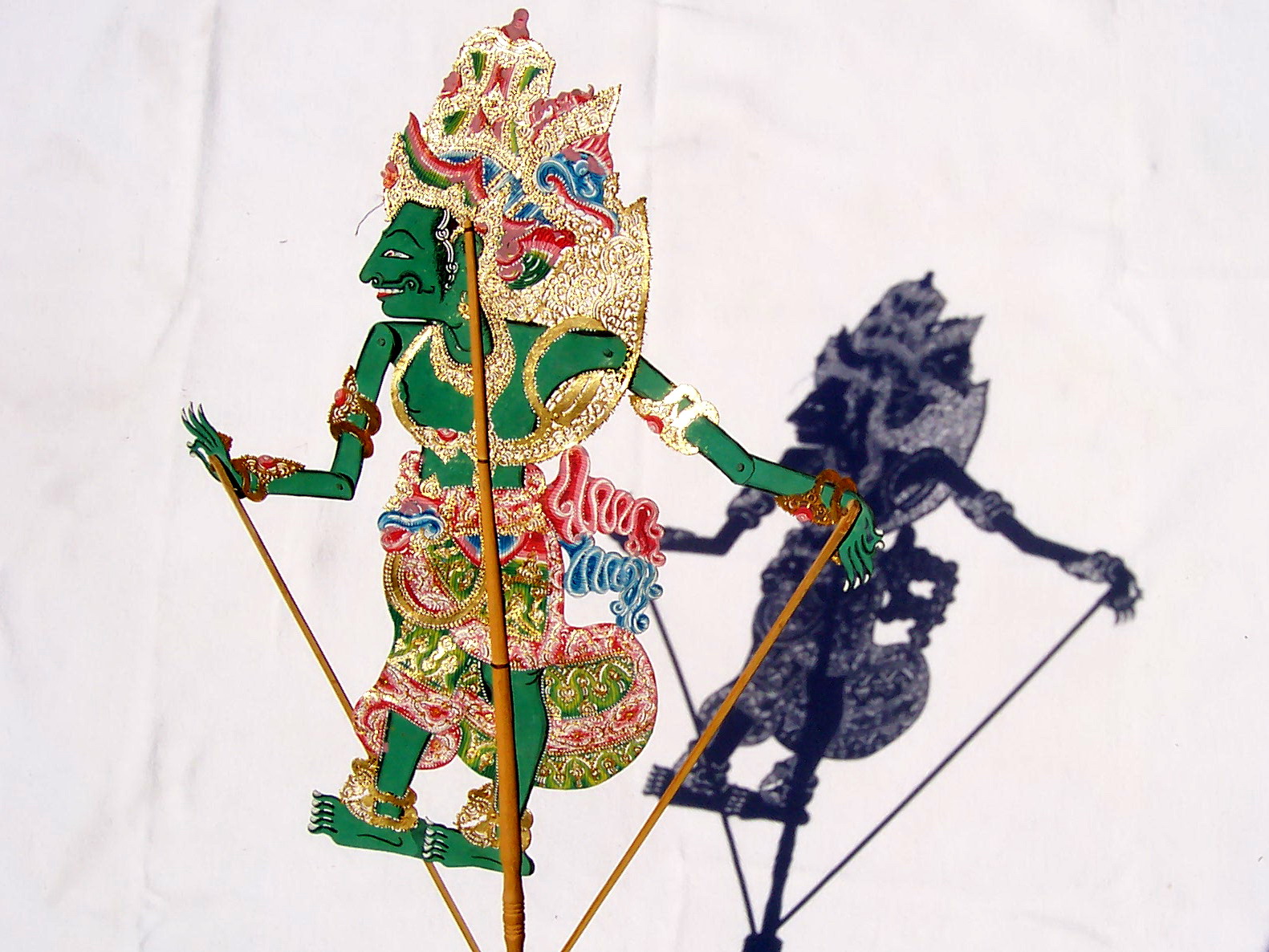
Wayang kulit — wayang means shadow, kulit means skin — is Bali's oldest leather craft: flat puppets carved from thin buffalo or cow hide, painted in bright colours and moved on rods behind a lit screen. The figures tell stories from the Ramayana and Mahabharata, and a single performance puppet can take several weeks of handwork. UNESCO listed wayang kulit as a Masterpiece of the Oral and Intangible Heritage of Humanity in 2003. A handcrafted puppet makes a striking souvenir, from around USD 100 to 175 for a good one.
PlaceSukawati: the puppet village
Sukawati, in Gianyar regency, is the village of the dalang — the puppet masters who make their own wayang kulit, carving the thin cattle hide and painting it themselves. At Banjar Babakan in Sukawati you can watch leather puppets being made at the home of the puppeteer I Wayan Nartha, at the end of a side street about 100 metres south of the market; it is best to call ahead to see if the house is open to visitors. Sukawati is also home to the Sukawati Art Market, one of the cheapest places on the island for leather bags and handicrafts.
PlaceSetia Darma House of Mask and Puppets
On Jalan Tegal Bingin in Sukawati, the Setia Darma House of Mask and Puppets holds more than 1,300 puppets and 5,000 masks from across Indonesia and beyond, displayed in five antique wooden joglo houses brought from Java. It was founded in 2004 by Agustinus Prayitno, who feared the traditional masks and puppets were disappearing. The wayang kulit rooms are the best place on the island to see the range of Balinese leather puppets — kings, gods, demons and clowns — up close.
FactPande kulit: the traditional leather artisans
Bali's traditional leather workers are called pande kulit, and their craft goes back centuries before the tourist trade: they made ceremonial masks and wayang puppets for temple performances, using techniques passed down through families. Modern workshops such as Kaula Bali in Kerobokan still work with vegetable-tanned leather using methods adapted from the pande kulit, with floral carving patterns that mirror those of the island's oldest villages. When a shop talks about 'traditional Balinese leatherwork', this is the tradition it means.
FactHow a wayang puppet is made
A wayang kulit puppet starts with a buffalo or cow hide, soaked, cleaned and dried until it is supple but firm. The maker traces a master pattern onto the leather, then cuts and punches the fine details — faces, crowns, clothing — with small chisels and awls, so light can shine through the holes. The figure is smoothed, painted by hand, and fitted with movable arms on bamboo or buffalo-horn rods. A set for one performance can take a team of artisans several weeks.
FactVegetable-tanned leather: the slow kind
Vegetable-tanned leather is tanned with plant tannins from bark and wood — chestnut, mimosa, quebracho and oak — in a process that takes 30 to 60 days. It starts firm and pale, holds tooling and carving well, and darkens over 18 to 24 months into a rich patina that is the leather itself changing colour, not a surface stain. Its cut edge is tan or brown all the way through, and it can be burnished to a glassy finish. It spots with water, so it needs a little more care than chrome-tanned leather.
FactChrome-tanned leather: the soft kind
Chrome-tanned leather is tanned with chromium salts in about a day, and it makes up most of the world's leather. It is soft and supple from day one, drapes well, dyes evenly in strong colours and copes better with water than vegetable-tanned leather. It barely changes with age — the colour you buy is the colour you keep — and its cut edge often shows a grey or bluish core. Most Bali jackets, soft bags and sandals are chrome-tanned, because that is what garment leather needs.
TipVeg-tan or chrome-tan: which to buy
Neither tanning method is a quality grade — both can be excellent or poor. Choose vegetable-tanned leather for belts, wallets, structured bags and anything you want to age into a patina, and for carved or tooled pieces, since only veg-tan holds a stamp. Choose chrome-tanned leather for jackets, soft slouchy bags and anything that will get wet, since it is softer, lighter and more water-tolerant. Ask the seller which it is: a reputable shop knows, and the answer tells you how the piece will age.
TipThe smell test: your nose knows
Real leather smells rich, earthy and slightly sweet, like a saddle or an old book — the scent comes from the tanning process and the natural oils in the hide, and it lingers for years. Fake leather, usually polyurethane (PU) or PVC, smells of chemicals, plastic or glue, especially when new. If a bag smells like a shower curtain or a new car interior, it is not real leather. Scented products can mask the smell, so use this test with the others, not on its own.
TipThe grain and edge test
Real leather has an irregular grain: uneven pores, small wrinkles, tiny scars and slightly different tones across the surface, because no two parts of a hide are identical. Fake leather has a perfectly repeating pattern, like wallpaper — hold it under bright light at an angle and the repetition gives it away. Run a finger along a cut edge: real leather looks fibrous and slightly rough, like felt, while fake leather has a smooth, sealed edge and often shows a fabric or foam backing.
TipThe water drop and press tests
Put a single drop of water on a hidden spot: on unfinished real leather it slowly soaks in and darkens the surface within seconds, while on fake leather it sits on top like water on plastic. Press a finger firmly into the surface: real leather wrinkles in a fine, natural pattern like skin and warms to your touch, while fake leather feels cool and clammy, springs back without a mark, or forms large uniform ripples. Finished leather resists water, so neither test is conclusive alone — use them together with the smell and grain tests.
TipThe label test: read before you pay
Read the label and ask what the leather is. 'Genuine leather' is a real but low grade — it is the split layer of the hide, not the top grain — and 'bonded leather' is leather dust glued onto a backing, which peels within a year or two. Full-grain and top-grain are the good grades. If a label only says 'made with leather' or does not state the material at all, ask the seller directly. A reputable Bali workshop will tell you the hide, the tanning and the grade without hesitation.
PlaceSeminyak Leather Bali: the big one
Seminyak Leather Bali, at Jalan Raya Basangkasa No. 15 in Seminyak, is one of the island's best-known leather shops, rated 4.9 from more than 200 reviews. It sells bags, boots, jackets, sandals and laptop bags, and takes custom orders — bring a photo or a sketch and the staff will design a piece with you. Allow at least a week for custom production. It is a good first stop for comparing quality and prices before you buy anywhere else.
PlaceLarisse Leather Bali: custom since 2007
Larisse Leather Bali, founded in 2007 by Ibrahim, specialises in fully custom-made leather jackets, bags and shoes, with more than 17 years of experience. Every piece is made to order from your measurements and wishes, and you work directly with the makers through the design, from choosing the hide to the final fitting. The shop works with customers from Australia, the USA, Canada and Europe, and ships worldwide. A good choice if you want one piece made exactly for you rather than something off the shelf.
PlaceHK Leather & Tailor: Legian's made-to-order workshop
HK Leather & Tailor, at Jalan Mataram No. 18A in Legian, Kuta, makes custom suits, handmade leather boots, sandals, bags and belts to your measurements. You choose the materials, the design is discussed in person, measurements are taken, and everything is made to order in the Legian workshop with a fitting before you collect it. A black made-to-measure leather jacket costs around IDR 2,900,000, approximately. Home-visit consultations are available in Kuta, Canggu, Seminyak, Ubud and Uluwatu.
PlaceLemona Leather and Tailor: Seminyak and Pererenan
Lemona Leather and Tailor has two shops: one on Jalan Drupadi No. 17 in Seminyak and one on Jalan Pantai Pererenan No. 102 in Pererenan, Canggu. Both make custom leather goods — jackets, bags, shoes and cowboy boots — to order, and both are rated around 4.8 from dozens of reviews. The Pererenan shop is handy if you are staying in Canggu and do not want to drive to Seminyak for a fitting. Call or message ahead for custom work, since made-to-order pieces take days, not hours.
PlaceUbud's leather shops: Goutama Street
Ubud's leather shopping clusters on Jalan Goutama and Jalan Hanoman, where small shops sell handmade bags, wallets and sandals alongside the rattan bags the street is known for. Feodora Bali on Jalan Goutama No. 20 is rated 5.0 and open daily 9am to 10pm, and Adlongoods on Jalan Hanoman No. 10 is another well-rated leather shop. Santai Aja Bags, also on Goutama Street, makes hand-embroidered leather and rattan bags with bright, intricate patterns. Prices in Ubud run higher than Sukawati but the quality is generally better.
PlaceMake your own: the Kaula Bali leather workshop
Kaula Bali, in Gang Yogya, Kerobokan Kaja, runs hands-on leather workshops in a garden studio among the rice fields. You work with vegetable-tanned leather using techniques adapted from the pande kulit, and you can make a wallet, belt, notebook cover, sandals or a bag, from cutting and colouring through stitching to polishing. A session costs from around IDR 650,000 (about AUD 55), approximately, and runs about six hours. Book ahead — it is a small studio, not a drop-in.
FactMade to order: a jacket or bag in three days
Most Bali leather shops will copy a design from a photo: bring a picture of a designer handbag or a jacket you like, and they can usually make a version in about three days. A custom leather jacket runs around USD 80 to 150, approximately, and a stylish tan leather bag from around USD 40. Order early in your trip, not on the last day — you need time for a fitting and for adjustments, and a rushed job is the one that comes back wrong. Agree the price and the leather in writing before work starts.
FigureWhat leather costs: market to boutique
As a rough guide, all prices approximate: market wallets and belts from around IDR 150,000; market handbags from around IDR 400,000; leather sandals from around IDR 80,000 to 150,000 after bargaining; a boutique handbag from around IDR 1,000,000 to 2,000,000; a custom leather jacket around USD 80 to 150; a leather workshop session from around IDR 650,000. Prices vary by hide, hardware and how hard you bargain, and they are highest in the boutiques of Seminyak and Ubud and lowest at Sukawati Art Market.
PlaceSukawati Art Market: the cheapest leather
Sukawati Art Market is one of the cheapest places in Bali for souvenirs and handicrafts, and it is the best market for leather bags at low prices — real leather bags are one of the things shoppers single out there, along with sarongs, paintings and wood carvings. Head to the back lanes for the better stalls and be ready to bargain. The trade-off is quality: check every seam, zip and edge before you pay, because the cheapest bags are also the ones most likely to be bonded leather or PU.
TipBargaining for leather
Bargaining is expected at Sukawati Art Market, Ubud Art Market, Kuta Art Market, Poppies Lane and all street stalls — but not in the fixed-price boutiques of Seminyak and Ubud. As a rule, counter at about 40 percent of the first quote and expect to settle at 50 to 70 percent of it; in Kuta, sellers often open at three times the fair price. If the seller will not budge, walk to the next shop — the same bag is usually on sale three stalls down. Smile, stay friendly, and never bargain for something you do not intend to buy.
TipThe knockoff trap: fake designer bags
Bali is full of shops selling 'genuine designer' bags and watches that are not genuine at all — a Chanel watch for IDR 250,000 or a Jimmy Choo handbag for IDR 100,000 is a copy, however good it looks. The leather on knockoffs is usually PU or bonded leather that cracks and peels within months, and the stitching and hardware give it away up close. If you want a designer look, buy a well-made unbranded Bali bag instead: it will last longer, cost about the same, and nobody at home will mistake it for a fake.
TipLeather care in the tropics: beat the mould
Bali's humidity is leather's worst enemy: above 60 percent relative humidity, leather absorbs moisture, swells, and grows mould that stains and weakens the fibres. Never store leather in a plastic bag or a sealed box — trapped moisture is the most common cause of mould. Store bags in a breathable cotton dust bag, stuffed with tissue paper to hold their shape, in a ventilated room. Wipe mould off promptly with a dry cloth, let the piece air out fully, then condition it. Condition every few months with a thin, even layer of leather conditioner, and dry wet leather slowly at room temperature, never in direct sun or with a heater.
TipWords to know
kulit — leather; skin;
tas — bag;
dompet — wallet;
ikat pinggang — belt;
sandal — sandal;
jaket kulit — leather jacket;
sepatu — shoe;
pande kulit — leather artisan;
wayang kulit — shadow puppet; leather puppet;
dalang — puppeteer;
samak — to tan leather;
jahitan — stitching; seam;
ritsleting — zipper;
gesper — buckle;
tali — strap;
warna — colour;
asli — genuine; original;
tiruan — imitation; fake;
tawar-menawar — bargaining;
pasar — market;
toko — shop
See also: related sets
The markets are in Shopping, the puppet village in Bamboo, and the tailors in Textiles and tailoring.