FactWhat is a gamelan?
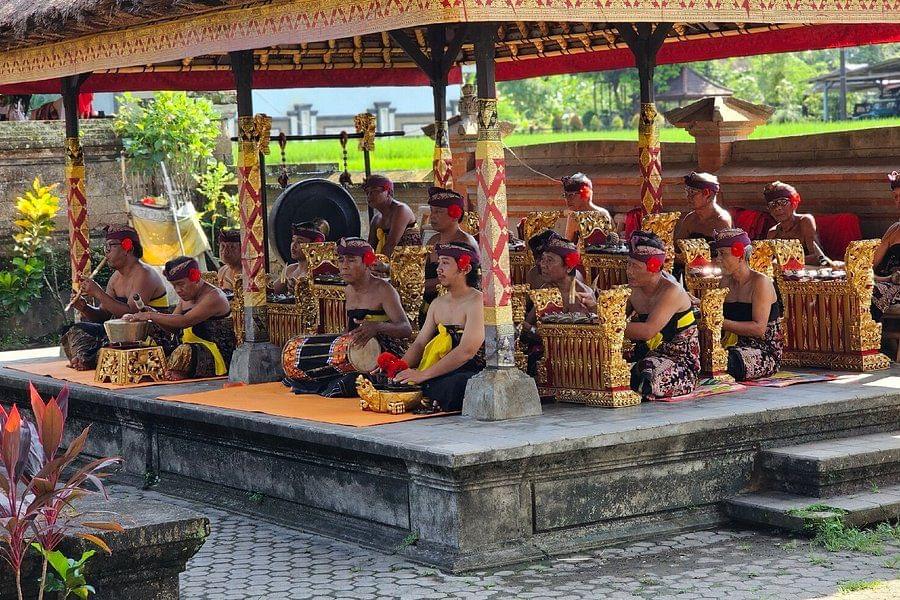
A gamelan is the traditional orchestra of Bali (and Java): an ensemble built mostly from bronze percussion — tuned metallophones, hanging gongs, kettle gongs and drums, with bamboo flutes and sometimes a bowed fiddle. It is the sound of Bali itself, played at temple festivals, weddings, cremations, dances and shadow-puppet shows. In December 2021 UNESCO inscribed gamelan on its Representative List of the Intangible Cultural Heritage of Humanity.
FactOne set, one tuning — no two gamelans alike
A gamelan is a single set of instruments, not a collection you can mix and match: every key and gong is cast and tuned to fit its own set, and there is no universal standard pitch like a piano's A at 440 hertz. Each set even has its own name, and players speak of 'our gong' the way a village speaks of its temple. Bali has dozens of different types of gamelan, each with its own repertoire and instruments.
FactThe gangsa — the metallophones that carry the tune
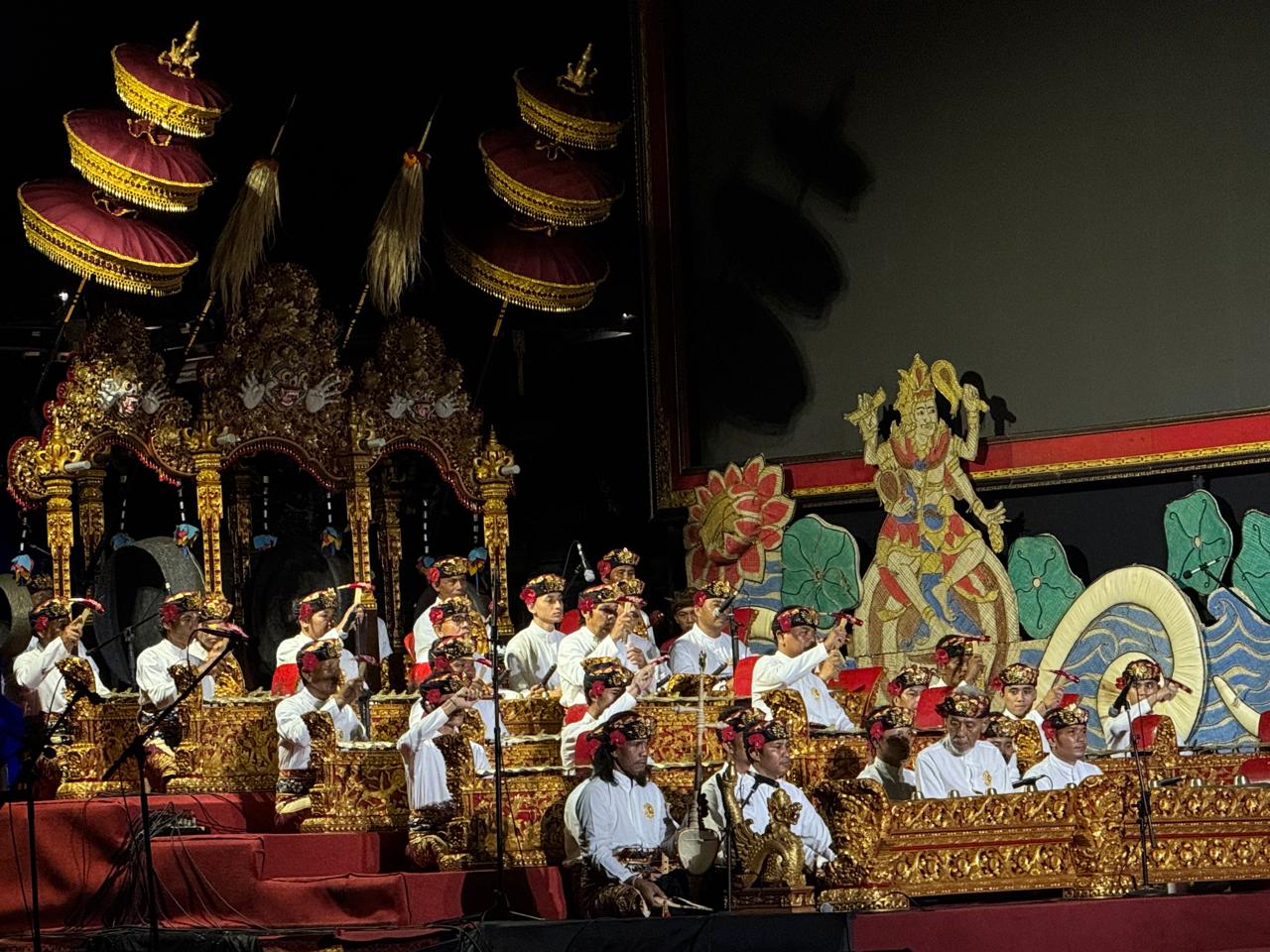
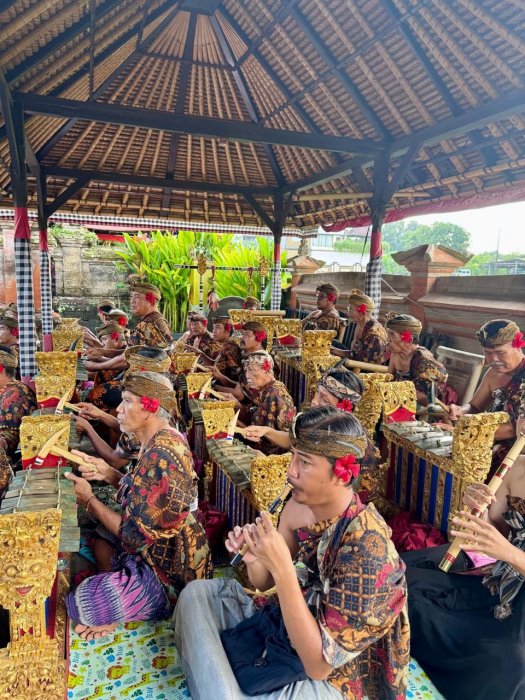
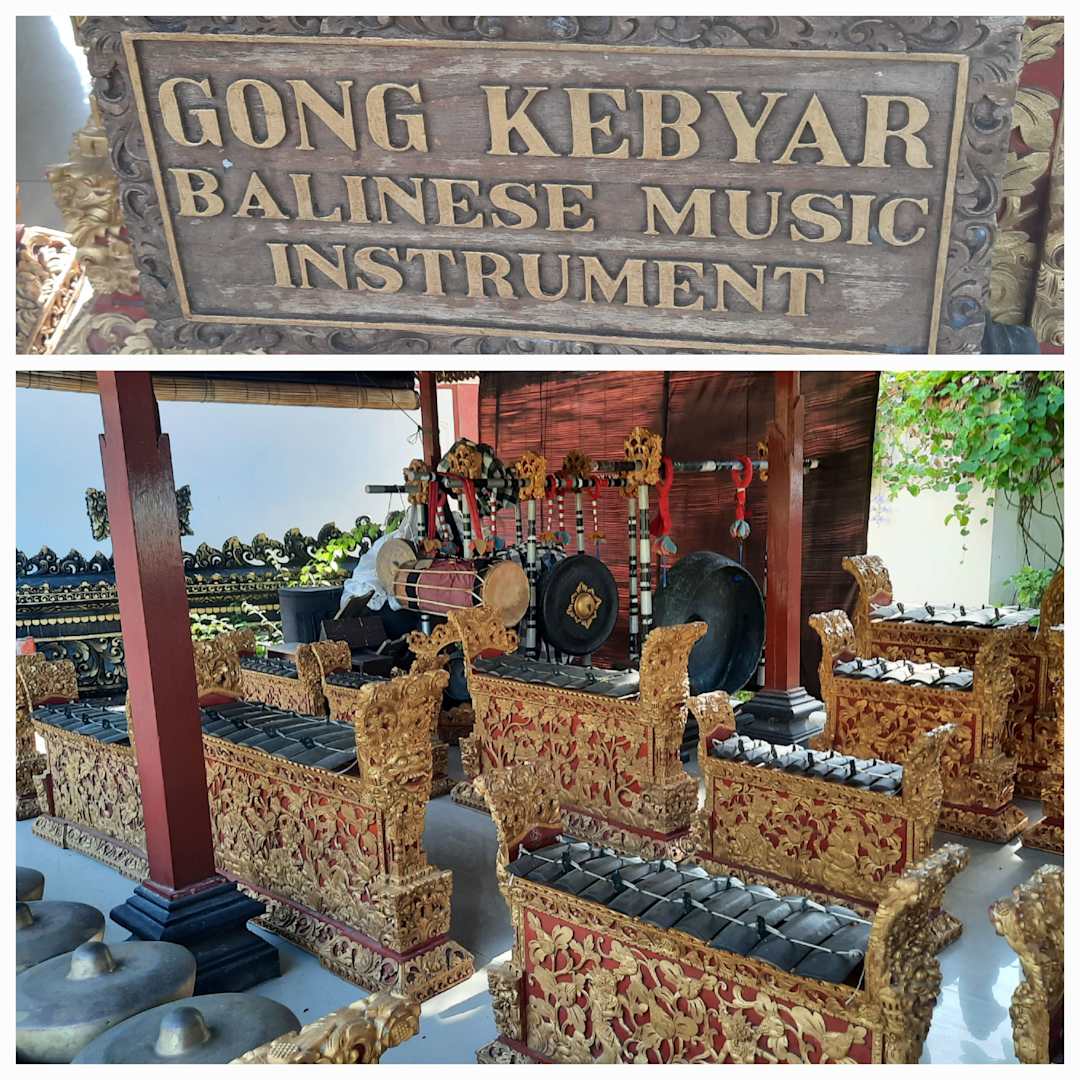
The front line of the orchestra is the gangsa: rows of heavy bronze keys suspended over tuned bamboo resonators, struck with mallets and dampened with the other hand. In gong kebyar the gangsa section is the largest, with 13 or 14 players, split by pitch into jegogan (lowest), calung, penyacah, ugal (the lead), pemade and kantilan (highest). They play the pokok, the core melody, dressed up with fast ornamentation — the 'flowers' on the trunk of the tree.
FactThe gong ageng and the gong cycle
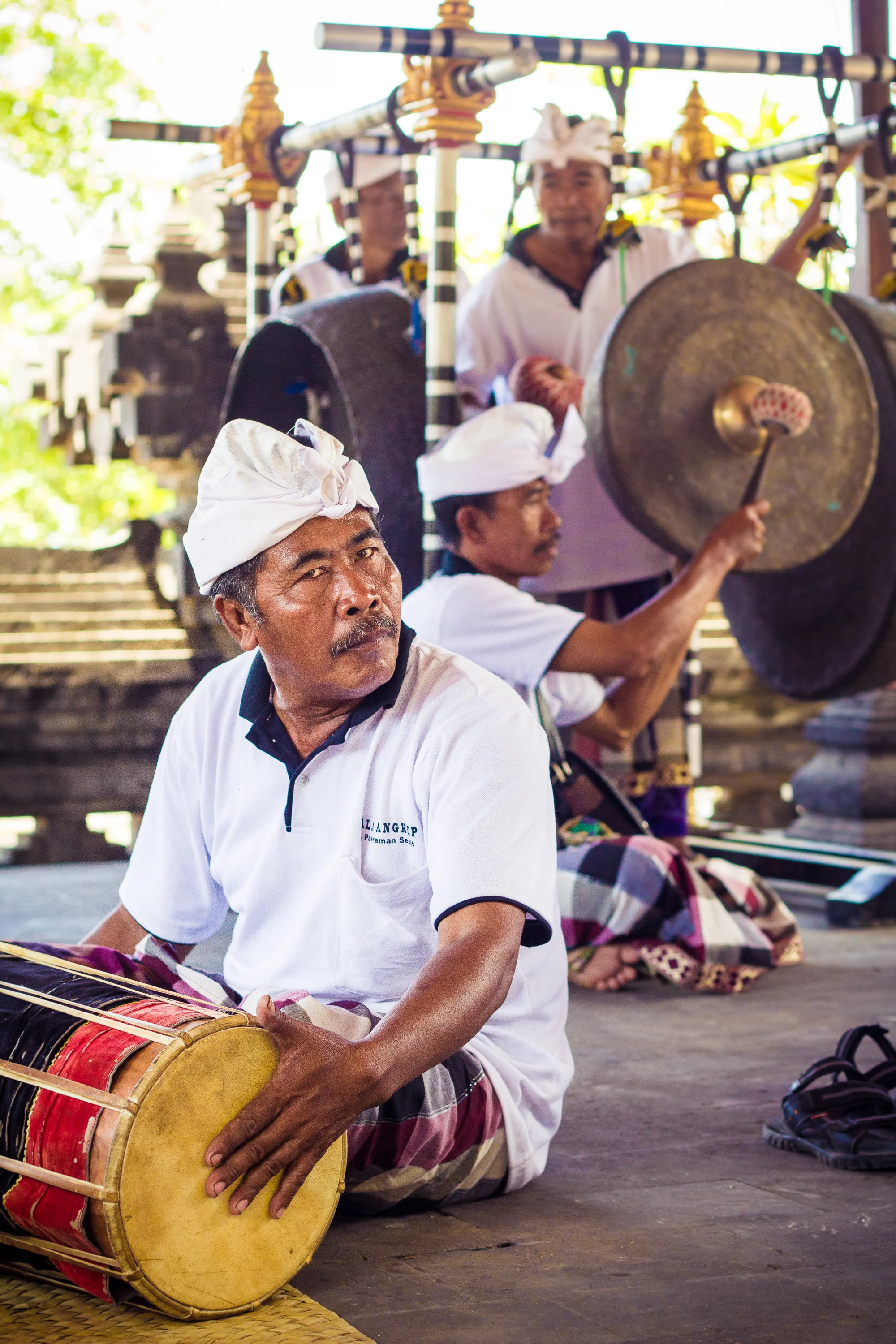
Balinese music is built in repeating cycles called gongan, and the great hanging bronze gong, the gong ageng, marks the end of each cycle with a deep, long-lasting stroke. Smaller gongs — kempur, kempli and kajar — mark the divisions inside the cycle. The gong is the most spiritual instrument in the set, and in a temple its sound is understood to reach the gods.
FactThe kendang — the conductor with no baton
Balinese gamelan has no conductor with a baton: the lead drummer does the job. The kendang is a pair of double-headed barrel drums of jackfruit wood and cowhide — the larger, lower wadon (female) and the smaller, higher lanang (male) — played with bare hands or a stick. The wadon player sets the tempo, cues every change and signals the sudden stops and starts, and the kendang part is the most complex in the whole ensemble.
FactThe reyong — four players, one row of pots
The reyong is a long frame holding 12 to 14 small tuned kettle gongs in a row, shared by four players sitting side by side, each covering a few pots. It adds a bright, bell-like layer over the metallophones, especially in gong kebyar, and its players use special techniques such as byong, loud chords struck together. Like the gangsa, reyong players interlock their parts to build lines no single player could manage.
FactCeng-ceng — the sizzle on top
The ceng-ceng are small bronze cymbals mounted on a frame and struck with another pair held in the hands, and their crashing, crackling rhythm gives Balinese gamelan its sizzling top layer. In the fast kebyar style the ceng-ceng are a big part of what makes the music feel so urgent and bright. Listen for them in the loud passages — they are the sound that seems to make the whole bronze shimmer.
FactSuling and rebab — the soft voices
Two instruments soften the bronze: the suling, a bamboo ring flute that floats a free, airy melody over the top (its players use circular breathing to hold long notes), and the rebab, a two-stringed spike fiddle played with a bow that can bend and slide between the notes. The rebab is used mainly in the older, softer styles, and in Javanese gamelan it often leads the orchestra. In loud kebyar they appear only sometimes, when the music turns quiet.
FactKotekan — two players, one impossible line
The defining trick of Balinese gamelan is kotekan: interlocking parts in which two players split a single fast melody between them, one playing the polos (the basic pattern) and the other the sangsih (the answering pattern). Together they produce a rippling line at a speed no one player could manage alone. It is a musical picture of the Balinese idea that the group achieves what the individual cannot.
FactOmbak — why the sound shimmers
Ombak means 'wave', and it is the key to the shimmering sound of Balinese gamelan: paired instruments are deliberately tuned slightly apart, one lower (pengumbang, the hummer) and one higher (pengisep, the sucker). Played together, the tiny difference in pitch makes the sound beat and waver like light on water. It is not out of tune — it is tuned that way on purpose, and it is what makes a Balinese gamelan glow.
FactPelog and slendro — the two scales
Balinese music uses two tuning systems: pelog, a seven-tone scale, and slendro, a five-tone scale. Gong kebyar is built on pelog selisir, five tones taken from the seven-tone pelog scale (tones 1, 2, 3, 5 and 6). The older seven-tone ensembles such as semar pegulingan can change mode in the middle of a piece, which is part of their refined, courtly sound.
FactGong kebyar — the explosive modern style
Gong kebyar is the style most visitors hear: fast, loud, bright and full of sudden stops, tempo changes and interlocking kotekan. Kebyar means 'to burst open' or 'to flash'. It burst onto the scene at a gamelan competition in Jagaraga, North Bali, in December 1915 — witnesses said tied cattle broke loose and ran — and within decades it had spread to villages across the island. A kebyar ensemble has 25 to 35 musicians, and it is now the most common gamelan in Bali.
FactSemar pegulingan — music for sleeping royalty
Semar pegulingan is the older court gamelan, dating to around the 17th century, and it sounds like the opposite of kebyar: sweet, graceful and restrained, with delicate melodies and ornate elaboration. It was once played near the palace sleeping chambers to lull royalty to sleep, and it still accompanies the legong dance. Its seven-tone tuning lets it change mode, and it is now the favourite ensemble of many contemporary Balinese composers.
FactGender wayang — the smallest, hardest ensemble
Gender wayang is the music of the shadow-puppet theatre, played on just two or four ten-keyed bronze metallophones in the five-tone slendro scale — the smallest gamelan of all. Players consider it the most technically demanding repertoire in Balinese music, and it also accompanies the most sacred Hindu rituals. Its most famous early player was I Wayan Lotring, who was put on a gender keyboard as a small child.
FactJegog — giant bamboo from the west
Jegog is the thunder of western Bali: a gamelan made not of bronze but of giant bamboo tubes, some so large they are played by two people, producing deep bass notes you feel in your chest. Smaller bamboo metallophones play rapid interlocking patterns above. Two jegog ensembles sometimes compete head to head in mebarung (battles), each trying to outplay the other at extreme volume.
FactSelonding — iron keys from Tenganan
Selonding is one of the oldest and most sacred gamelans in Bali: instead of bronze, its instruments have heavy iron keys laid over wooden trough resonators, and its sound is dark, heavy and dreamlike. It belongs to Tenganan, the village of the Bali Aga (the island's original people), and is played for village temple ceremonies. Few outsiders ever hear it, and it is never played for tourists.
FactRindik — the bamboo gamelan of everyday life
Rindik is the gentle bamboo gamelan you are most likely to hear in a hotel garden or at a wedding: two bamboo xylophones playing soft, flowing melodies, often with a suling flute. It is the music of relaxation and celebration rather than ceremony, which is why resorts offer rindik lessons to guests. It is also a good first instrument to try — the bamboo keys are forgiving and the tunes are simple.
FactFrom Majapahit courts to village temples
Gamelan came to Bali with the Hindu-Javanese Majapahit empire: when Majapahit collapsed in the late 15th century, its priests, artists and nobles fled to Bali, bringing court music that merged with older indigenous traditions. The oldest surviving styles, gambuh (with long bamboo flutes) and the great gong gede, were court and temple music. Balinese musicians divide their tradition into three eras: gamelan tua (old forms like selonding and gender wayang), gamelan madya (middle forms like semar pegulingan) and gamelan anyar (20th-century creations like kebyar).
FactI Wayan Lotring — the composer who shaped modern Bali
I Wayan Lotring (1887–1983) is the defining composer of 20th-century Balinese gamelan. Born in Kuta, he was playing gender wayang by the age of six and went on to shape legong music, kebyar, gender wayang and angklung — Balinese musicians say his music is everywhere, and almost every player has performed one of his pieces. The first commercial recordings of Balinese music, made in 1928–29, preserve his playing and that of his generation. Today's leading composer is I Nyoman Windha, whose Puspanjali (1989) is now standard repertoire.
FactLearned by ear — there is no written music
Balinese gamelan is learned by ear, not from notation: there is no written score, and a player learns by sitting beside a teacher, watching the mallets and memorising the parts over months of evening rehearsals. Children start young — Lotring was playing in his family group at six — and pieces are passed down by memory from one generation to the next. That is why a visitor who sits in on a rehearsal will see no music stands, only musicians watching each other's hands.
FactThe banjar owns the gamelan
In Bali the gamelan belongs to the community, not to an individual: each banjar (neighbourhood association) owns its set of instruments, keeps them in the bale banjar (village pavilion), and its sekaa gong (gamelan club) rehearses there in the evenings. Rehearsals are communal events and performances serve communal functions — temple festivals, weddings, cremations. Almost every village has its own ensemble, which is why the music is everywhere once you start listening for it.
FactGamelan and dance — the music moves the dancers
In Bali, dance and gamelan are one art, not two: the kendang player watches the dancers and signals every change, and the dancers move to the music's sudden stops and starts. The legong is danced to the delicate pelegongan ensemble, and the barong dance is driven by a full kebyar orchestra that follows the story's fights and jokes. At a performance, watch the drummer, not just the dancers — he is the one steering the whole show.
FactGamelan and wayang kulit — the puppet master's orchestra
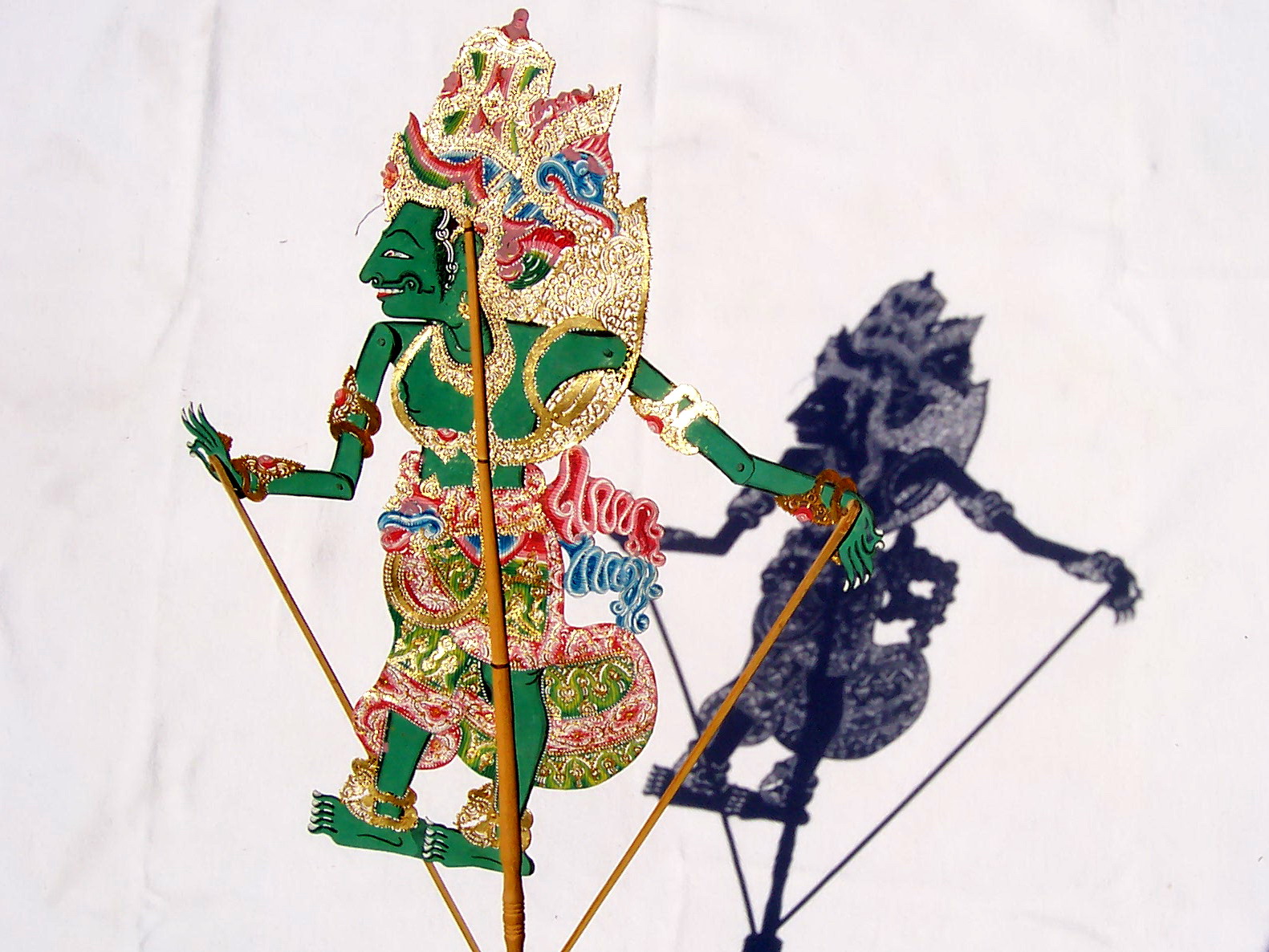
Wayang kulit, the leather shadow-puppet theatre, is accompanied in Bali by gender wayang, the small metallophone ensemble — never by a full kebyar orchestra. One dalang (puppet master) does almost everything: he moves the puppets, speaks every voice, sings, and cues the musicians by tapping a wooden knocker against the puppet chest. Traditionally a show runs from midnight to dawn, telling episodes from the Ramayana and Mahabharata. UNESCO inscribed wayang puppet theatre on its heritage list in 2008.
FactBali vs Java — fast and loud, or slow and soft
Java and Bali share the same instruments and the same idea of music in gong cycles, but they sound strikingly different. Javanese gamelan, grown in the royal courts of Yogyakarta and Solo, is slow, soft, refined and meditative, often led by the rebab, with gradual tempo changes. Balinese gamelan is faster, brighter and more explosive, with abrupt changes, interlocking kotekan and the shimmering ombak tuning. If you hear one after the other, the difference is unmistakable.
PlaceUbud Palace — the nightly stage
The easiest place to hear live gamelan is Ubud Palace (Puri Saren Agung), at the main crossroads opposite the art market: a dance with a live gamelan orchestra plays in the front courtyard every night at about 7:30pm, with the programme changing by the night — legong, Barong, Ramayana Ballet and more. Tickets cost about IDR 100,000 per person (approximate), sold by vendors on Jalan Raya Ubud from about 5pm; arrive by 7pm for a good seat.
PlaceSaraswati Temple, Pura Dalem and ARMA
Ubud has more stages than the palace. Pura Taman Saraswati (the Water Palace) hosts dance with live gamelan almost every night at 7:30pm except Friday, for about IDR 100,000 (approximate) — Tuesdays are the women's gamelan orchestra. Gamelan Semara Ratih, one of Bali's best-known groups, plays at Pura Dalem Ubud every Saturday at 7:30pm. ARMA Museum's open stage starts at 7pm, with most shows about IDR 150,000 (approximate) and a Saturday dinner show about IDR 350,000.
TipTaking the music home — buying instruments and recordings
Most of Bali's gamelan instruments are made in Tihingan village, Klungkung, where workshops such as Gong Windu and Sutama Gamelan forge gongs and metallophones and export them to universities and collectors worldwide. A top-quality full set sells for well over Rp 200 million (approximate), so think about shipping before you fall in love — but small items such as brass priest's bells go for around Rp 350,000 (approximate). Miniature gamelan souvenir sets are made in Sukawati, and recordings are the easy souvenir: the Bali 1928 recordings preserve the pre-war styles.
FigureBali Arts Festival — village against village
The Bali Arts Festival (Pesta Kesenian Bali), held every June and July in Denpasar since 1979, is the island's great gamelan proving ground: village and banjar groups compete against each other in traditional and contemporary gamelan, dance and shadow puppetry, after months of daily rehearsal. A village's prestige is on the line, and winning pieces — such as I Nyoman Windha's — enter the standard repertoire. It is the best single place to hear the full range of Balinese gamelan in one month.
TipTry it yourself — gamelan lessons for visitors
You can sit at the instruments yourself: Pondok Pekak Library in central Ubud runs one-hour gamelan classes, about IDR 100,000 per person in a group workshop or IDR 200,000 for a private lesson (approximate), taught by local musicians. Desa Wisata Mas village offers a gamelan workshop for about IDR 400,000 per person (approximate), including lunch and a certificate, and Griya Santrian in Sanur runs a 60-minute class for about IDR 650,000 (approximate). HOSHINOYA Bali offers a one-hour rindik lesson for about IDR 726,000 for up to two people (approximate). No musical background is needed.
TipListening well — etiquette at a ceremony
At a temple ceremony, gamelan is sacred music, not a concert: wear a sarong and sash, sit behind the worshippers rather than among them, and never walk in front of the musicians or step over offerings. Do not touch any instrument unless you are invited to — some sets are sacred and may only be handled by their own players. Keep quiet during the prayer parts, and ask before taking photos; a flash during a ceremony is never welcome. If you can, stay for the whole piece rather than drifting off mid-cycle.
TipWords to know
gamelan — bronze orchestra; ensemble;
gong ageng — the great gong;
kendang — double-headed drum;
gangsa — bronze metallophone;
reyong — row of small kettle gongs;
ceng-ceng — small cymbals;
suling — bamboo flute;
rebab — two-stringed bowed fiddle;
kotekan — interlocking parts;
ombak — wave; the shimmering beat;
pelog — seven-tone scale;
slendro — five-tone scale;
kebyar — to burst open; the explosive style;
pokok — the core melody; trunk;
gongan — a gong cycle;
sekaa — a club or group;
banjar — neighbourhood association;
dalang — puppet master;
wayang — shadow; puppet theatre;
rindik — bamboo xylophone;
jegog — giant bamboo gamelan;
legong — graceful court dance
See also: related sets
For the gamelan in the Music set, the dances it drives, the puppet theatre and the Arts Festival, see these cards in other sets.