FactThe fruit year in Bali
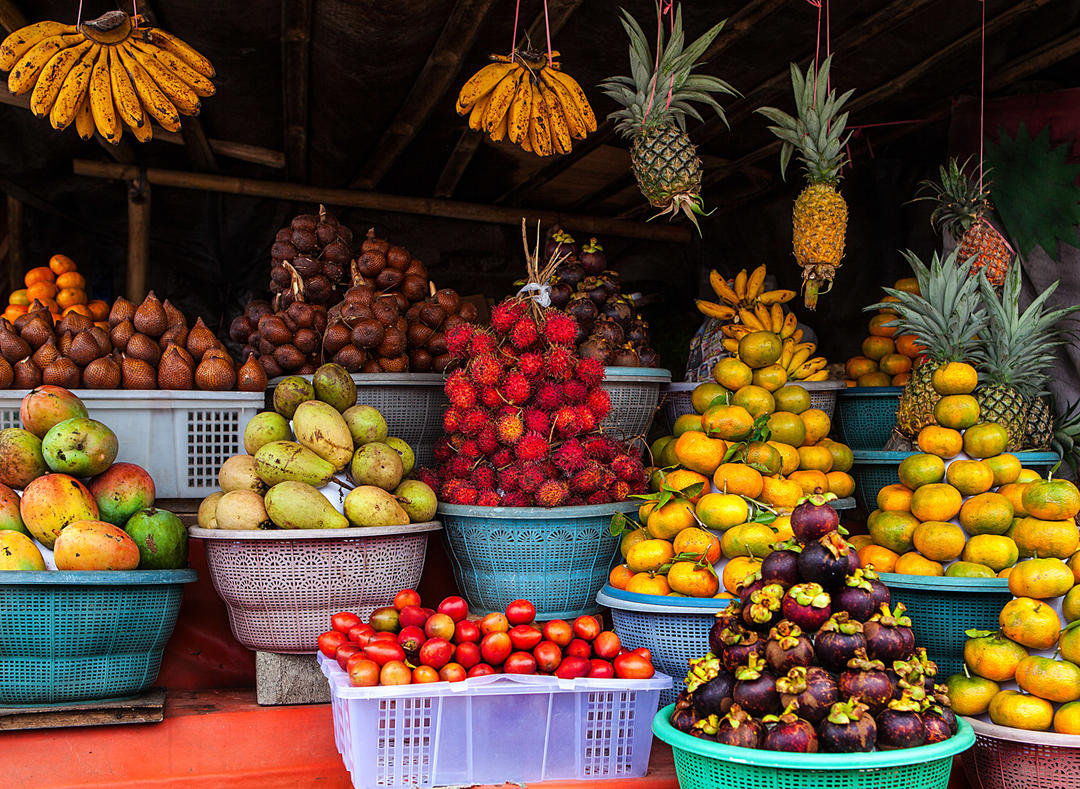
Bali's fruit year runs on two seasons. The wet season, roughly November to March, is the jackpot: mangosteen, rambutan, durian, dragon fruit and duku all peak then. The dry season, April to September, brings mangoes, crystal guava, cempedak and highland strawberries from Bedugul. Year-round staples are banana, coconut, papaya, pineapple and salak, so every stall has something in any month.
FactMangosteen, the queen of fruits
Mangosteen (manggis) has a thick deep-purple rind hiding soft white segments that taste of peach, strawberry and pineapple at once, sweet with a floral tang. It is called the queen of fruits across Southeast Asia, and its season runs roughly December to March. Count the petals on the base of the fruit and that is how many segments are inside.
TipHow to open a mangosteen
Hold the fruit in both hands and squeeze gently around the middle until the rind cracks, or score it carefully around the middle with a knife and pry it open with your thumbs. Pick fruit whose shell gives slightly under gentle pressure — a hard, dry rind means it is old. The purple juice stains clothes permanently, so open it over a plate, and eat the segments soon after opening.
FactSalak, Bali's snake fruit
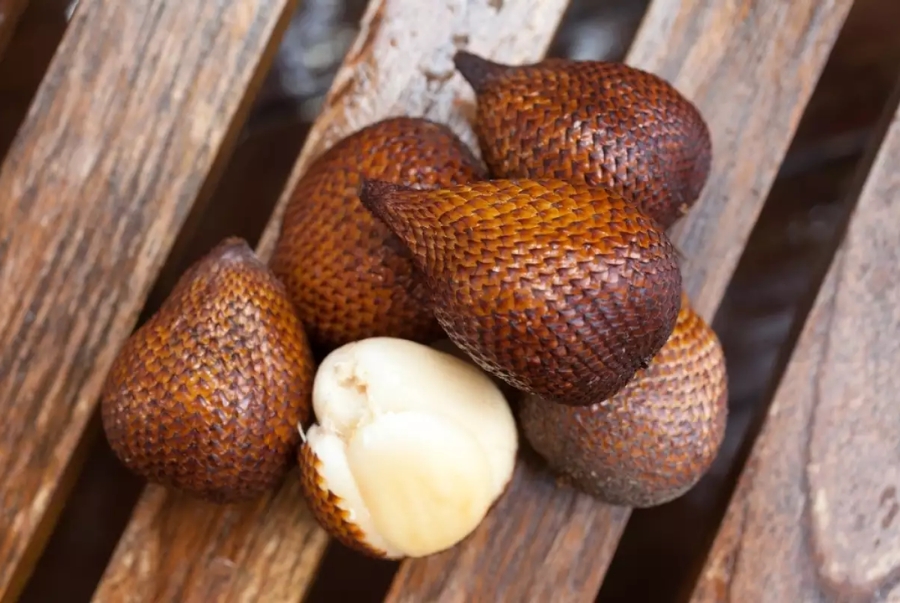
Salak gets its name from its reddish-brown scaly skin, which looks just like snake scales. Inside, the crisp flesh is sweet and tangy, like an apple with a hint of honey or pineapple, and it is available year-round with a peak around June to September. Pinch the pointed tip and peel the brittle skin back, then eat the pale lobes around the hard seeds — the salak gula pasir variety is the sweetest of all.
PlaceSibetan, the village of salak
Sibetan village in Bebandem, Karangasem, about 83 km east of Denpasar and 15 km from Amlapura, is Bali's salak heartland — nearly every household farms the fruit, and its orchards cover around 81% of the village's land, about 1,125 hectares. Fourteen or fifteen local varieties grow here, including the sweet salak gula pasir and pineapple salak. The village is set up for agro-tourism, so visitors can walk the plantations and taste the fruit where it grows.
FigureSalak's world heritage honour
In September 2024 the United Nations food organisation FAO designated the Karangasem salak agroforestry system a Globally Important Agricultural Heritage System — Indonesia's first, and one of only 102 such sites in the world. The system mixes salak palms with forest trees and other crops, managed through the traditional subak water-sharing system. The certificate was presented at FAO headquarters in Rome on 31 October 2025.
FactDurian, the king of fruits
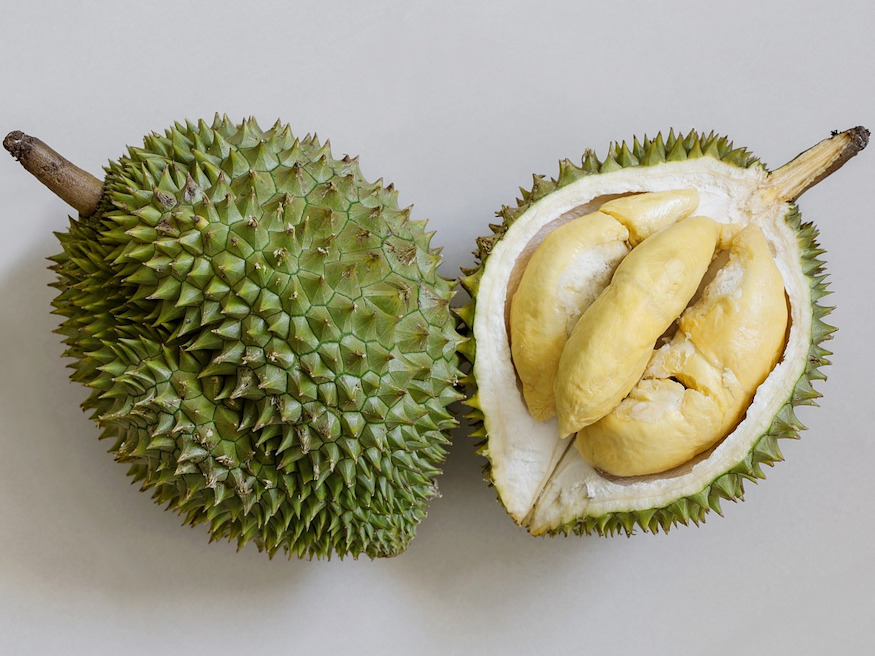
Durian is famous — or infamous — for its powerful smell, but lovers say the creamy, custard-like flesh is unbeatable, with notes of almond, caramel and onion. Its main season runs roughly December to March, with a smaller mid-year harvest around July to September, and the Ministry of Agriculture rates October to December as the best quality. North Bali, particularly Buleleng, is known for its durian.
TipDurian is banned in hotels and on planes
No Indonesian law bans durian, but hotel and airline rules do the job: 'No Durian' signs are common in lobbies, lifts and rooms, because the smell clings to fabric, carpet and air conditioning, and hotels may charge a cleaning fee. Singapore Airlines bans it in cabin and checked baggage, and AirAsia lists it as not allowed. Eat it at the stall where you buy it, and never try to take fresh fruit home to Australia — biosecurity officers will seize it.
FactRambutan
Rambutan takes its name from rambut, the Indonesian word for hair, and its bright red shell is covered in soft spiky hairs. Inside is a translucent white fruit that tastes like a lychee, slightly milder and less sweet. Its season is short, roughly November to February, so it is rarely seen outside that window. Split the shell with your thumbnail, peel it away, and eat the flesh around the woody seed.
FactDragon fruit
Dragon fruit (buah naga) is the most photogenic fruit in Bali: a magenta-pink orb with soft green scales, and flesh that is white or brilliant magenta, dotted with tiny edible black seeds. The flavour is mild and lightly sweet, more refreshing than intense. Its season runs roughly November to March. Cut it in half and scoop the flesh out with a spoon, or peel it and slice it into cubes.
FactMango
Bali's mangoes include harum manis, manalagi and gedang, and they are at their sweetest in the dry months, with the season usually given as September to December, some varieties running into January. A kilo costs roughly IDR 15,000 to 45,000 at a market, depending on variety and season. Look for fruit that smells fragrant at the stem and gives slightly when pressed.
FactJackfruit
Jackfruit (nangka) is the largest tree fruit in the world, and a ripe one is intensely sweet with a slightly chewy, rubbery texture. It is available most of the year. The best way to try it is to buy it from a vendor who opens the fruit fresh and sells the golden pods ready to eat. Unripe jackfruit is a different thing altogether — it is cooked as a vegetable.
FactBananas
Bali's bananas are small and sweet — look for pisang raja and pisang susu — and they are on every market stall all year round. A bunch can cost as little as around IDR 5,000 at a local market. They are also fried as pisang goreng, a common snack sold at markets and roadside stalls.
FactPapaya and pineapple
Papaya (pepaya) and pineapple (nanas) are year-round staples, so they are the fruits you will see on every stall in every month. Papaya is soft, orange and sweet; the small pineapples sold in Bali are fragrant and can cost around IDR 5,000 each. Vendors often sell pineapple peeled and sliced, ready to eat.
FactCoconut and kelapa muda
A young coconut (kelapa muda) drunk straight from the shell with a straw is Bali's classic refreshment. It costs roughly IDR 15,000 to 25,000 from a roadside stall, around IDR 30,000 on a beach, and more in a restaurant. After the water is finished, the vendor scrapes out the soft flesh to eat. A squeeze of lime (jeruk nipis) in the water is the local touch.
FactPomelo, jeruk Bali
Pomelo (jeruk Bali, literally 'Bali orange') is one of the largest citrus fruits in the world, with thick skin and mild, sweet-tart flesh that has none of a grapefruit's bitterness. Its season runs roughly October to April, and a whole fruit costs around IDR 40,000. It is usually sold peeled and in segments at markets.
FactStar fruit
Star fruit (belimbing) is crisp and juicy, and sliced across it makes perfect five-pointed stars — a favourite garnish on fruit plates and in drinks. Its season runs roughly July to September, and it costs around IDR 35,000 per kilo at Pasar Badung. It is also one of the fruits in rujak, the spicy fruit salad.
FactSoursop
Soursop (sirsak) has a spiky green skin and soft white flesh that is tart and sweet at once, a little like a mix of strawberry and pineapple. Its season runs roughly March to December. It is most often met as a juice, where its creamy, tangy flavour is at its best, and it is sold at warungs and juice stalls across the island.
FactLangsat and duku
Langsat (duku) grows in clusters of small tan-skinned fruit, each holding sweet translucent segments a little like a lychee or a grape. It peaks in the wet season, roughly November to March. Peel the thin skin and eat the segments, spitting out the small bitter seeds. Locals say eating a great many at once will give you a sore throat.
FactJambu, sawo and kedondong
Beyond the famous fruits, market stalls hold a lesser-known trio. Jambu (water apple) is crisp, watery and lightly sweet. Sawo (sapodilla) is brown and soft inside, tasting faintly of caramel and brown sugar. Kedondong (ambarella) is sour and crunchy, usually eaten green with salt and chilli, or tossed into rujak.
FigureWhat fruit costs
At a traditional market, everyday fruit — papaya, banana, dragon fruit, salak, mango in season — generally sits around IDR 20,000 to 35,000 per kilo. The same kilo in an expatriate supermarket such as Pepito or Grand Lucky is closer to IDR 45,000 to 70,000, because it has been sorted, chilled and packed. Mangosteen and durian swing hardest with the season and can double out of season, so treat these as a guide, not a price list.
PlacePasar Badung
Pasar Badung in central Denpasar is Bali's largest traditional market, open 24 hours a day, with the ground floor given over to fresh produce — tropical fruit, vegetables, spices and flowers for temple offerings. Prices here are a fraction of tourist areas: a kilo of mangosteen that costs around IDR 40,000 at a Canggu minimart can be around IDR 15,000 at Badung. It is a working market, not a tourist one, so English is limited and the aisles are narrow.
PlaceUbud's morning market
The morning produce rows at Ubud Market, behind the craft stalls, are where the town buys its fruit — go before 8am, when the market is at its busiest and the fruit is freshest. The larger Sayan traditional market nearby opens at 5am and runs to about 9am, with cars full of fruit at the entrance. Imported fruit is sold here too, at much higher prices than the local crop.
PlacePasar Sindhu, Sanur
Pasar Sindhu on Jalan Pasar in Sanur is the town's traditional market, and its morning session is the best time to buy fruit — stalls are up from about 5:30am and the best of the day is gone by 8am. The same site turns into the Sindhu night market from about 5pm, where the fruit stalls give way to warung food and a row of fresh juice carts. Bring small notes, as most vendors do not take cards.
TipRoadside stalls and supermarkets
Fruit stalls line the busy roads where tourists pass, and they are a good place to buy a small amount to eat the same day. Supermarkets such as Pepito and Grand Lucky sell a wider range, including sliced fruit kept in fridges, at higher prices. Indomaret and Alfamart minimarts carry a small seasonal selection. On the beach, sellers with baskets on their heads offer cut fruit — check the hygiene before you buy.
TipHow to buy well
Go early: produce sellers trade from around 5am, the best of the day is on the table between 6am and 8:30am, and by mid-morning what is left has been sitting in the heat. Ask 'Berapa per kilo?' — how much per kilogram — and confirm the price is per kilo, not per piece or per basket. Compare the same fruit at two or three stalls, watch the weighing, and agree the total before it is packed. 'Boleh coba?' means may I try — most sellers will let you taste.
FactRujak, the spicy fruit salad
Rujak is Bali's fruit salad with a kick: unripe and sour fruit — pineapple, water apple, jicama, starfruit and mango — cut into pieces and tossed in a paste of chilli, palm sugar, tamarind and fermented shrimp paste. It is sold by street vendors and at markets for around IDR 5,000 a portion. Sweet, sour, salty and spicy in one mouthful, it is the taste of Bali's markets in a bowl.
FactEs campur and fresh juices
Es campur is shaved ice with palm sugar syrup, jellies and coconut milk, sold at night markets and roadside stalls for around IDR 5,000 to 10,000 — the island's answer to the tropical heat. Fresh fruit juices cost roughly IDR 20,000 to 40,000 a glass at warungs and cafes, with watermelon, pineapple, dragon fruit and mango the usual choices. Salak juice, slightly tart and faintly astringent, is one you will rarely find outside Indonesia.
FactFruit in temple offerings
Fruit is part of Bali's daily religion. Every morning Balinese Hindu families place canang sari — small palm-leaf offerings of flowers, rice and incense — on doorsteps, shrines and motorbikes, and they often hold a small piece of fruit, a wedge of watermelon or a slice of banana. Large ceremonies offer whole fruits such as pineapples and coconuts. The fruit is an expression of gratitude, a gift back to the gods — so never step on an offering in the street.
TipWash it and peel it
The risk with fruit in Bali is rarely the fruit — it is the water it was washed in. Peel what you can, wash what you cannot, and drink only sealed bottled water. Avoid pre-cut fruit and ice from open buckets, and choose busy stalls with high turnover where the food is prepared fresh in front of you. Whole fruit with an intact skin and no wet split or sour smell is the safest buy.
TipWords to know
buah — fruit;
manggis — mangosteen;
salak — snake fruit;
durian — durian;
rambutan — rambutan;
buah naga — dragon fruit;
mangga — mango;
nangka — jackfruit;
pisang — banana;
pepaya — papaya;
nanas — pineapple;
kelapa muda — young coconut;
jeruk Bali — pomelo;
belimbing — star fruit;
sirsak — soursop;
duku — langsat;
jambu — water apple; rose apple;
sawo — sapodilla;
kedondong — ambarella;
rujak — spicy fruit salad;
manis — sweet;
matang — ripe;
pasar — market
See also: related sets
For more on Bali's food, markets and staying well, see these cards in other sets.