FactBali sits in the Coral Triangle
Bali lies in the Coral Triangle, the most diverse marine ecosystem on Earth, home to nearly a thousand reef-fish species. On top of that, pelagic game fish swim past the island's shores all year round. That combination is why a single day's fishing here can mix reef species with open-ocean giants.
FactThe pelagic prize list
The fish every visiting angler dreams about are yellowfin tuna, mahi-mahi, marlin, sailfish and wahoo, all of which pass Bali's coasts. Giant trevally, dogtooth tuna, barracuda and Spanish mackerel fill out the list. Which ones are biting depends on the season, the coast and how far offshore your boat goes.
FactYellowfin tuna: the hard fighter
Yellowfin tuna are the most sought-after tuna in Bali's waters, powerful fish that fight hard on light tackle. They gather around fish aggregating devices (FADs) to the north of the island from about August to November, and nearshore tuna fishing peaks around June. A big yellowfin can top 100 kg, though most caught on charters are far smaller.
FactMahi-mahi: the acrobat
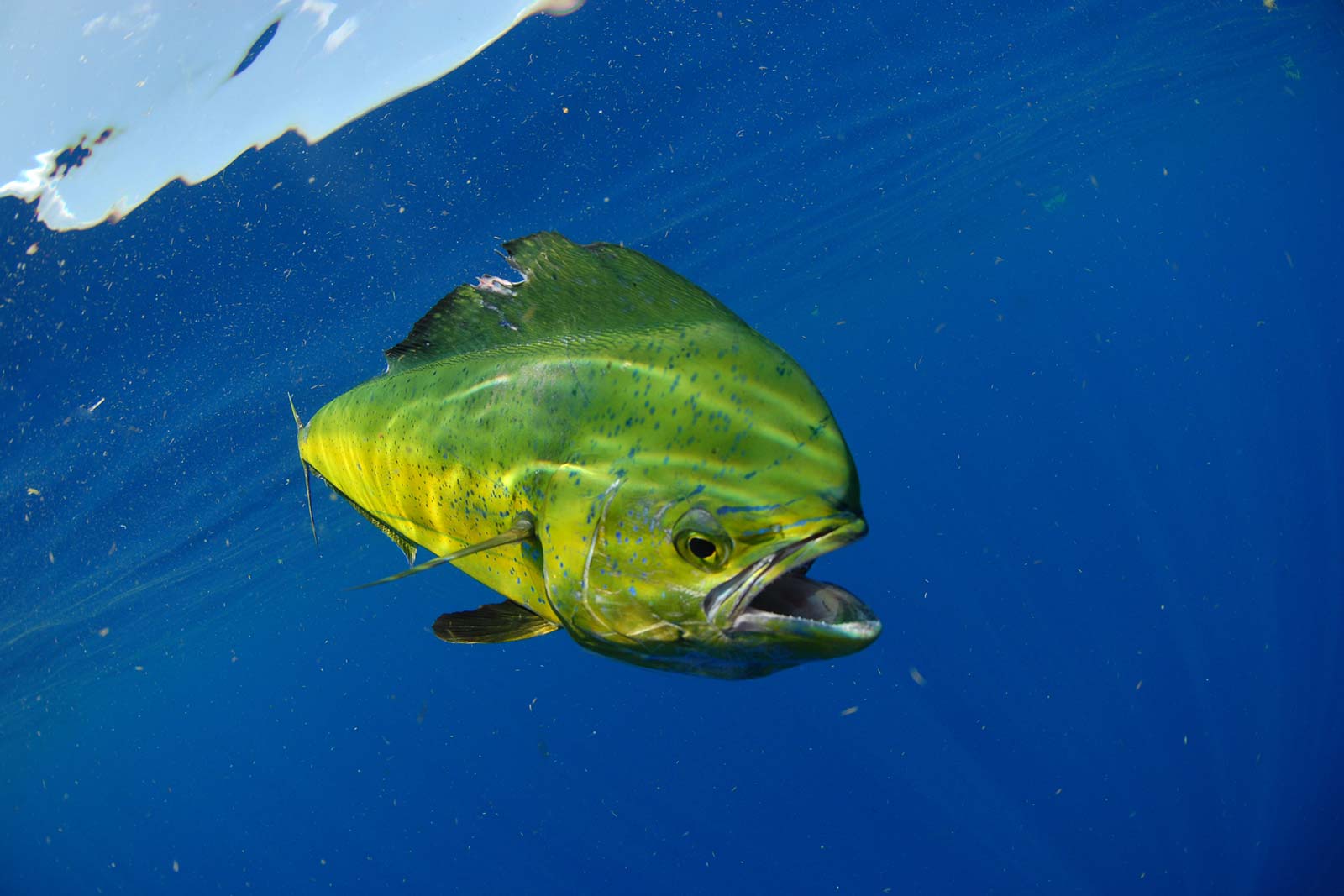
Mahi-mahi, also called dolphinfish or dorado, are among the most spectacular fish to catch: they leap, twist and change colour from electric blue-green to gold as they fight. They are most common from October to January. They are also excellent eating, so a mahi-mahi is one of the best fish to keep for dinner.
FactMarlin and sailfish: the trophies
Blue marlin and sailfish are the great prizes of Bali game fishing, with the best months from July to September. Sailfish are famous for their huge dorsal fin and spectacular leaps, while blue marlin can exceed 500 kg. Most charters release billfish after the fight, so the trophy is the photograph, not the fish.
FactWahoo and Spanish mackerel
Wahoo are among the fastest fish in the sea and a favourite target from October to January, striking lures trolled at speed. Spanish mackerel, called tenggiri, are a local staple and the pride of Amed, where the mackerel season runs roughly October to December and a fisherman can land 100 to 300 fish a day in peak season. Both are superb eating fish.
FactGiant trevally: the reef bruiser
Giant trevally, or GT, are the heavyweights of the reef: hugely powerful fish that smash surface lures and fight all the way to the boat. They can be caught around Bali all year, but the monsters live around the islands to the south-east. Casting big poppers around Batu Abah, off Nusa Penida, is one of the best ways to find a big one.
FactDogtooth tuna and amberjack
Dogtooth tuna hunt around reefs close to shore, but the best way to land a big one is jigging in deep water around reef drop-offs. Amberjack are another deep-water prize, often caught on the same grounds. Both are strong, dogged fighters that test tackle and arms alike, and both are excellent on the grill.
FactReef fish: snapper, grouper and coral trout
Closer to the reef, the targets are ruby snapper, grouper, coral trout and barracuda. Ruby snapper respond well to deep-water jigging and can be caught all year round. Barracuda are common around Bali's reefs and inshore waters: exciting to catch, but handle them with care, as their teeth are razor sharp.
FactTrolling: the classic technique
Trolling means towing lures or baited lines behind a moving boat, and it is how most pelagic fish are caught in Bali. The boat works along reef drop-offs and current lines while the crew watches the rods. It is the method used for tuna, mahi-mahi, wahoo, marlin and sailfish, and beginners can do it with no experience at all.
FactJigging: dropping deep
Jigging means dropping a heavy metal lure to the reef far below and working it back up in sharp jerks. It targets dogtooth tuna, amberjack, ruby snapper and giant trevally holding on deep drop-offs. It is hard physical work, but it produces some of the biggest fish of the day, and it works around Padang Bai and the Amed drop-offs.
FactPopping and casting for GT
Popping uses big surface lures that splash and gurgle across the water to imitate a wounded baitfish, and giant trevally attack them explosively. It is a visual, heart-stopping way to fish, best around reef edges and the Nusa Islands. Heavy tackle is essential: a big GT will head straight for the reef to cut you off.
FactBottom fishing: easiest for families
Bottom fishing means dropping a baited line to the reef below and waiting, and it is the easiest fishing for children and first-timers. The usual catch is snapper, grouper and triggerfish, all good eating. Most charters switch to bottom fishing after trolling, and it is a relaxed way to finish the morning.
FigureWhat a charter costs
A private half-day charter (about 4 hours) typically costs around USD 500 per boat for up to four people, with a full 8-hour day around USD 700, though prices vary widely between operators, so check before booking. Larger boats and luxury yachts cost far more, from around AUD 890 for a half day. Shared or small-group trips start from roughly USD 130 to 170 per person.
FactWhat a charter includes
A standard charter includes the boat, captain and crew, all rods, reels, tackle, bait and lures, plus safety equipment and life jackets. Most also include hotel pick-up and drop-off, cold drinks, snacks and, on full-day trips, lunch. Snorkelling gear is often available on request, and some trips combine fishing with a snorkel stop.
FactA typical charter day
Most charters leave early, around 6am, when the fish feed best and the sea is calmest. A typical day runs out past the reef to troll for tuna and mahi-mahi, then switches to jigging or bottom fishing over the reef. If you are prone to seasickness, take tablets the night before and again in the morning, and bring sunscreen, a hat and sunglasses.
FactThe jukung: Bali's outrigger canoe
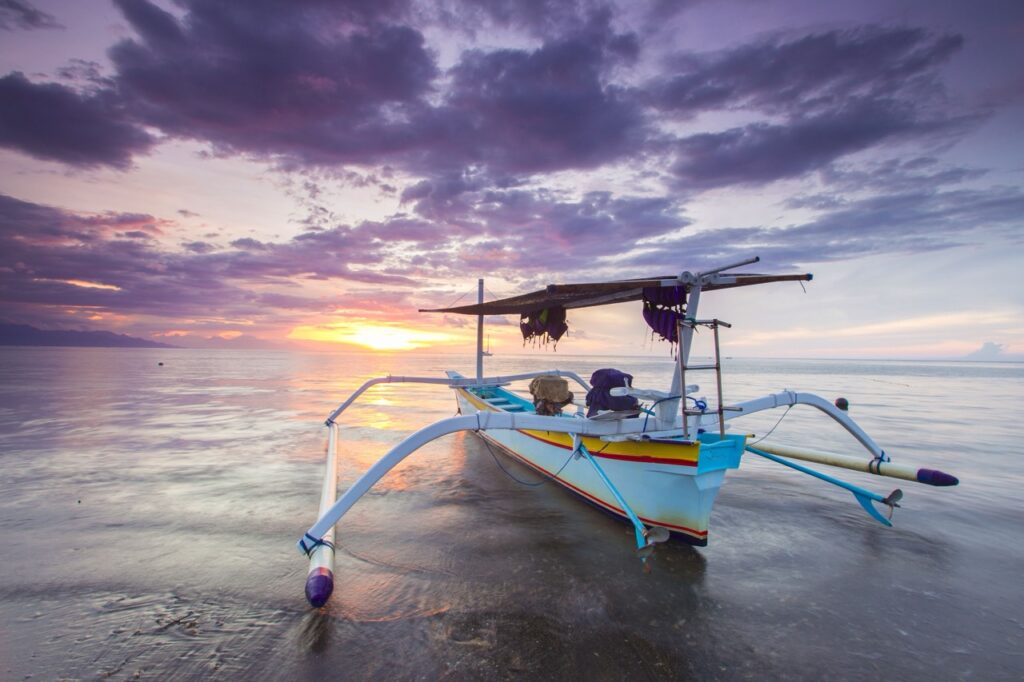
The jukung is Bali's traditional fishing boat: a narrow wooden outrigger with bamboo arms on either side for stability, hollowed from a single tree trunk. Hulls are painted white with bright accents, and each boat's name is painted on the bow. Fishermen still launch them daily at dawn, and many now carry small engines for windless days.
FactFishing with a local fisherman
The most authentic fishing trip in Bali is a dawn outing on a jukung with a village fisherman, trolling a hand line or casting a simple baited line. In Amed, a morning with a local fisherman can cost around IDR 100,000 to 200,000 per person arranged through your guesthouse, while a guided jukung trip elsewhere runs roughly IDR 300,000 to 700,000 per person. It is basic, early and unforgettable.
PlaceNusa Penida and Nusa Lembongan
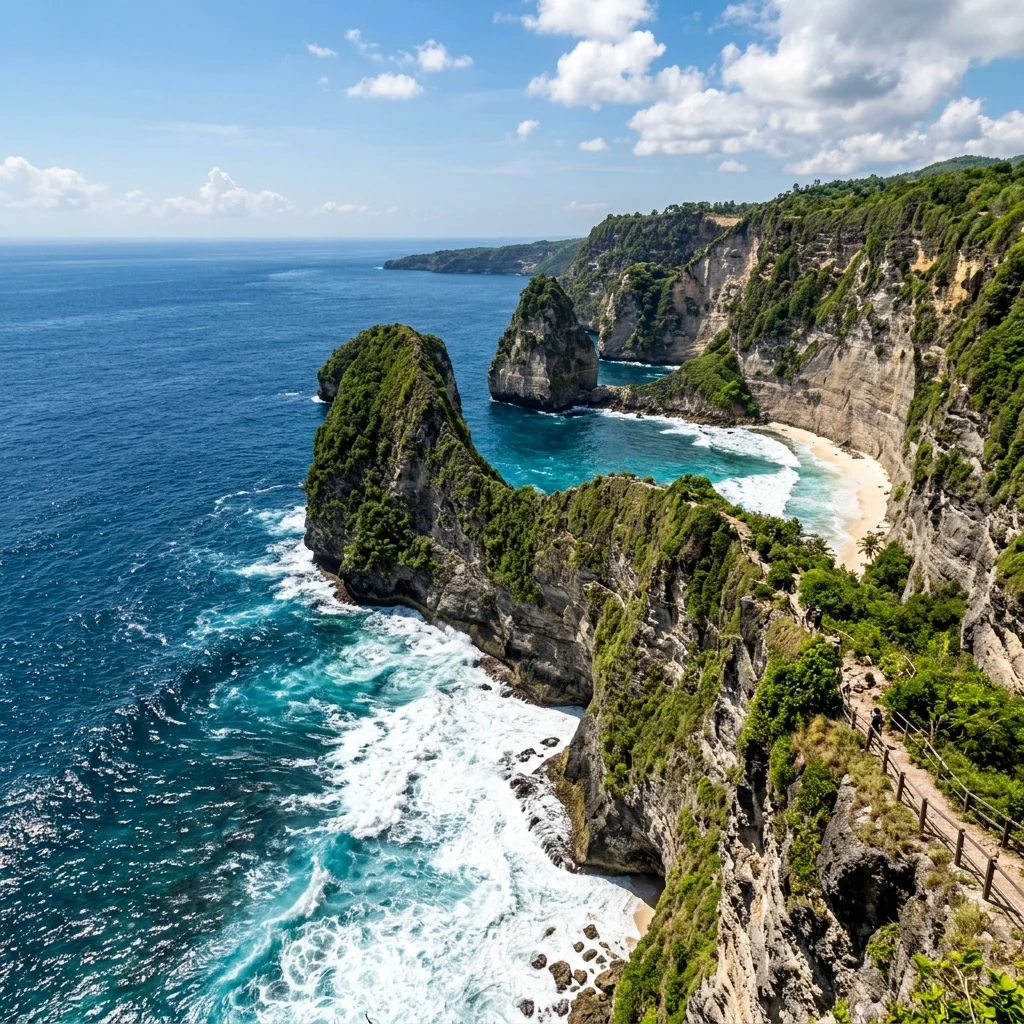
The deep channels around Nusa Penida and Nusa Lembongan are Bali's big-game heartland, holding yellowfin tuna, mahi-mahi, wahoo, sailfish and giant trevally. Most charters reach the islands from Sanur, Benoa or Nusa Dua in under an hour. Parts of the Nusa Penida Marine Protected Area are closed to fishing, so confirm the permitted zones with your operator before departure.
PlacePadang Bai: jigging country
Padang Bai on the east coast is a working harbour town and one of Bali's best fishing bases. Its offshore drop-offs are prime ground for jigging dogtooth tuna, amberjack and snapper, and the east coast is also known for blue marlin, sailfish and night squid fishing. It is a quieter, more local start to a fishing day than the southern ports.
PlaceTanjung Benoa: best for beginners
Tanjung Benoa, on the peninsula south of Sanur, is the easiest place to start fishing in Bali. Its sheltered waters suit bottom fishing and family charters, with grouper, snapper and coral trout the usual catch. Most of the big charter fleets depart from Benoa harbour, and the calm water makes it the kindest option if you are new to boats.
PlaceSanur: light tackle and shore casting
Sanur's long, calm reef flat suits light-tackle fishing and shore casting, with trevally a common catch from the beach. The Semawang fishermen still launch their jukung from Sanur beach at dawn, just as they have for generations. Charters from Sanur run to Nusa Penida and Lembongan, and a six-hour trip can add a snorkelling stop around the islands.
PlaceAmed: the mackerel villages
Amed is a 14-kilometre stretch of small fishing villages on Bali's far north-east coast, where life still revolves around the sea. Fishermen launch jukung at dawn and return with mackerel, tuna and squid, and visitors can join them for a morning's fishing. The east coast is calmest from May to October, the best window for fishing here.
PlaceLovina and the north coast
Lovina, on the north coast, is the base for traditional jukung fishing trips after mahi-mahi, trevally and snapper, with boats leaving around 6am after a very early hotel pick-up. The north coast also holds giant trevally, barracuda, snapper and Spanish mackerel. Trips here feel wilder and less polished than the southern charters, and the fishing grounds are more than 20 spots around the bay.
PlaceLake Batur: freshwater fishing
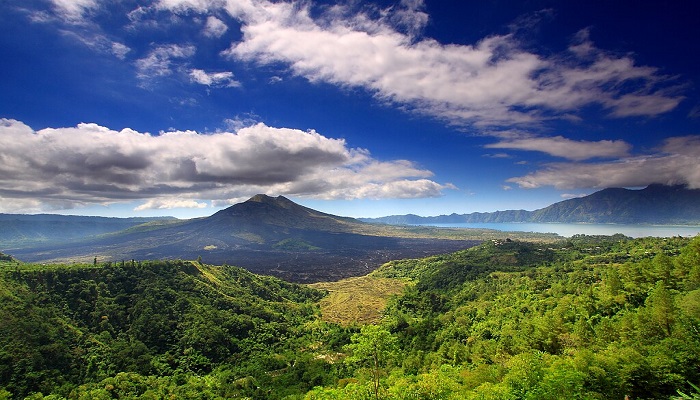
Bali's freshwater fishing centres on Lake Batur, a crater lake at 1,050 metres above sea level inside the caldera of an active volcano. The lake holds tilapia and carp, and a 2025 survey recorded 17 fish species there, including several introduced ones. It is a calm, scenic change from the ocean, and fly fishing for tilapia and carp is possible on Lakes Batur, Buyan and Tamblingan.
TipShore and jetty fishing
You can fish from shore all over Bali, though the catch is usually small reef fish, so bring your own gear and bait, which are hard to buy on the island. Gilimanuk Harbour in the west and Jimbaran Bay in the south are popular shore spots, and Sanur is good for trevally. Check the tide and avoid fishing in front of a temple during a ceremony.
FigureBest season: April to October
The dry season, April to October, is generally the best time to fish in Bali, with calmer seas and clearer water. Within it, April to June is best for mahi-mahi and tuna, July to September is prime for marlin and sailfish, and October to December brings wahoo and giant trevally. Fishing is possible all year, but wet-season rain and swell can cancel trips.
FactDo you need a fishing licence?
On a licensed charter you do not need a personal fishing licence: the operator's commercial permit covers the boat and everyone aboard. A personal permit through the fisheries ministry's E-Mancing system exists for people fishing from a private or non-commercial boat, costing around IDR 500,000 for foreigners for up to 15 days. For most tourists on a charter, the paperwork is the operator's job, not yours.
FactNo-take zones: where not to fish
Some of Bali's best-looking water is off limits. The core zone of the Nusa Penida Marine Protected Area, about 120 hectares, is closed to fishing and tourism, and its marine ecotourism zone is for tourism only. Menjangan Island sits inside West Bali National Park, a no-fishing zone. Always ask your captain or guide before dropping a line in a new spot.
FactProtected species and fishing responsibly
Manta rays have been fully protected across Indonesia since 2014, and whale sharks since 2013, along with sea turtles and Napoleon wrasse. Keep only what you will eat and release the rest, especially billfish and undersized fish. Rumpon, the bamboo fish-attracting rafts you will see offshore, are private property: never fish one without your captain's permission. Many restaurants will happily grill your catch for dinner.
TipWords to know
memancing — to fish; fishing;
pancing — fishing rod;
nelayan — fisherman;
jukung — traditional Balinese outrigger canoe;
ikan — fish;
be — fish (Balinese);
umpan — bait;
kail — fish hook;
jala — fishing net;
cumi-cumi — squid;
madidihang — yellowfin tuna;
lemadang — mahi-mahi (dolphinfish);
cakalang — skipjack tuna;
tongkol — mackerel tuna;
tenggiri — Spanish mackerel;
kakap — snapper;
kerapu — grouper;
layaran — sailfish;
rumpon — fish aggregating device (FAD);
tonda — trolling;
dasaran — bottom fishing;
perahu — boat
See also: related sets
Related cards in other sets — tap one to jump to it.