PlacePuri Lukisan: Bali's Oldest Art Museum
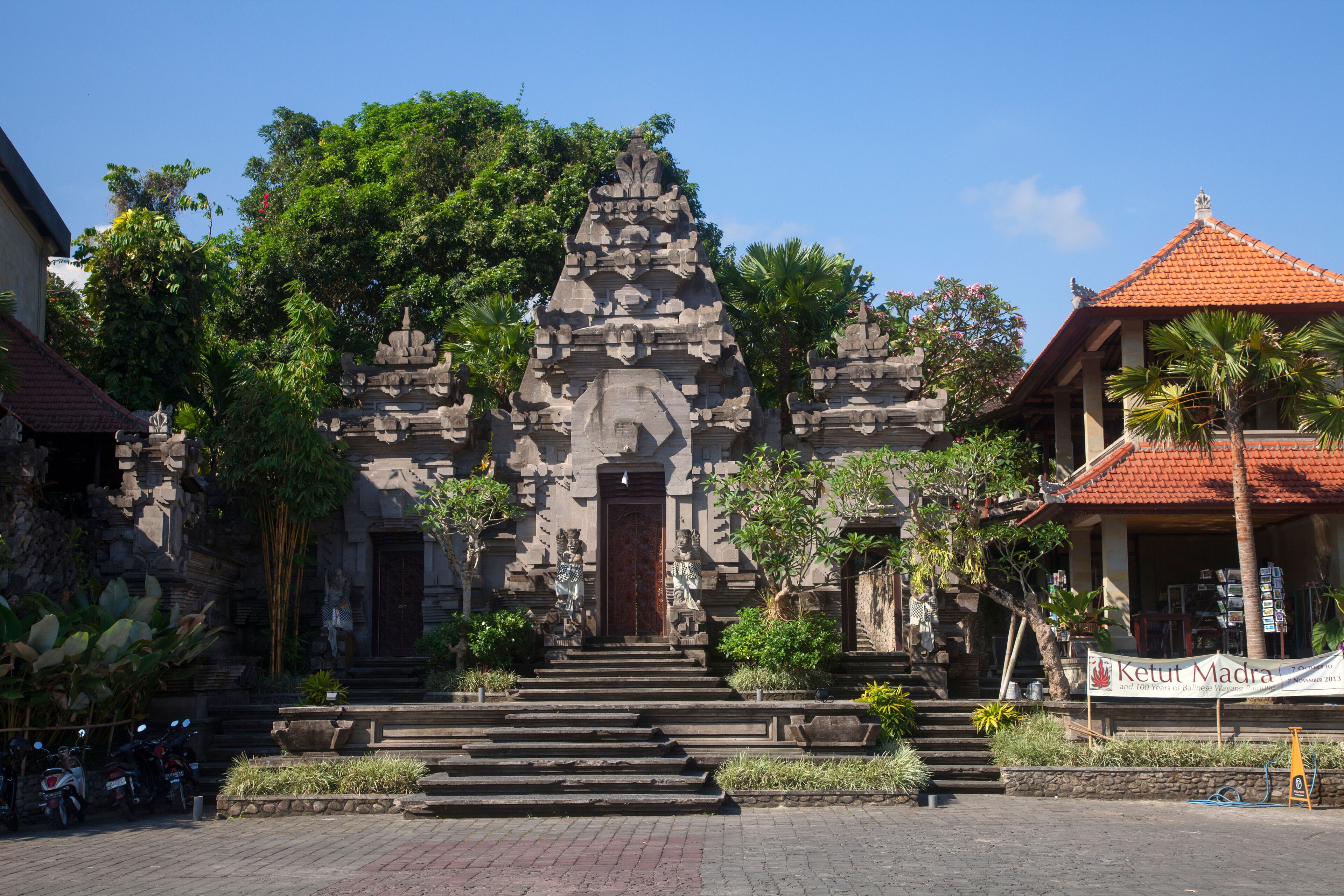
Museum Puri Lukisan in central Ubud is Bali's oldest art museum, set in gardens in the middle of town. Its pavilions trace Balinese painting from classical wayang style through the Pita Maha generation to modern works. It is the best single place to get your eye in before buying anything.
FigurePuri Lukisan Opened in 1956
Museum Puri Lukisan in central Ubud is Bali's oldest art museum, officially opened in January 1956 to stop the island's best paintings leaving with foreign collectors. Entry is around IDR 95,000 for adults, and children under 15 accompanied by an adult enter free. It is open daily from 9am to 6pm, and most visitors need about 90 minutes.
PlaceNeka Art Museum: The Story of Balinese Painting
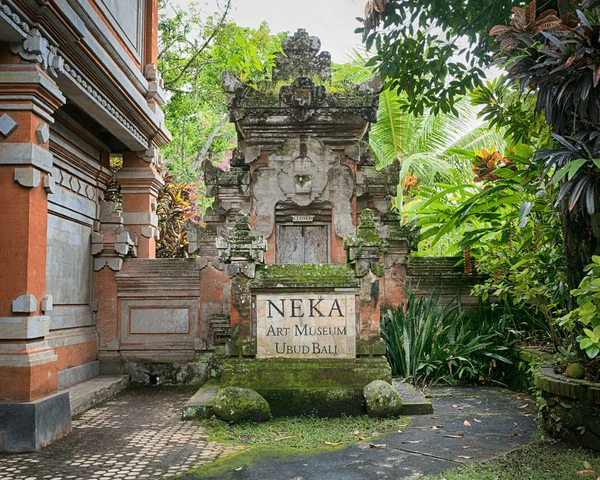
On the Campuhan ridge in Sanggingan, the Neka Art Museum displays its collection in separate pavilions, each covering a period or style, so it works like a walk-through history of Balinese painting. It was built up by collector Suteja Neka, whose father was a celebrated woodcarver. Don't miss the pavilion devoted to Dutch artist Arie Smit and the Young Artists he mentored.
FigureNeka Museum Entry Around IDR 150,000
The Neka Art Museum was officially opened on 7 July 1982 by Indonesia's Minister of Education and Culture, and it was Bali's first privately owned museum. Adult entry is around IDR 150,000, with students and children aged 6 to 12 at around IDR 75,000 and under-6s free. It opens daily from 9am to 5pm, closing only on Nyepi Day.
PlaceARMA Museum: Ubud's Grand Art Compound
The Agung Rai Museum of Art (ARMA) in Pengosekan, Ubud, spreads Balinese and Indonesian paintings across two large gallery buildings in tropical gardens. Founded by art dealer Agung Rai, it is as much a cultural centre as a museum, with dance performances, gamelan and painting classes on site. Allow at least two hours, and note the ticket includes a coffee or tea at the café.
FigureARMA Opened in 1996
The Agung Rai Museum of Art was officially opened on 9 June 1996, making it the youngest of Ubud's three big art museums. Adult admission is around IDR 150,000, students with ID around IDR 75,000, and young children enter free. The adult ticket includes a drink at the café, and evening dance performances are charged separately at around IDR 150,000.
PlaceBlanco Renaissance Museum, Campuhan
The former home and studio of flamboyant Spanish-Filipino painter Don Antonio Blanco crowns the Campuhan hill in Ubud, blending Balinese and Spanish architecture. Inside are his romantic, often sensual paintings of Balinese women, his preserved studio, collages and illustrated poems, plus gardens with exotic birds. It is the most theatrical of Ubud's museums — part gallery, part personality cult.
FigureBlanco Museum Opened in 1998
The Blanco Renaissance Museum opened on 28 December 1998, in the house Antonio Blanco built after settling in Bali in 1952; he died the following year, in 1999. Entry for international visitors is around IDR 100,000, with lower rates for Indonesian visitors and children. It is open daily from 9am to 5pm, and an hour is usually enough.
PlaceMuseum Pasifika: Asia-Pacific Art in Nusa Dua
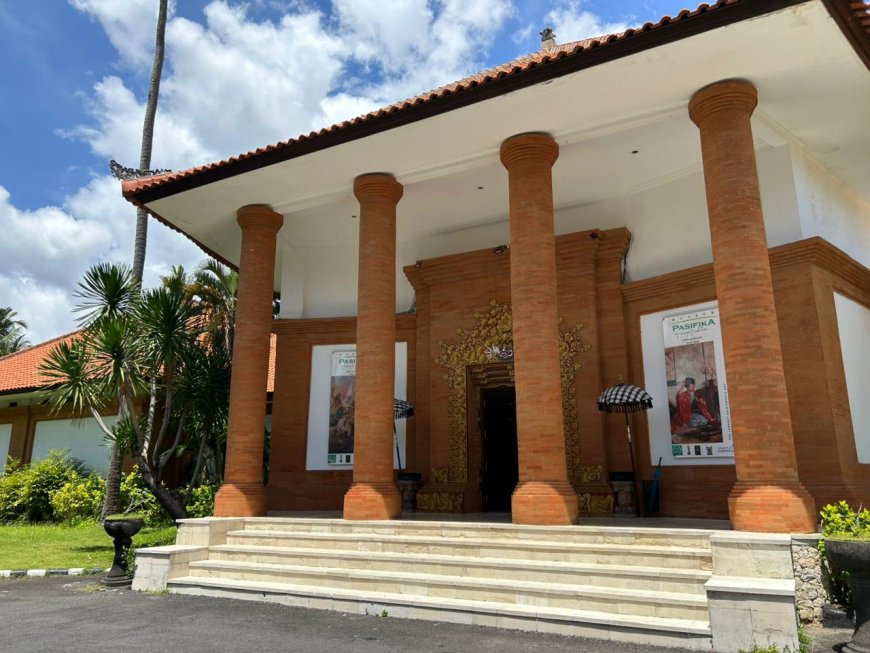
Inside the ITDC resort complex in Nusa Dua, Museum Pasifika looks beyond Bali: founded in 2006, it holds more than 600 works by around 200 artists from 25 Asia-Pacific countries across 11 themed rooms. Alongside Balinese masters and the European artists who worked on the island, there are rooms for Polynesian and Pacific art, tapa cloth and Indochinese painting. It is open daily from 10am to 6pm; allow one to two hours.
FactPita Maha Changed Balinese Art Forever
In 1936 the artists' association Pita Maha was founded in Ubud by the royal Sukawati brothers together with German painter Walter Spies and Dutch painter Rudolf Bonnet. It encouraged Balinese artists to paint everyday village life, use new materials, and sign their own work — a revolution for art that had been anonymous and religious. Its legacy fills the galleries of Puri Lukisan Museum.
FactLempad: Bali's Master of Many Arts
I Gusti Nyoman Lempad (1862–1978) was a stone carver, architect, sculptor and painter who helped design Ubud's palaces and temples and lived to about 116. His ink drawings of Balinese myth and daily life, all flowing line and balanced composition, are among the most prized works in Bali's museums. Look for his drawings at Puri Lukisan and his carvings on buildings around central Ubud.
FactWayang Painting: Bali's Oldest Style
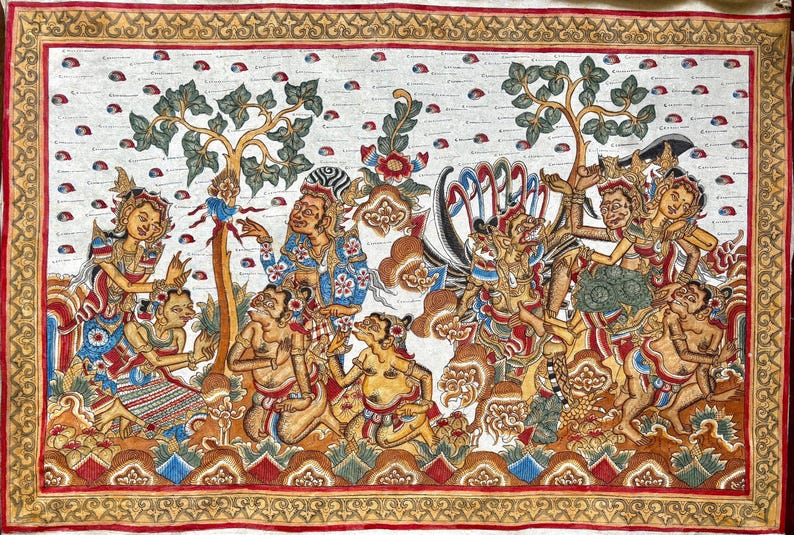
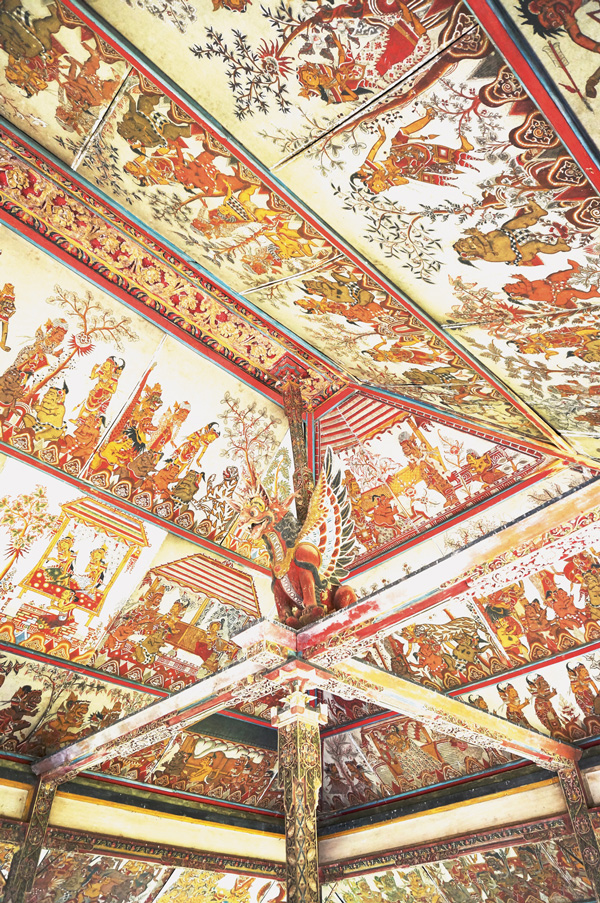
Traditional Balinese painting follows the wayang style, borrowed from shadow-puppet theatre: flat, stylised figures in profile, arranged in crowded rows that tell stories from the Ramayana and Mahabharata epics. For centuries these works were made for temples and palaces, not for sale. You can still spot the style in temple murals and in the village of Kamasan, its historic home.
PlaceKamasan Village: Home of Wayang Painting
Kamasan, near Klungkung in east Bali, is the ancestral home of classical wayang-style painting, where skills pass down through families. Workshops along the village streets sell narrative cloth paintings, painted eggs, fans and calendars, and artists will often show you works in progress. Combine a visit with the painted ceilings of the nearby Kerta Gosa pavilion in Klungkung, the style's masterpiece.
PlaceKerta Gosa: A Ceiling That Preaches
The old royal hall of justice of the Klungkung kingdom in Semarapura, east Bali, was built towards the end of the 18th century — and the accused looked up at its ceiling while awaiting judgment. It is covered in Kamasan-style panels telling the Bhima Swarga story: graphic punishments awaiting wrongdoers in hell, then the rewards of heaven. Kamasan artists repainted the panels several times in the 1900s; entry is around IDR 50,000, and the floating Bale Kambang pavilion stands beside it.
FactNatural Pigments and Egg Tempera
Traditional Kamasan painters ground their own colours from nature: soot and burnt bone for black, ochre earths for yellows and reds, and white from seashells or deer antler. Colours were mixed with fish glue or egg and applied to cloth prepared with rice paste. Some contemporary artists in Kamasan still work this way, and a genuine natural-pigment piece will usually cost more than an acrylic copy.
FactBatuan Style: Dark, Dense and Detailed
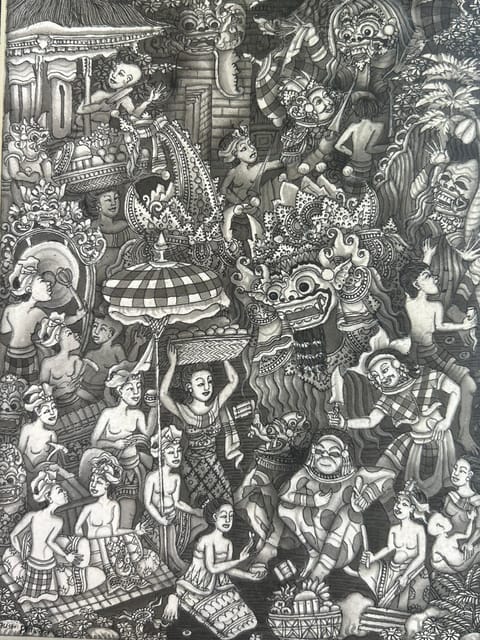
Painters from the village of Batuan, south of Ubud, developed a distinctive style in the 1930s: ink-black backgrounds, crowded scenes and fine, repetitive detail. Their subjects mix daily life with sorcery, ceremonies and the spirit world, giving the works a moody, almost gothic feel. Batuan paintings are a good buy if you want something unmistakably Balinese but less colourful than most.
FactYoung Artists of Penestanan
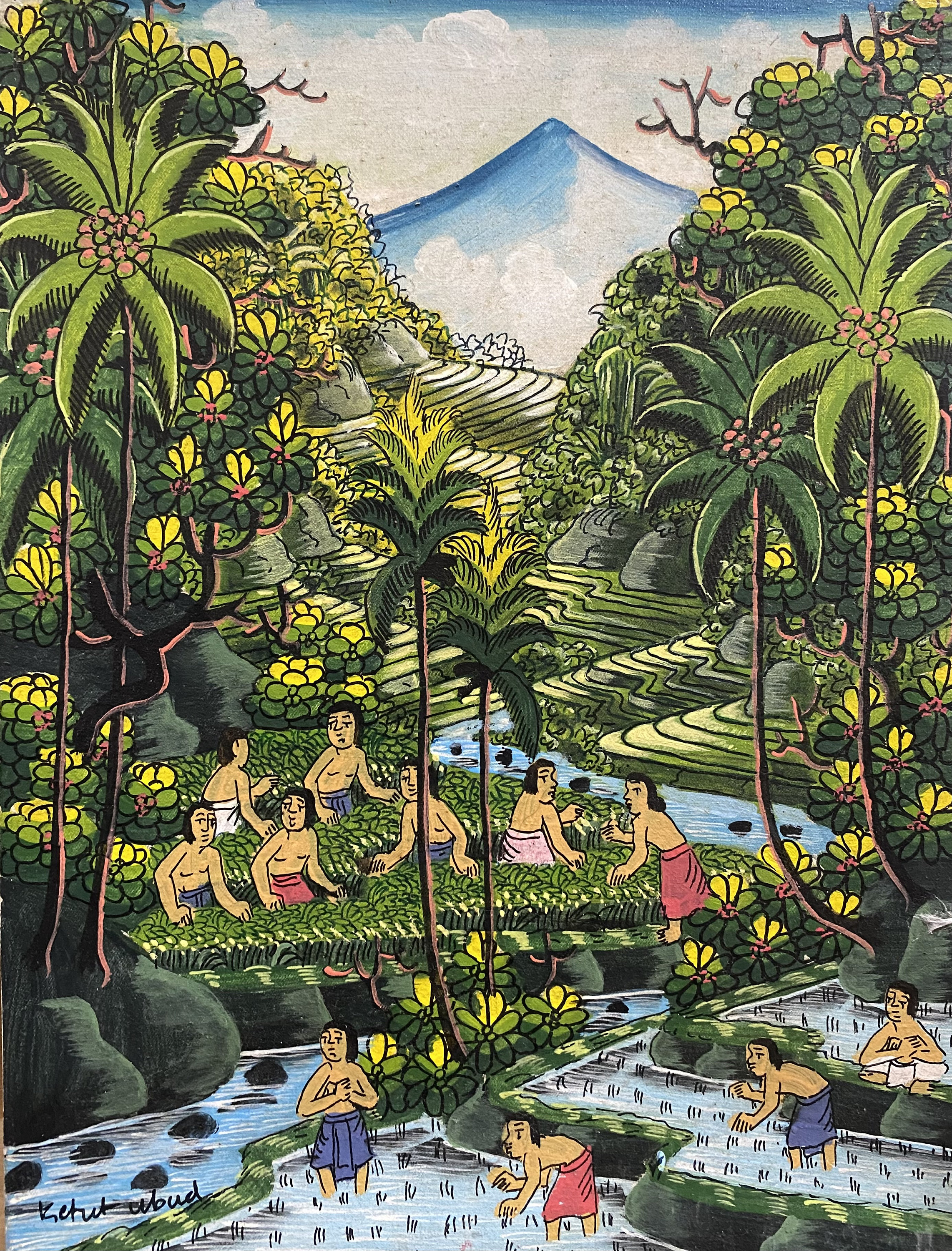
In the 1960s Dutch-born artist Arie Smit settled in Penestanan, near Ubud, and handed village boys paper and bright paints, telling them to paint what they saw. The result was the Young Artists style: naive, joyful scenes of festivals, rice fields and village life in bold, flat colour. Original works by the first generation of these painters are now collectible.
PlacePengosekan: The Flora-and-Fauna Painters
Pengosekan, the village just south of Ubud where the ARMA Museum stands, was a farming community whose men turned to painting from the 1960s. Its signature style is detailed flora and fauna — birds, butterflies, frogs and forest foliage in fresh pastel colours — developed by painters such as I Dewa Putu Sena and the Pengosekan Community of Artists, founded in 1970 by Dewa Nyoman Batuan. Studios line Jalan Pengosekan, and many painters welcome visitors into their family compounds.
PlaceMas Village: Woodcarving Central
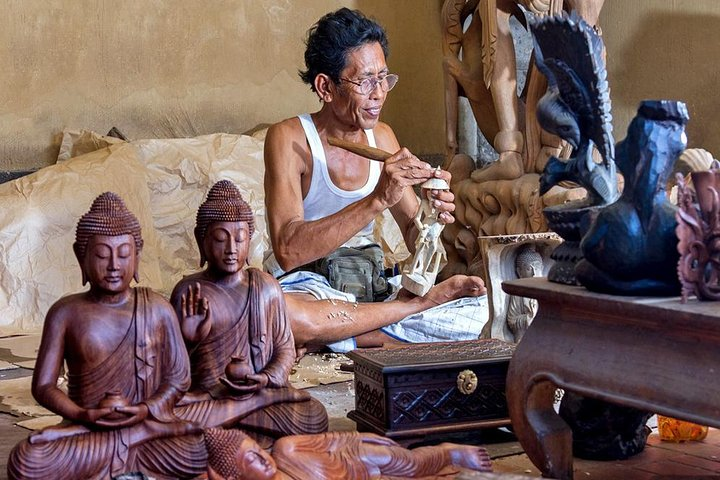
The village of Mas, about 20 minutes south of Ubud, has been a woodcarving centre for generations, and its main road is lined with family workshops and showrooms. You can watch carvers turn hibiscus, ebony and sandalwood into masks, statues and panels, then buy direct from the makers. Prices range from small masks under IDR 100,000 to master-carved pieces costing many millions.
FactWoodcarving: From Temple Doors to Souvenirs
Balinese woodcarving began as temple and palace decoration — ornate doors, beams and guardian statues — and the village of Mas supplied carvers to the royal courts. Traditional woods include hibiscus (waru), jackfruit, ebony and fragrant sandalwood, each with its own grain and colour. A fine hand-carved piece shows undercut detail and tool marks; perfectly uniform pieces are usually machine-assisted.
PlaceKeliki Village: Miniature Painting Masters
Tiny Keliki, north of Ubud, is famous for miniature paintings — intricate landscapes and village scenes sometimes no bigger than a postcard, painted with brushes a few hairs thick. The style was championed by the late master I Nyoman Meja, and village workshops still teach local children the technique. Visiting a Keliki studio is one of the easiest ways to see painters at work up close.
PlaceCeluk Village: Bali's Silversmiths
Celuk, in Sukawati district on the road between Denpasar and Ubud, is Bali's silver village: its main street is a near-continuous row of gold and silversmith workshops and showrooms. Families here have worked precious metal for generations, specialising in filigree and granulation — fine silver wire and tiny beads built up into jewellery by hand. Watch pieces being made at the bench, then buy at workshop prices, and check for a 925 stamp on sterling silver.
PlaceSidemen: Songket Woven with Gold Thread
The Sidemen valley in Karangasem, east Bali, is the home of songket — ceremonial brocade woven on simple looms with gold and silver thread worked into the pattern by hand as the cloth grows. A single fine piece can take weeks to weave, which is why genuine songket costs what it does. Family workshops along the valley road demonstrate the weaving and sell songket alongside the lighter, everyday endek cloth.
PlaceThreads of Life Gallery, Ubud
Threads of Life on Jalan Kajeng is a fair-trade gallery working with over 1,000 women weavers across Indonesia to keep traditional textile arts alive. The museum-quality ikat and songket cloths come with the story of the community that made them, and staff explain the natural dyes and symbolism as you browse. Prices are fixed and higher than market stalls — you are paying the weavers properly.
FactArt Is Built Into Bali's Temples
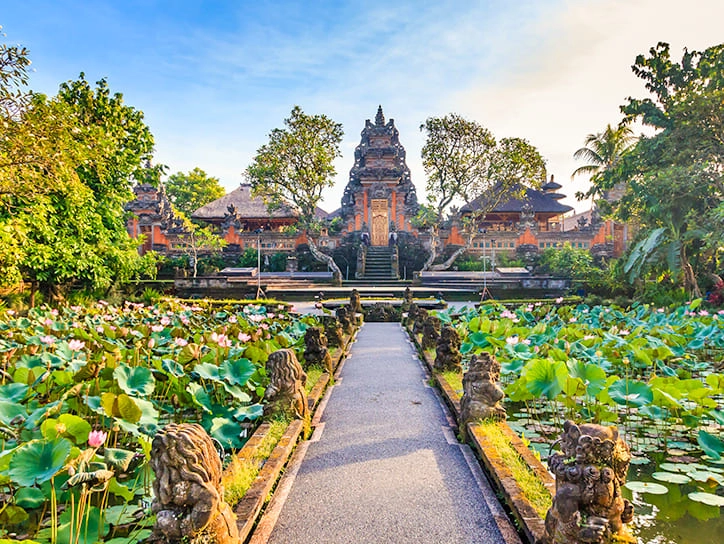
In Bali, art was never separate from religion: split gates (candi bentar), temple walls and pavilions are covered with carved stone reliefs of gods, demons and flowers. Master sculptor-priests designed both the buildings and their decoration, and temple art is still renewed by village craftsmen today. Reading a temple's carvings is a free open-air art lesson — start at the richly decorated Pura Taman Saraswati in Ubud.
PlaceUbud Art Market: Souvenir Art by the Basketload
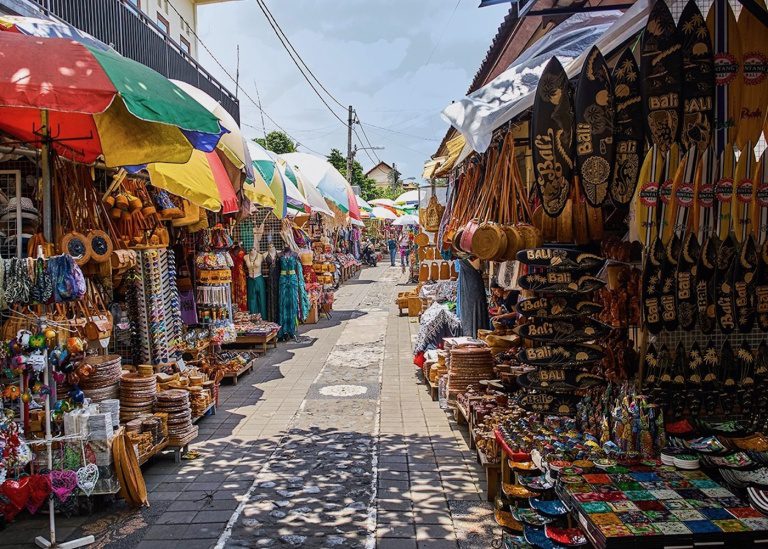
Pasar Seni Ubud, opposite Ubud Palace, packs two floors with paintings, carvings, masks and crafts from villages across the island. Quality varies hugely — much is mass-produced — but patient browsing turns up genuinely handmade pieces, and it is the best place to learn the going rates before buying elsewhere. Go early in the morning for the calmest browsing and the keenest sellers.
TipBargaining at the Art Markets
At Ubud Art Market and similar markets, the first price is an opening bid, not the price. Start at around a third to half of the asking price, stay friendly, and meet somewhere in the middle. Walking away politely often produces the real price — and if it doesn't, you were probably near it already.
TipReal Painting or Print? Check Closely
Mass-produced prints flood Bali's souvenir shops, sometimes lightly overpainted to feel textured. To check, look at the surface at an angle: real brushwork has varied ridges and slight imperfections, while prints look flat and mechanically even. Ask directly whether it is hand-painted, and buy from the artist's studio or a reputable gallery if the price is serious.
TipShipping a Big Painting Home
Galleries in Ubud ship worldwide every day, so ask them to handle it rather than struggling yourself. Paintings on canvas are usually taken off the stretcher, rolled in a protective tube and sent by courier or sea cargo; framed and fragile pieces are crated. Get the shipping quote in writing before you buy, and photograph the work and its certificate before it is packed.
TipAntiques and Export Rules: Take Care
Genuinely old Balinese art — anything classed as an antique or cultural heritage object — may need an export permit, and some pieces cannot legally leave Indonesia at all. Buy antiques only from established dealers who provide documentation and a certificate of authenticity, and have them arrange the paperwork. For ordinary modern paintings and carvings, no permit is needed and a shop receipt is enough.
TipWords to know
seni — art;
lukisan — painting;
patung — statue / sculpture;
ukiran — wood carving;
batik — wax-resist dyed cloth;
tenun — woven cloth / weaving;
songket — gold-thread brocade cloth;
endek — Balinese ikat woven cloth;
gerinsing — sacred double-ikat cloth from Tenganan;
kain — cloth / fabric;
poleng — black-and-white checked cloth;
topeng — mask;
wayang — shadow puppet;
gamelan — traditional orchestra;
sanggar — art studio / workshop;
taksu — spiritual charisma of an artist;
pengrajin — craftsman / artisan;
warna — colour;
harga — price;
beli — to buy;
tawar-menawar — bargaining
See also: related sets
Bali's arts cross over into everything else: the lotus temple in Temples, the silver village in Silver, and the monkey god whose statues guard the island in Monkeys. Follow the links below to keep exploring.